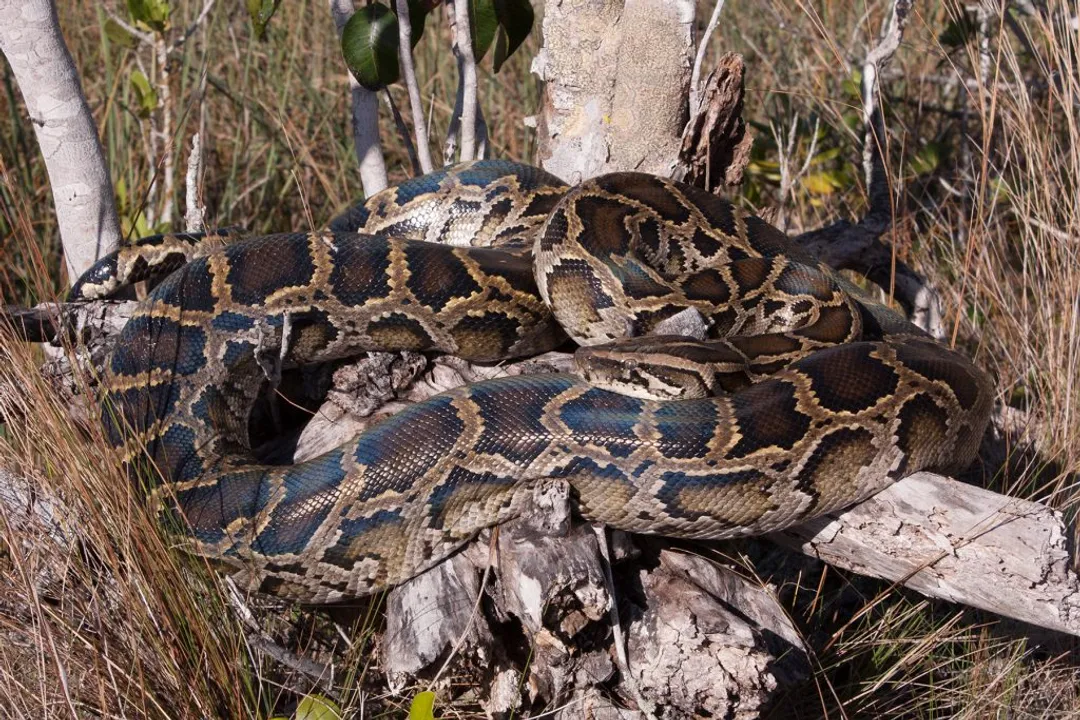
What specialized anatomical adaptation prevents suffocation when a python swallows prey considerably wider than its own head?
A specialized tube at the bottom of the mouth diverts air to the trachea.
The ability of pythons to consume prey items substantially larger than their own heads necessitates extraordinary flexibility in their jaw structure, facilitated by the lack of a fused chin and the presence of the quadrate bone. However, opening the mouth to such an extreme degree risks cutting off the airway. To counter this, pythons possess a unique adaptation: a specialized tube located at the bottom of the mouth. This structure remains open, acting as a temporary external airway that directs air from the front of the mouth cavity directly to the trachea, ensuring the snake can continue breathing while the rest of the mouth is entirely occupied by the massive food item being swallowed.