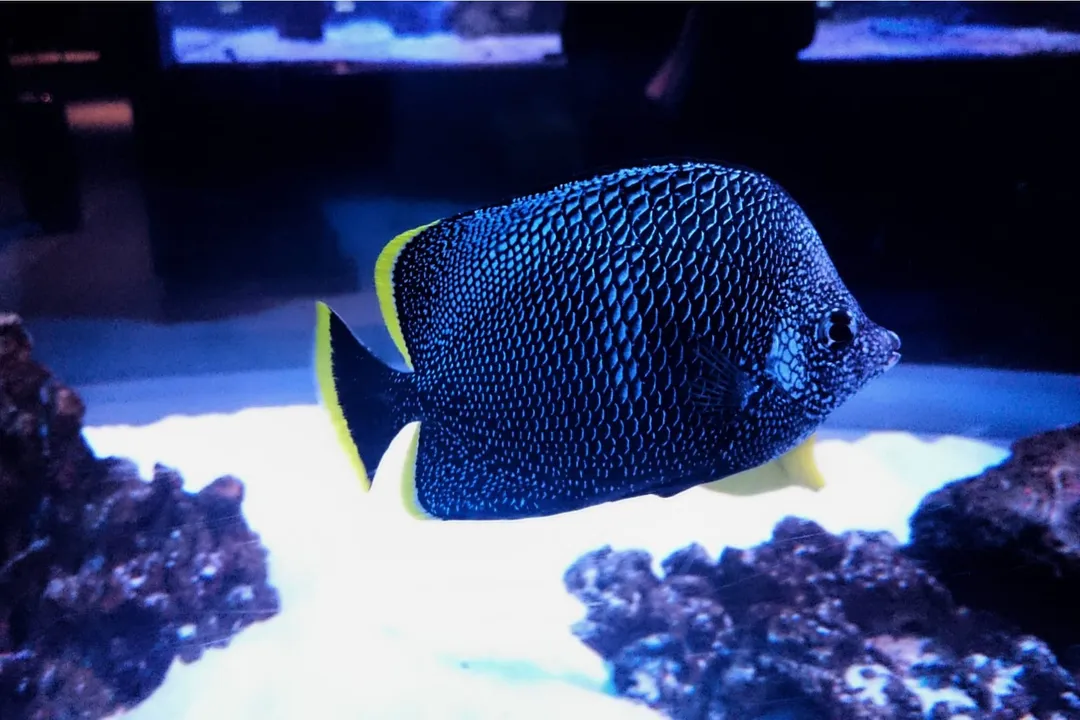
What microhabitats are suggested to benefit from the cryptic coloration of C. daedalma?
Answer
Deeper water, turbid areas, or complex rubble zones
The highly cryptic, dark coloration of Chaetodon daedalma is interpreted as an adaptation prioritizing camouflage within specific, less illuminated environments. This suggests the species is adapted to microhabitats characterized by deeper water, areas with naturally higher turbidity, or complex reef structures composed of dead coral rubble and sponges. These zones require excellent concealment for foraging on cryptic prey and allow the fish to avoid intense competition for resources found on the sunlit, branching coral slopes favored by brightly patterned specialist corallivores.
Related Questions
What is the scientific designation for the Wrought Iron Butterflyfish within the Chaetodontidae family?What color strategy does C. daedalma favor compared to relatives celebrated for bright colors?What is the usual maximum total length reached by adult Wrought Iron Butterflyfish specimens?Which regions define the centered distribution of Chaetodon daedalma?What type of diet categorizes the Wrought Iron Butterflyfish, avoiding the strict classification of obligate corallivore?What visual elements common in many Chaetodon species does C. daedalma generally lack?What is the recorded depth range where Chaetodon daedalma is typically found?What microhabitats are suggested to benefit from the cryptic coloration of C. daedalma?Which species, the Copperband Butterflyfish, has Chaetodon daedalma reportedly bred with in captivity?Instead of forming large aggregations, what social structure is typical for the Wrought Iron Butterflyfish?