What key feature helps identify this species in its humid, dense jungle setting?
Answer
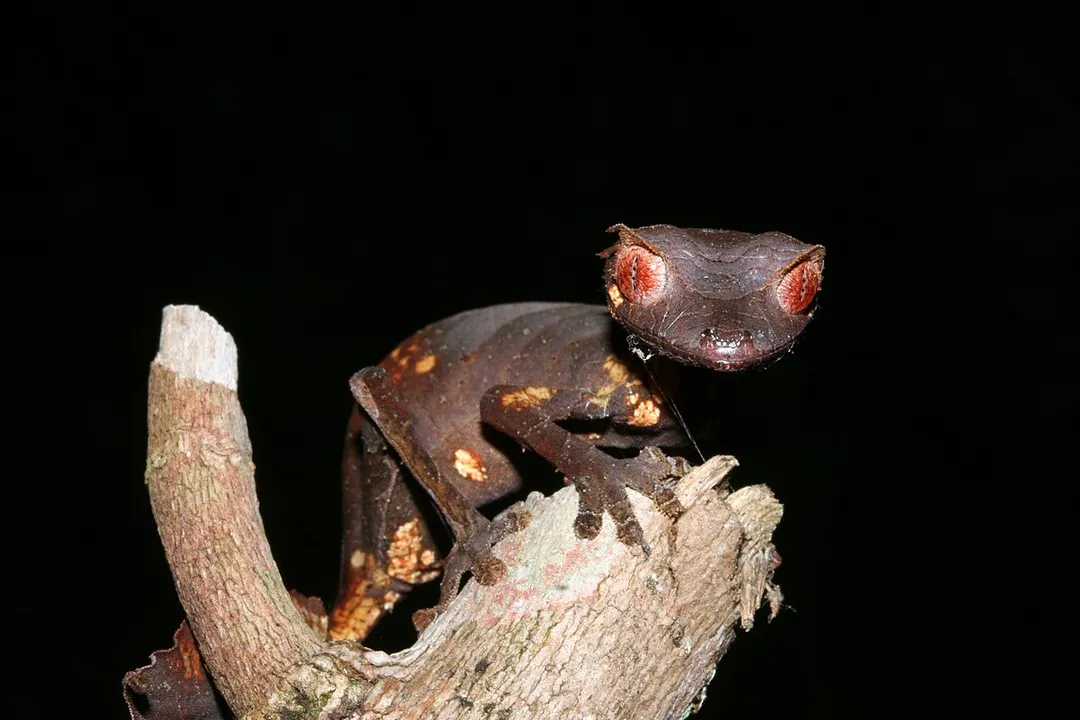
Its flattened, broad, and textured tail resembling a desiccated leaf
The tails of these geckos are flattened, broad, and textured to perfectly resemble a desiccated leaf, which is the key adaptation dictating their behavior and camouflage.
#Videos
SATANIC LEAF-TAILED GECKOS IN THE WILD! (Are we ... - YouTube
Related Questions
Where is the satanic leaf-tailed gecko endemic?Which specific region of Madagascar primarily hosts *Uroplatus phantasticus*?What is the primary classification of the gecko's lifestyle regarding where it lives?What natural object does the satanic leaf-tailed gecko's tail perfectly mimic?Which CITES Appendix lists the satanic leaf-tailed gecko?What physical feature distinguishes adult male *U. phantasticus* from females?What are the primary human activities threatening the gecko's limited natural range?What unusual dynamic is created by the significant global captive population?What type of habitat structure do these geckos show a preference for in their resting spots?What high humidity level must be replicated in captive environments to reflect their natural climate?What key feature helps identify this species in its humid, dense jungle setting?