What is the suspected purpose of the white spots and stripes covering the dark skin of Rhincodon typus?
Answer
To offer camouflage in the sun-dappled surface waters where it often feeds
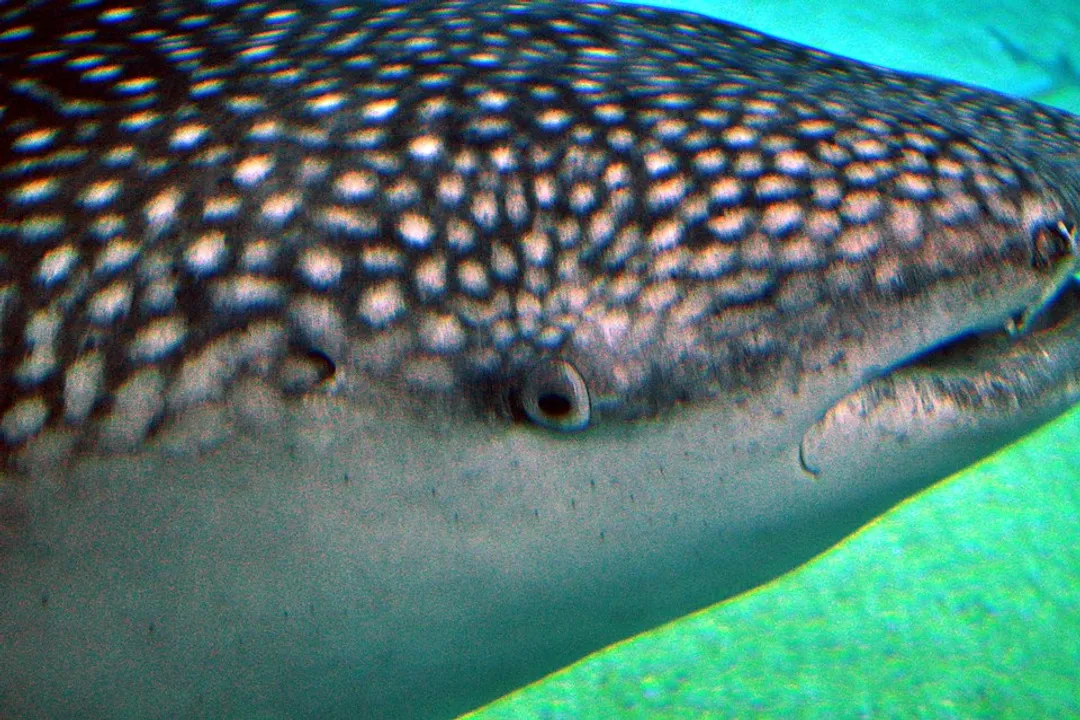
The distinctive pattern covering the whale shark's dark skin—composed of numerous white spots and stripes—is believed to serve a critical function related to its feeding habits near the surface. This coloration pattern is theorized to function as disruptive camouflage. When the shark is swimming in the upper layers of the ocean, the dappled sunlight filtering through the water surface is mimicked by the pattern, which can confuse potential threats or prey both when viewed from above or below. Although this morphology is a hallmark of the modern species, the exact timing of its evolution relative to the attainment of giant size remains an area of evolutionary study.
Related Questions
To which order does Rhincodon typus belong, alongside wobbegongs and zebra sharks?What time period is associated with the estimated existence of the genus Rhincodon based on morphological fossil evidence?What is the key mouth placement difference between the whale shark and the basking shark?What material characterizes the skeleton of sharks belonging to the Chondrichthyes class?Why is the family Rhincodontidae considered monotypic concerning R. typus?What structures inside the whale shark's mouth strain plankton from the water during feeding?Which shark order does the basking shark belong to, demonstrating convergent evolution with Rhincodon?Approximately how long ago did sharks, as a whole lineage, establish their ancestry prior to dinosaurs?What is the suspected purpose of the white spots and stripes covering the dark skin of Rhincodon typus?What historical epoch saw the presence of whale sharks successfully navigating significant global climate shifts?