Whale Shark Facts
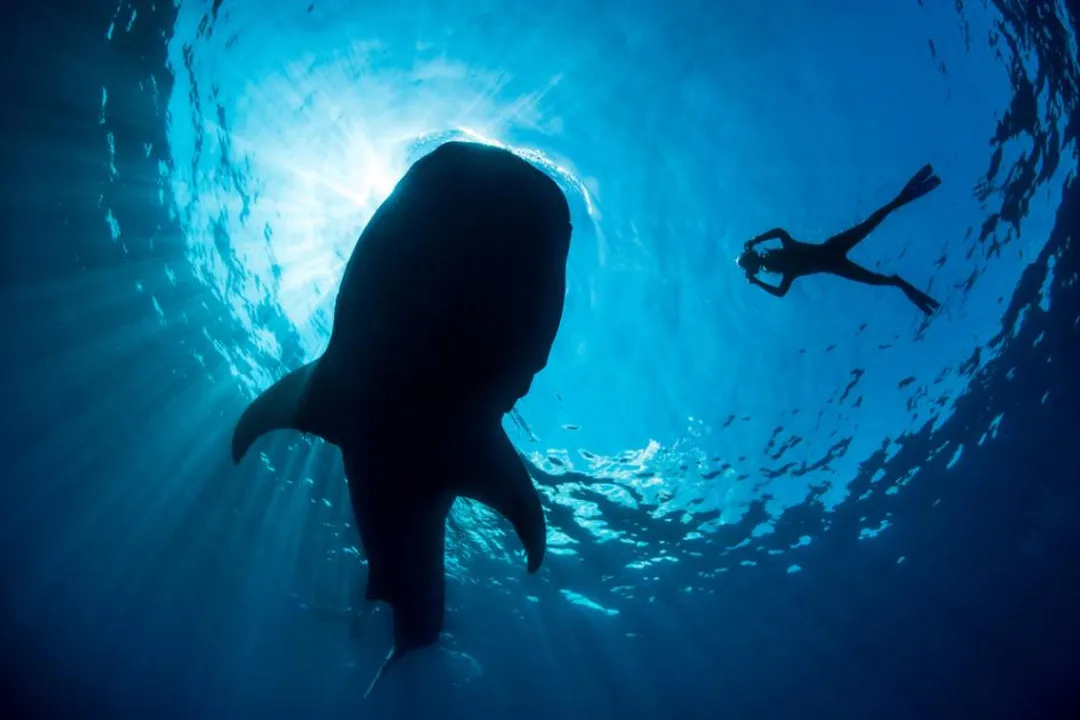
The ocean harbors creatures of truly colossal scale, and perhaps none captures the imagination quite like the whale shark, Rhincodon typus. These animals are undisputed giants of the marine world, yet despite their massive size, they possess a surprisingly gentle demeanor, swimming placidly through warm waters across the globe. To understand them is to appreciate a masterclass in marine biology, where immense scale meets delicate filter feeding.
# Largest Fish
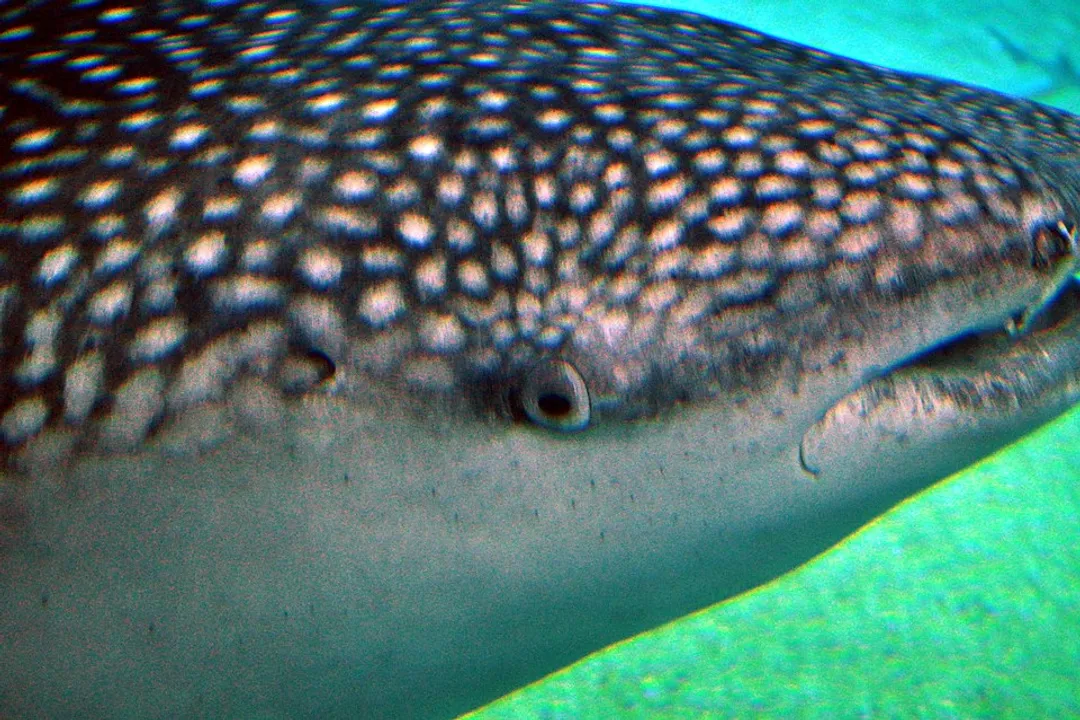
The whale shark holds the undisputed title as the largest fish inhabiting our oceans today. These magnificent creatures can reach staggering lengths, often reported to be up to 18 meters, though some historical or anecdotal reports suggest sizes reaching 60 feet. When considering their sheer volume, these animals are incredibly heavy; a mature specimen can weigh in at approximately 21.5 tons. It is a profound experience just to visualize this scale; an 18-meter shark is longer than two standard city buses parked end-to-end, and finding one is often described as a once-in-a-lifetime event for researchers and divers.
A defining feature, helping to distinguish them from any other large marine inhabitant, is their unique skin pattern. Their bodies are dark grey or brownish, covered in a constellation of pale yellow or white spots and horizontal or vertical stripes. What’s particularly interesting about this patterning is its individuality; no two whale sharks share the exact same arrangement of spots, meaning each individual possesses a unique, inherent identification marker, much like a human fingerprint.
# Not Whales
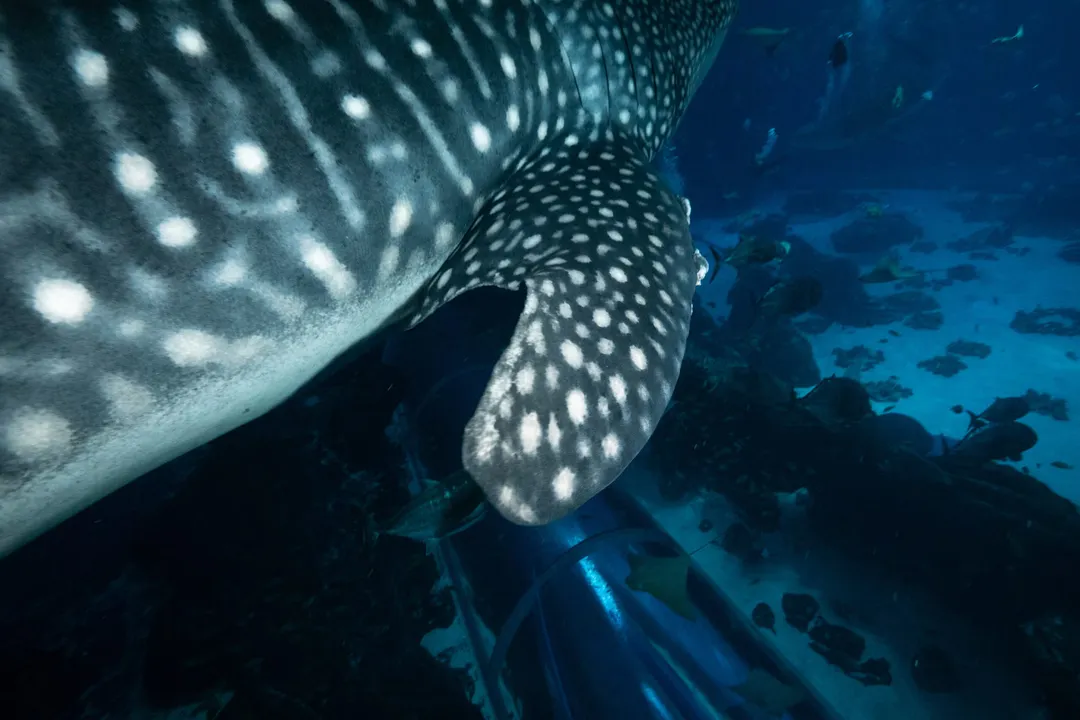
Despite the "whale" in their name, these animals are emphatically not mammals; they are, in fact, sharks, belonging to the class of cartilaginous fish. The nomenclature simply reflects their enormous size and their method of consuming food, which resembles that of baleen whales rather than predatory sharks. They possess five pairs of gill slits on the sides of their heads, a clear indicator of their fish lineage.
Their feeding apparatus is one of their most defining characteristics. Whale sharks are ram filter feeders, meaning they swim forward with their massive mouths agape to process huge volumes of water. Their mouths can open to an impressive width, sometimes reaching up to 1.5 meters across. As water rushes in, it passes over specialized structures within the mouth called gill rakers, which act as a sieve, trapping food particles while the water is expelled through the gill slits.

# Filter Feeding

The diet of the whale shark is surprisingly humble given their imposing size. They subsist primarily on the smallest members of the ocean ecosystem. This menu consists mainly of plankton, small crustaceans, and tiny schooling fish. This reliance on microscopic or small prey is why they often congregate in areas where plankton blooms occur, sometimes feeding near the surface where they are visible to observers, or occasionally near the seabed. While filter feeding is their primary method, they are known to sometimes feed by suction, opening their mouths and drawing water in—a less common but documented feeding style.
It is always worth remembering that these massive animals pose no threat to humans; they are not aggressive and generally appear unconcerned by the presence of divers, allowing for close, yet respectful, observation.
# Global Range
Whale sharks are distributed widely across the world's oceans, preferring tropical and warm-temperate waters. You are most likely to find them in the open ocean, though they do sometimes enter shallower coastal areas, which can be especially beneficial for researchers tracking their movements.
These animals are highly migratory, often traveling vast distances between feeding and breeding grounds. This nomadic lifestyle contributes to the difficulty in accurately assessing their population numbers across different regions, as a pod observed off the coast of Mexico one season might travel thousands of miles before being sighted again near the Philippines the next. The global nature of their distribution means that conservation efforts require international cooperation, as a shark might cross numerous national boundaries during its life span.
# Slow Life
The life history of the whale shark suggests a strategy centered on longevity and high reproductive output, though details remain somewhat mysterious. Estimates suggest they can live for a very long time, potentially reaching 70 to 100 years. They are generally described as slow-moving, contributing to their reputation as placid giants of the sea.
When it comes to reproduction, whale sharks are ovoviviparous, meaning their eggs develop and hatch internally before the mother gives birth to live young. A single birth event can result in a large litter, sometimes numbering in the dozens of pups. Interestingly, while the adults are immense, the newborn pups are quite small, measuring only about two feet in length when they emerge. Contrasting the size of the two-foot newborn with the 60-foot potential maximum adult size underscores a tremendous, decades-long growth trajectory, suggesting a very slow maturation rate, which is typical for long-lived species and makes population recovery particularly vulnerable to external pressures.
# Conservation Status
Unfortunately, this remarkable species faces significant threats in the modern ocean environment. The whale shark is currently classified as Endangered on the IUCN Red List. This status reflects a worrying decline in their populations globally.
The primary dangers they encounter are directly linked to human activity. One of the most significant risks is accidental capture, known as bycatch, where they become entangled in fishing gear intended for other species. Vessel strikes are another serious concern, particularly as they often feed near the surface, increasing the likelihood of collisions with boats, especially in busy shipping lanes or popular tourist areas. Beyond direct physical harm, the pervasive issue of plastic pollution poses an ongoing hazard, as they might mistake plastic debris for food, leading to internal injury or starvation. Protecting these gentle giants requires focused global management efforts targeting these specific anthropogenic pressures.
#Videos
Did You Know? Fun Facts About Whale Sharks - YouTube
Related Questions
#Citations
Whale shark | National Geographic Kids
5 interesting facts about whale sharks - WWF-UK
Whale Shark - Great Barrier Reef Foundation
Whale shark - Wikipedia
Whale Shark | World Wildlife Fund
Fun facts about whale sharks - Reddit
Whale Shark Facts - Marine Megafauna Foundation
Whale Shark – Discover Fishes - Florida Museum of Natural History
Celebrating International Whale Shark Day with Fun Facts! - Georgia ...
Did You Know? Fun Facts About Whale Sharks - YouTube