What is the necessary larval food source intrinsically linked to the distribution of US stag beetles?
Answer
Decaying wood, specifically the stumps and root systems of dead hardwood trees
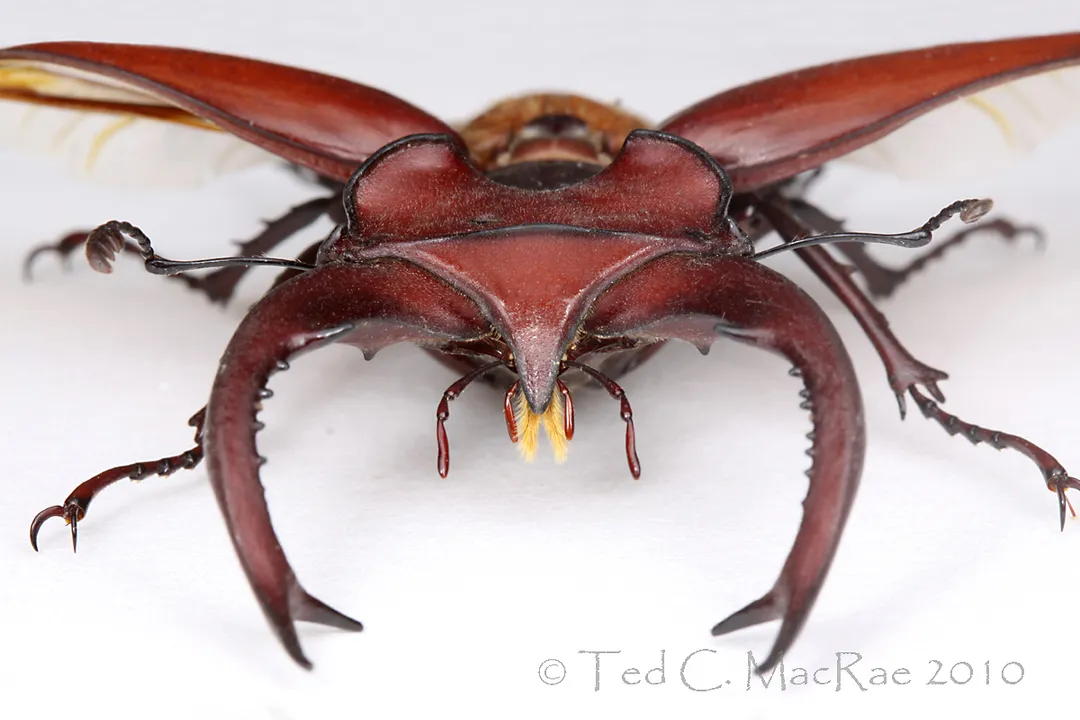
The distribution of stag beetles is fundamentally dependent upon the availability of their specific larval food source, which necessitates decaying wood. More precisely, the larvae, or grubs, require the decaying stumps and root systems of dead hardwood trees such as oak, maple, or hickory. This dependence acts as a powerful limiting factor for their presence; regions lacking this specific type of decomposing organic material, such as arid areas or places dominated by non-hardwood species, offer far fewer acceptable breeding grounds. The larvae spend multiple years consuming this material underground or within the rotting timber to fuel their development.
Related Questions
Which stag beetle species is recognized as the largest found in North America?What is the necessary larval food source intrinsically linked to the distribution of US stag beetles?Where are established populations of the Smooth Stag Beetle, Lucanus capreolus, specifically noted to thrive among dead hardwood stumps?For how many years, sometimes more, can stag beetle larvae consume decaying material underground or within rotting timber?What geographic demarcation line is noted as centering the densest cluster of confirmed stag beetle sightings and biological studies?What general biome typically hosts the well-documented distribution range for the Giant Stag Beetle, Lucanus elaphus?During which general time frame do adult stag beetles typically appear and become active above ground?What historical land-use correlation suggests sensitivity in Lucanus elaphus populations to modern habitat changes?What specific physical characteristic of decomposing wood is described as a prime indicator for finding stag beetle nurseries outside established ranges?Which states may harbor different Lucanid species adapted to drier woodland environments, such as those in riparian zones?What observation suggests high species richness among stag beetles in the Southeastern US compared to other regions?