Did short-faced bears live in California?
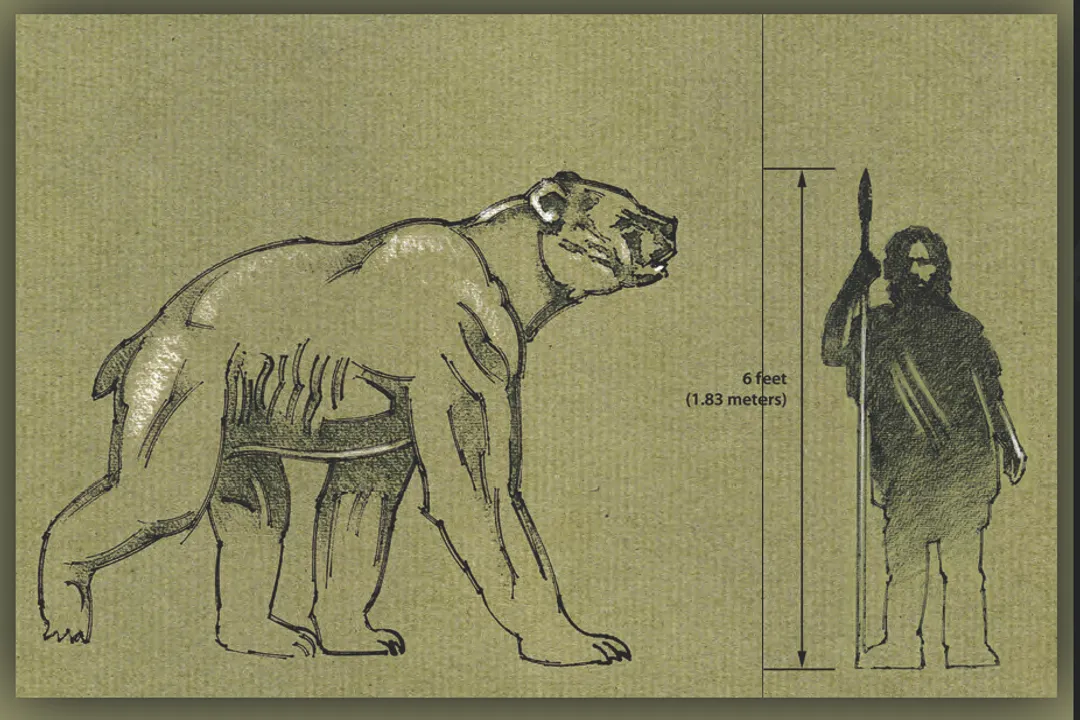
The history of North American megafauna is filled with giants, but few inspire as much awe and speculation as the short-faced bear, Arctodus. For those digging into the fossil record of the Golden State, the answer to whether these massive carnivores roamed California is a definitive yes, though the story involves at least two distinct chapters and island isolation that complicates the simple narrative. These weren't just large versions of modern black or grizzly bears; Arctodus represented an entirely different evolutionary trajectory for the bear family, one that prioritized sheer mass and imposing stature. [1][5]
Fossil evidence clearly places various forms of Arctodus within California's prehistoric landscape, stretching from the icy plains of the Pleistocene across the state's diverse ecosystems. [2][4] What makes the California record particularly compelling is that it potentially hosts remnants of the continent's largest known bear alongside a unique, late-surviving island species, suggesting that the state acted as both a mainstream corridor and a unique evolutionary refuge. [3] Understanding their presence requires separating the story of the mainland giant from the fate of its insular cousin.
# Bear Lineage
The genus Arctodus branched off early in bear evolution and developed characteristics quite different from living bears like the Brown Bear (Ursus arctos) or the American Black Bear (Ursus americanus). [1] Paleontologists generally recognize two main species: the widespread and massive Arctodus simus, known as the Giant Short-Faced Bear, and the smaller Arctodus pristinus, sometimes called the Spectacled Bear or Dwarf Short-Faced Bear. [1][5]
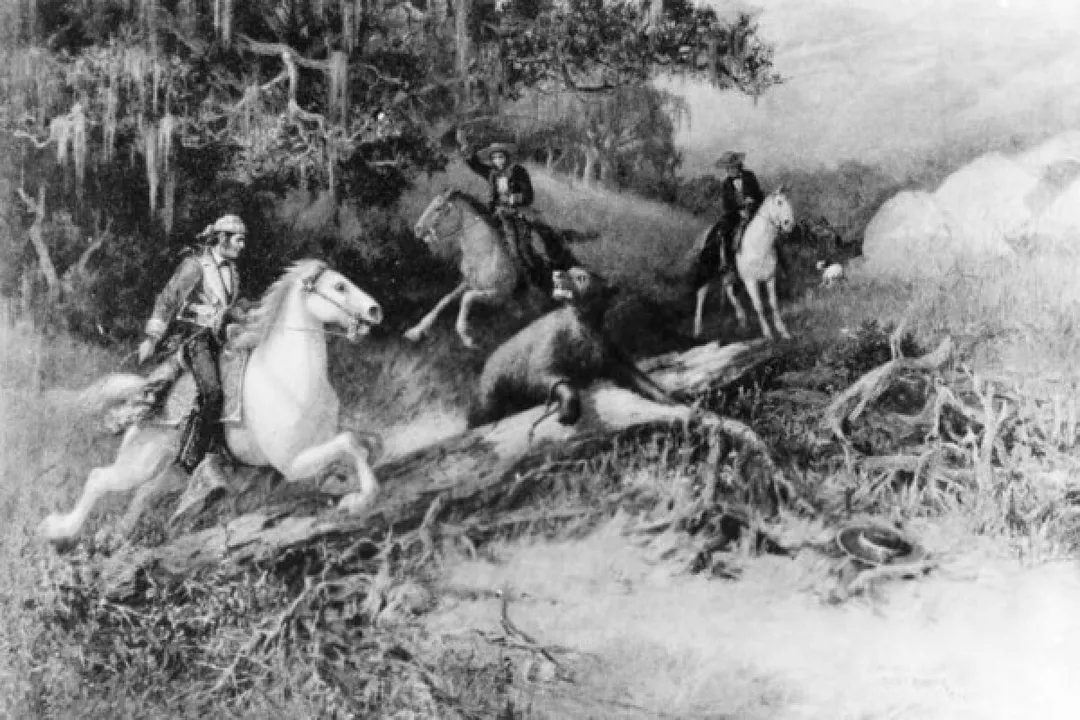
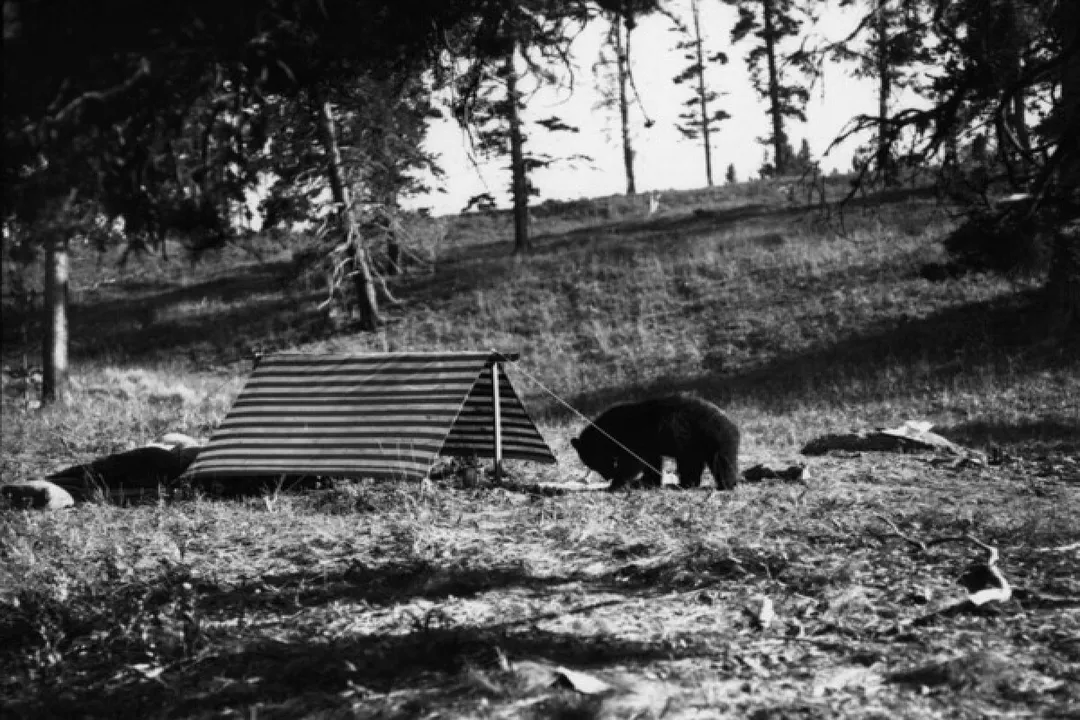
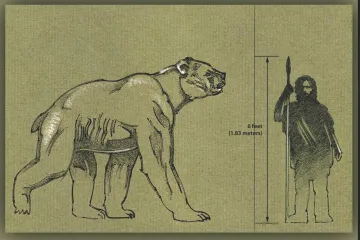
The Giant Short-Faced Bear (A. simus) was a true behemoth. Estimates suggest this animal could stand over five feet tall at the shoulder when on all fours, and potentially reach heights nearing eleven feet when standing upright, with males sometimes tipping the scales near 1,200 kilograms (about 2,650 pounds). [1][4] To put this size into local context, the average male California Grizzly Bear, which was already imposing, would look decidedly medium-sized next to the A. simus titan that once walked the Los Angeles basin. [1] This extreme size suggests powerful musculature, particularly in the head and forelimbs, hinting at a creature built for confrontation, whether with prey or rivals. [4]
# Mainland Fossils
The most famous geological site associated with megafauna in California, the La Brea Tar Pits in Los Angeles, has yielded significant remains of Arctodus. [2][6] The sticky asphalt seeps at La Brea acted as a natural trap, preserving the bones of countless Ice Age animals, including the massive remains of the Giant Short-Faced Bear. [7] These findings confirm that A. simus was a significant part of the mainland California ecosystem during the Pleistocene epoch. [2][6]
The geographic distribution of A. simus across North America was vast, stretching from Alaska down through the American West and Midwest. [1] While its presence in California is undeniable based on the La Brea evidence, understanding its behavior is still subject to debate among researchers. [4] Was it a specialized predator, a powerful scavenger that intimidated other carnivores away from kills, or a more generalized omnivore? The sheer crushing power implied by its skull structure suggests it was capable of dispatching large animals, perhaps targeting megafauna like mammoths or ground sloths, or securing large carcasses quickly. [1][4]
The timing of its disappearance is tied to the general extinction event that cleared the landscape of most large North American mammals around 11,000 years ago. [1] The climate shifted, the preferred prey base declined, and A. simus vanished from the mainland record, leaving behind only fossilized evidence of its former dominance. [1]
# Island Isolation
The story takes a fascinating turn when we look away from the mainland tar pits and toward the cool, wind-swept California Channel Islands, such as Santa Rosa and Santa Cruz. [3] Here, a unique evolutionary experiment took place, resulting in a distinct, though related, short-faced bear population.
Research published around 2020 identified a separate species, provisionally named Arctodus angustus, that inhabited these islands. [3] This species was clearly smaller than its mainland giant counterpart, A. simus. [3] Island environments often lead to insular dwarfism in large mammals, a process where generations of limited resources and lack of large predators cause populations to shrink in size over millennia. This smaller island form represents a fascinating case study in adaptation to insular ecology. [3]
Crucially, the extinction timing for this island population appears different from the mainland extinction. While A. simus disappeared continent-wide around 11,000 years ago, the fossils of Arctodus angustus on the Channel Islands suggest they persisted much longer. [3] Some evidence points to their survival until at least 20,000 years ago, and perhaps even later, indicating a prolonged period of isolated existence long after their massive mainland relatives were gone. [3] This longevity highlights how island biogeography can shield populations from continental extinction pressures, creating small, temporary time capsules of older faunal communities.
# Comparing the Forms
The existence of both A. simus on the mainland and A. angustus on the islands provides a good opportunity to compare evolutionary responses, even within a single genus.
| Feature | Arctodus simus (Giant Short-Faced Bear) | Arctodus angustus (Island Short-Faced Bear) |
|---|---|---|
| Size | Extremely large, up to 1,200 kg [1] | Significantly smaller (insular dwarfism) [3] |
| Location | Widespread mainland North America, found at La Brea [2][6] | Restricted to California Channel Islands [3] |
| Extinction Timing | End of Pleistocene, approx. 11,000 years ago [1] | Persisted significantly later on islands [3] |
| Implication | Apex predator/scavenger in megafaunal systems [4] | Adapted survivor in an isolated, limited ecosystem [3] |
The contrast is striking: one bear evolved toward maximum bulk and mainland dominance, while the other evolved toward survival in a resource-constrained, predator-free island setting. [3] Had the island population persisted until modern times, they might have represented a unique, smaller Arctodus species surviving alongside the arriving ancestral peoples, making the story of California bears even richer than just the grizzly narratives we often recount. [7]
# Dietary Speculation
The massive head and jaw structure of Arctodus simus have been central to debates regarding its diet. While early interpretations sometimes favored a hypercarnivorous role—a bear specialized purely for meat, possibly even faster than contemporary brown bears—more recent analysis suggests a broader, opportunistic diet. [1][4] The robust build might have been less about speed and more about brute force, capable of winning resource battles or efficiently processing large amounts of food, whether flesh or vegetable matter. [4]
If we look at the anatomy, the bear seems less built for the long pursuit associated with cursorial predators and more for explosive power, perhaps ambushing prey or using its size to muscle out other predators like saber-totoothed cats or dire wolves from a kill. [1] Regardless of its exact dietary niche, its sheer presence would have placed extreme top-down pressure on the herbivores of the Ice Age landscape. [4]
# Echoes in Time
The extinction of the short-faced bears, both the mainland giants and the island survivors, is intrinsically linked to the larger story of North American megafaunal turnover. While climate change undoubtedly played a role in stressing ecosystems across the continent, the timing often overlaps with the arrival of the first substantial waves of human hunters. [1]
For the mainland population (A. simus), the end seems definitive around 11,000 years ago, likely due to a combination of environmental shifts and increased competition or direct pressure from skilled human hunters who were colonizing the continent. [1] The subsequent fate of the island A. angustus population is slightly more mysterious, but their eventual disappearance—whenever it occurred—marks the end of the unique Arctodus lineage in the Americas. [3] The fact that the California Channel Islands held out for potentially thousands of years longer than the mainland populations offers a rare glimpse into how isolated refugia can extend the life of a species that failed to adapt to continental pressures. [3] The remnants we find today, embedded in ancient lake beds and tar deposits, are the only testament to this great, powerful chapter in California's deep history.
Related Questions
#Citations
Arctodus - Wikipedia
Extinct Short-faced Bear (Arctodus spp.) Fact Sheet [archived ...
How a giant short-faced bear reached the California Channel Islands
Giant Short-Faced Bear | Nocs Provisions
North American Short-faced Bears (Genus Arctodus) - iNaturalist
Giant Short-Faced Bear - DAVE TAYLOR'S WILDLIFE
A Brief History of Bears in the Los Angeles Area | Lost LA - PBS SoCal
This is the Short Faced Bear, and it lived in California 11,000 years ...
Short-faced bear - SciiFii Wiki - Fandom