Can Devil's Coach horse beetle sting?
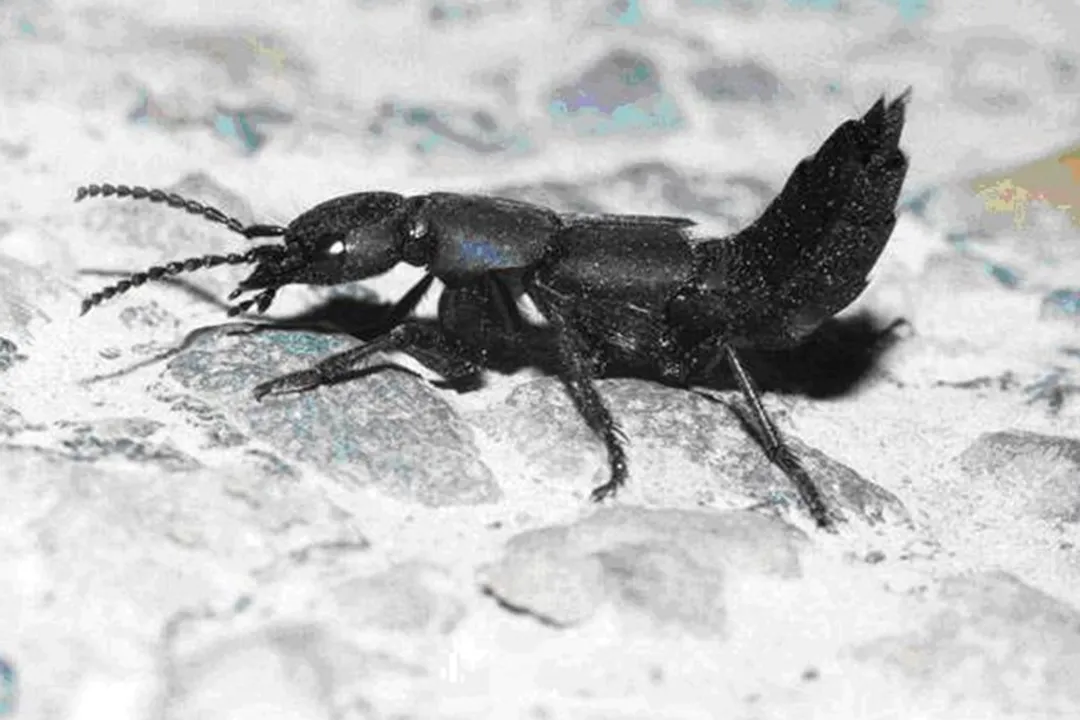
The imposing, jet-black shape often found scurrying beneath stones or decaying wood in damp corners of gardens and woodlands is immediately recognizable by its intimidating posture. This is the Devil's Coach Horse beetle, Ocypus olens, and its common name, coupled with its defensive display, naturally leads people to wonder about its capacity for harm, specifically whether it possesses a sting. To put this concern to rest immediately: the Devil's Coach Horse beetle cannot sting. Stinging is reserved for certain groups of insects, like wasps or bees, involving a specialized ovipositor modified into a stinger; this rove beetle possesses no such apparatus.
However, the lack of a sting does not mean this large beetle is defenseless. Its entire reputation, and the sinister name derived from medieval folklore, is built upon a series of very real, very physical deterrents that are far more immediate than the slow action of a venomous sting.
# The Name's Shadow
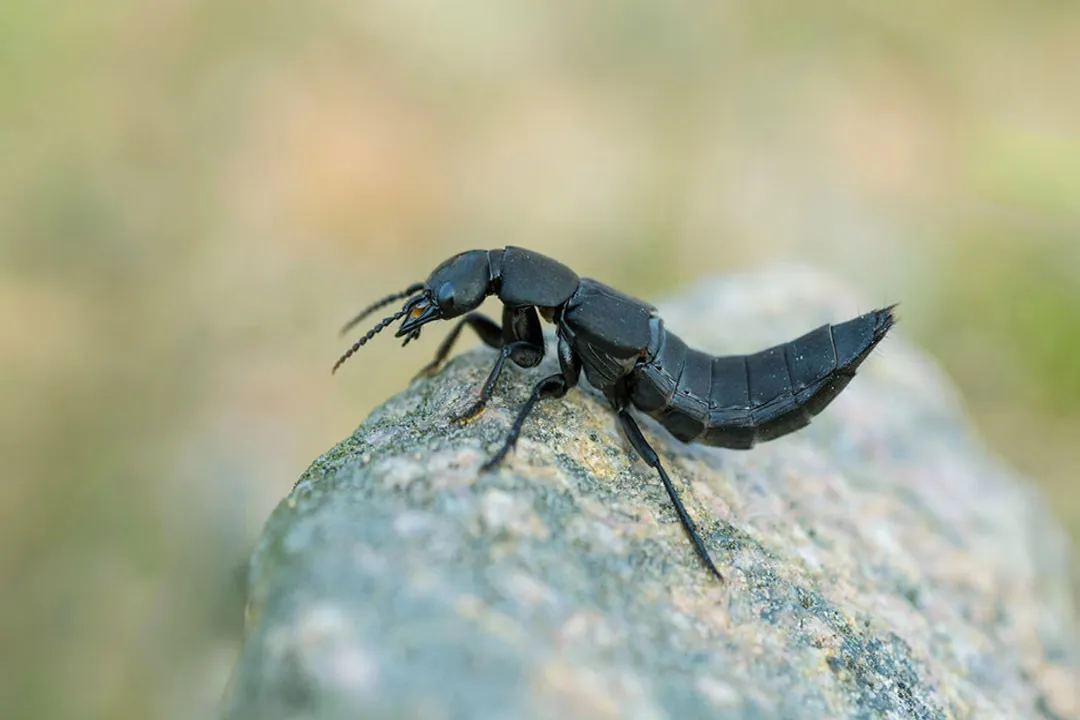
The dramatic moniker, Devil's Coach Horse, hints at centuries of human interaction tinged with superstition. In the Middle Ages, this creature was associated with evil forces, sometimes believed to be capable of cursing people simply by pointing its raised abdomen in their direction. In Ireland, it carried the local name Dar Daol, meaning "the Devil's beetle". This inherent fear, built over time, has given the beetle a reputation that far outstrips its actual danger to humans. It is an ancient association, where any creature appearing threatening or unfamiliar—especially one that mimics the tail of a scorpion—was easily absorbed into local mythology surrounding darkness and evil. The reality of Ocypus olens is much less supernatural and much more predatory.
# Anatomy Defense
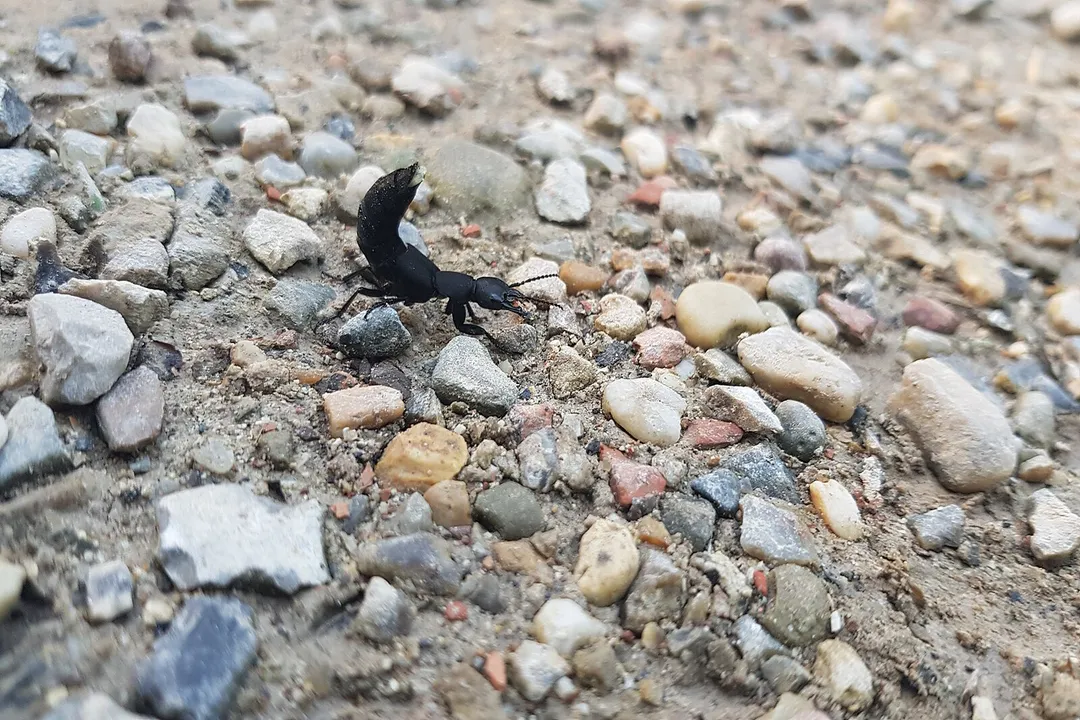
Physically, the Devil's Coach Horse is one of the most distinctive beetles found in the UK, being the largest of the native rove beetles. Adults are characterized by a long, uniformly black body, often glossy, measuring up to around 30 millimeters in length. A key feature is its short wing cases, or elytra, which only cover the thorax, leaving a large portion of the segmented abdomen exposed. It possesses a rounded head equipped with notable, pincer-like jaws, or mandibles, which are crucial for its feeding and defense. It can sometimes be mistaken for an earwig, but its scorpion-like defensive stance is a giveaway that it belongs to the rove beetle family, Staphylinidae.
# Defense Mechanisms
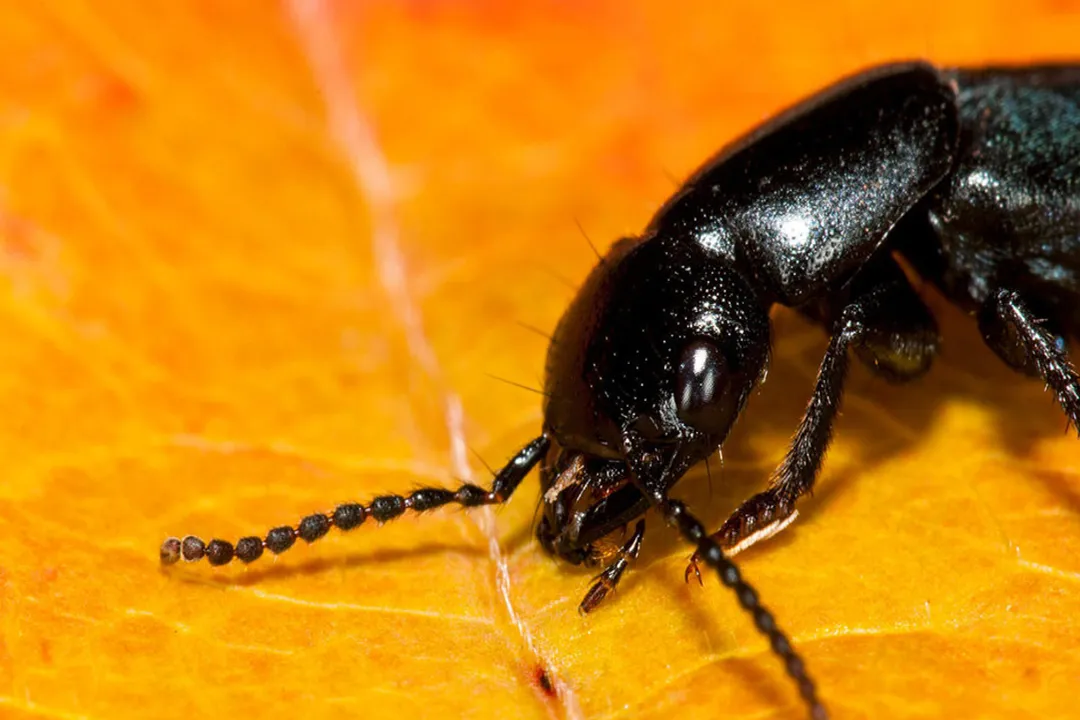
When an individual encounters this beetle and perhaps disturbs its hiding spot under a stone or log, its reaction is instantaneous and dramatic. The beetle raises its long abdomen up and forward over its body, creating that famous, chilling scorpion-like display. This act is purely a bluff, intended to look aggressive and dangerous to potential predators like birds or mammals.
If the threat persists, the beetle employs two active methods of dissuasion. The first is a chemical defense: it can emit a foul-smelling liquid from a pair of white glands located on its abdomen. This noxious odor is a strong deterrent. The second, and perhaps most impactful against accidental human contact, is its bite. The beetle uses its powerful mandibles to catch, crush, and consume its prey. If a human handles the beetle aggressively or attempts to trap it, those strong jaws are capable of delivering a painful bite. While it does not use venom, the mechanical pressure from its jaws can break the skin and cause bleeding, as observed in interactions where individuals tested the strength of the pinch.
The combination of the visual threat (the raised tail), the chemical threat (the smell), and the mechanical threat (the bite) forms a comprehensive, multi-layered defense system designed to ensure that anything large enough to threaten it decides the energy cost is not worth the reward. Unlike a wasp sting, which delivers a quick shock of pain and potential allergic reaction via venom, the Coach Horse relies on brute mechanical force and olfactory offense, all without needing a dedicated stinging organ.
# Predatory Habits
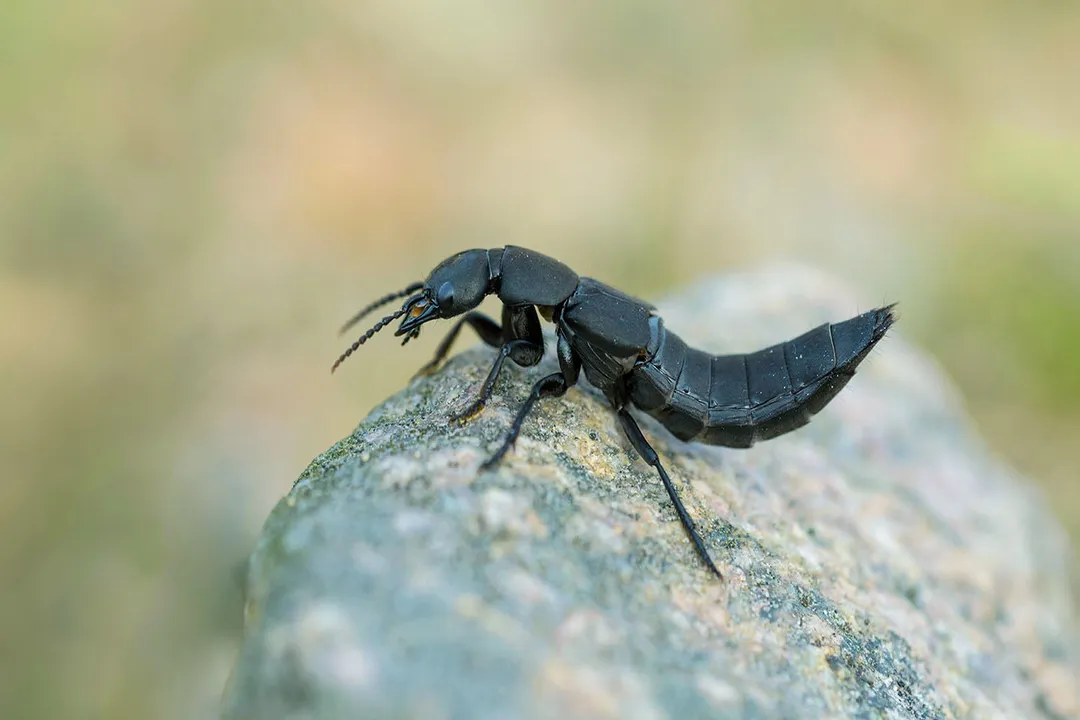
To appreciate why this beetle carries such formidable tools, one must understand its ecological role. The Devil's Coach Horse is a voracious predator. It is largely nocturnal, spending the day hidden away, emerging after dark to hunt actively along the ground. Its diet is entirely carnivorous, consisting of a wide array of smaller invertebrates found in the soil and leaf litter. This menu includes worms, slugs, snails, spiders, woodlice, and caterpillars.
For gardeners, this makes the Ocypus olens an excellent, if intimidating, ally. They actively consume common garden pests, such as small slugs and vine weevil larvae. The way it processes food is itself quite remarkable; using its large jaws and front legs, it can catch prey, roll it into a ball-like shape, and chew it until liquefied for digestion. Even the larvae mirror the adults' behavior, living underground and preying eagerly on other soil-dwelling invertebrates.
# Habitat and Movement
This species is widespread and common across the UK and much of Europe, having also been introduced elsewhere. Its presence is strongly correlated with damp conditions. You are most likely to find them in gardens, woodlands, hedgerows, grasslands, and heathlands. They favor sheltered spots, meaning they frequent compost heaps, under stones, or within deep leaf litter. Adults are generally active between April and October, mating in the autumn.
A final point regarding its movement relates to a minor divergence in observation: while they possess wings under their short cases, they are adapted for ground life and rarely fly. Although one source suggested they are wingless, the consensus among dedicated wildlife groups is that flight capability exists but is seldom employed, perhaps because their habitat—the ground level clutter of gardens and woods—offers a more effective hunting zone via running.
# Managing Misconceptions
Understanding the contrast between its reputation and reality is key to appreciating this beneficial insect. The myth of the sting often stems from conflating its scorpion-like tail display with the actual weaponized stinger of an insect like a wasp. However, the Coach Horse beetle offers a masterclass in deterrence without true toxicity. A true sting is an injection of active compounds—venom—that can cause systemic effects or intense localized pain. The beetle, in contrast, provides two distinct, non-venomous signals: a sharp, painful nip from its powerful grip, and a powerful, repellent odor. This combination suggests a defense strategy focused on immediate physical impedance followed by chemical repulsion, designed to send a clear message to anything considering it as a meal that it is simply too much trouble.
When considering the beetle's beneficial actions, the minor risk of a bite becomes negligible, particularly for those who practice care when handling unknown invertebrates. Most people will only encounter this beetle when turning over a compost pile or moving a damp paving slab. In these scenarios, the best course of action is to observe its dramatic defensive display from a distance, appreciating the natural engineering involved in its adaptation. If relocation is necessary, doing so gently is advised, as trapping it will inevitably trigger the bite response. For the dedicated gardener, providing suitable damp refuges—log piles, undisturbed mossy areas, or sections of a compost heap left slightly looser—ensures these nocturnal pest controllers stick around, keeping slugs and caterpillars in check without the need for synthetic intervention. This practice of habitat provision, rather than eradication based on appearance, is a fundamental shift toward encouraging natural biological control within the garden ecosystem.
# Life Cycle Context
The entire lifespan of the Devil's Coach Horse typically spans about a year. Following autumn mating, the female deposits a single egg in a dark, moist location. The larva hatches after roughly 30 days and immediately adopts a predatory life, often remaining underground and hunting other small invertebrates until it pupates. This transformation occurs after several instars, with the adult emerging, drying its wings, and becoming active during the following spring and summer months. In unusually mild weather, adults may survive a second winter, perhaps by burrowing deep until the weather warms again. Their relatively brief, yet intensely predatory, adult life is a vital contribution to the soil community's natural regulation.
Related Questions
#Citations
Devil's coach horse | The Wildlife Trusts
Devil's coach horse beetle pinching my finger. : r/awwnverts - Reddit
Devil's Coach Horse Beetle (Ocypus olens) - Woodland Trust
Devil's Coach Horse Beetle Insect Facts - Ocypus olens - A-Z Animals
Unmasking Myths: The Truth About Devil's Coach Horse Beetles
Devil's Coach Horse Beetle Guide - GrowVeg.com
Devil's Coach-horse - Bug Directory - Buglife