What is the fundamental shift in habitat preference for *E. murinus* as it matures from a juvenile to an adult?
Answer
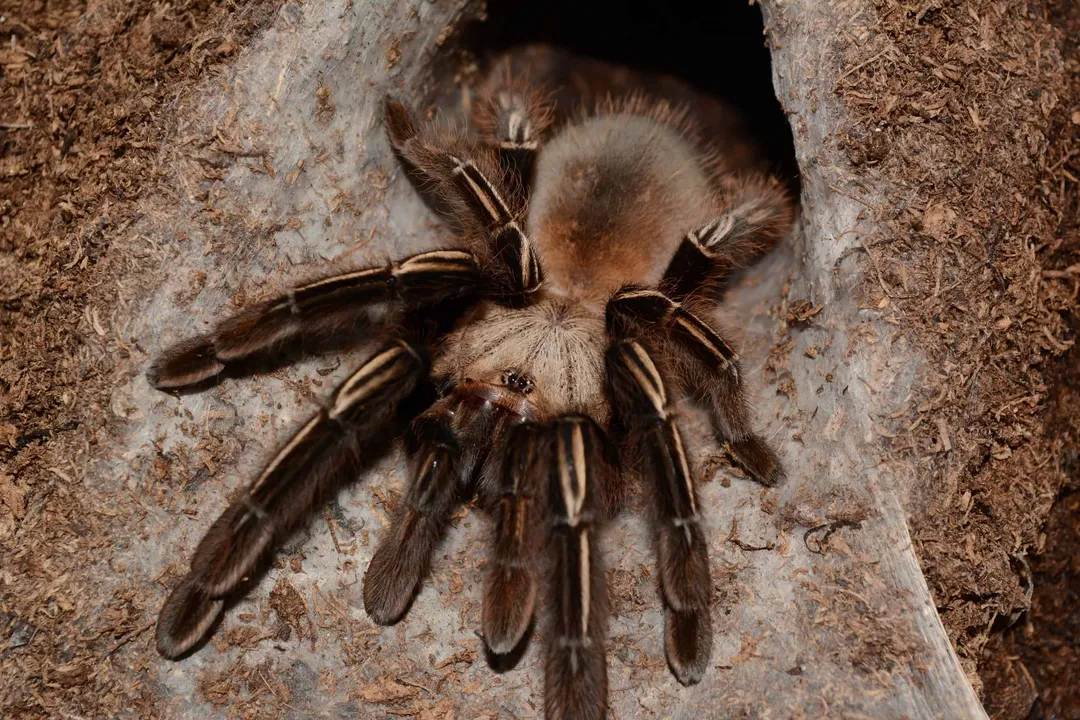
It shifts from an arboreal lifestyle as spiderlings to a terrestrial, fossorial existence as adults.
Spiderlings live in trees, often in bromeliads, but as the spider matures, it transitions completely to living on the ground, excavating deep burrows.
Related Questions
How is the venom potency of *Ephebopus murinus* generally described regarding human health risk?What visual characteristic gives the Skeleton Tarantula its common name?What is the fundamental shift in habitat preference for *E. murinus* as it matures from a juvenile to an adult?Unlike many New World tarantulas, where are the urticating hairs uniquely located on *Ephebopus murinus*?What is the typical lifespan comparison between adult male and female Skeleton Tarantulas in captivity?What shape is the deep burrow actively excavated by the adult, fossorial *E. murinus*?What localized effects are commonly reported following a mild bite from this tarantula?How does the Skeleton Tarantula deploy the urticating hairs located on its pedipalps?Why is the species generally not recommended for absolute beginners?Where do spiderlings and juveniles of *E. murinus* construct their silken retreats?When the tarantula rears up in a threat pose, which appendages increase the risk of immediate hair bombardment toward the keeper?Which geographical area defines the natural domain of the Skeleton Tarantula?