Where are Rough-legged Hawks found?
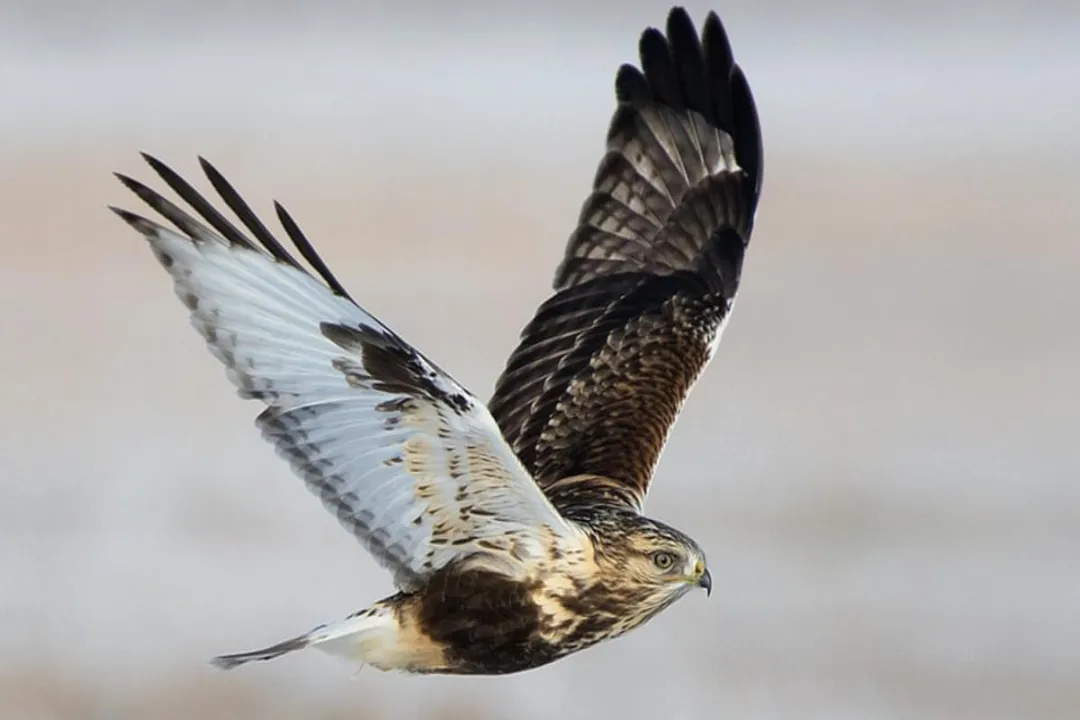
The presence of the Rough-legged Hawk is intrinsically tied to the vast, open spaces of the northern latitudes and the expansive agricultural lands further south during the colder months. These birds are renowned for their circumpolar distribution, meaning they breed in the Arctic regions surrounding the North Pole and then disperse across immense distances for the winter. [1][2] To truly pinpoint where this raptor is found requires looking at two very different maps: one for the summer and one for the winter. [3]
# Tundra Home
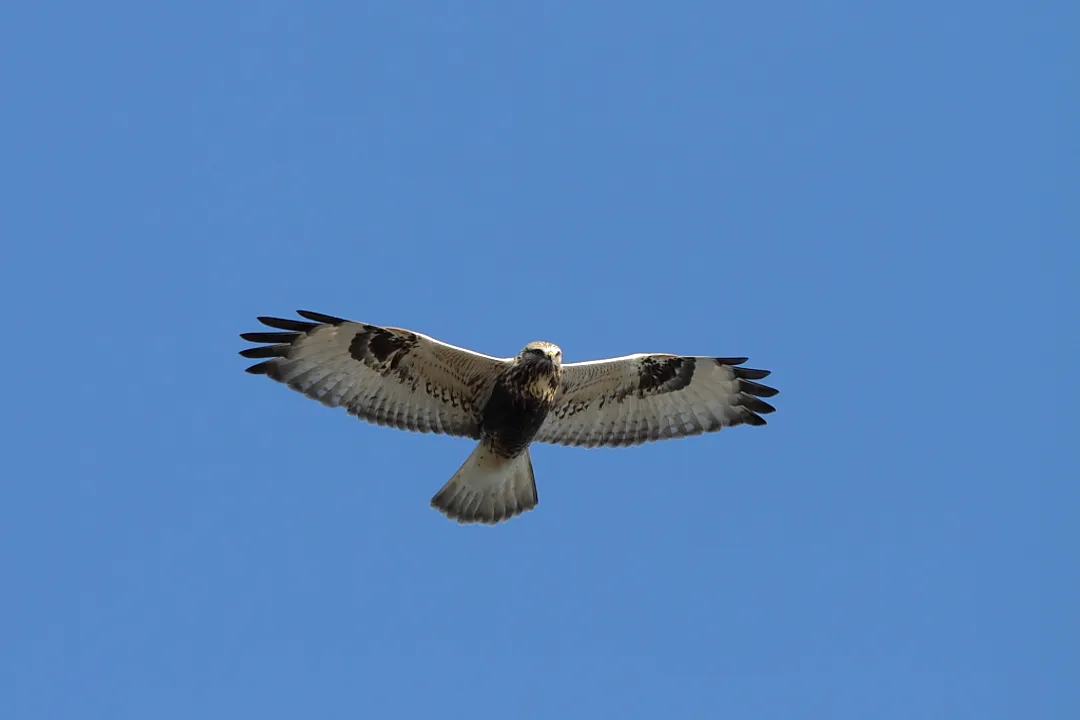
During the breeding season, which spans from roughly May through August, the Rough-legged Hawk establishes its territory across the Arctic and subarctic regions of the globe. [4] In North America, this means the open terrain of Alaska and the Canadian Arctic. [1][4] This environment is characterized by treeless tundra, which suits their nesting habits perfectly. [5] They require ground area to build their nests, often choosing elevated spots like mounds, cliffs, or hummocks within these sweeping, open landscapes. [4][5]
Across the Atlantic and Pacific, their breeding grounds extend into the Old World, covering the northern reaches of Eurasia. [2] This includes areas of northern Europe and Siberia. [2] The key element linking all these disparate northern locations is the lack of tall, dense forest cover. This preference for treeless environments is a critical factor defining their summer location. [5] When you consider the sheer scale of the Arctic, the area occupied by breeding Rough-legged Hawks is enormous, though the population density might be relatively low across that span. [1]
# Winter Range
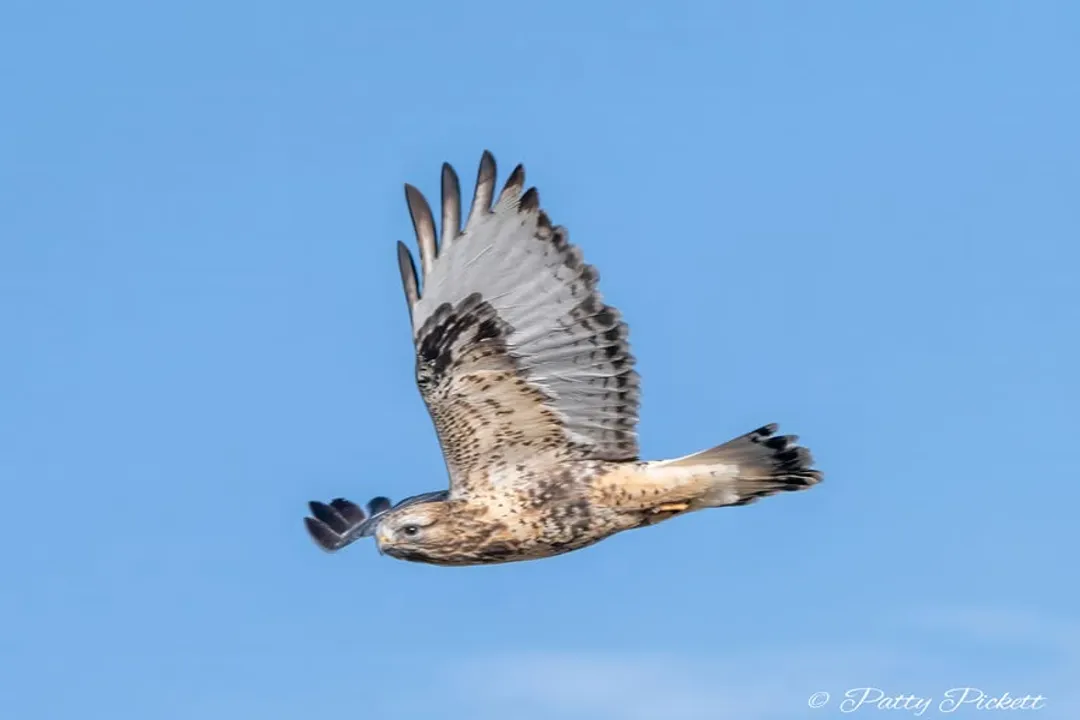
As the short Arctic summer ends and the ground begins to freeze, these hawks undertake remarkable migratory journeys south to find more accessible prey and warmer conditions. [1][4] The wintering range is considerably wider and more varied than the breeding range, stretching across the temperate zones. [2]
In North America, the winter distribution generally covers southern Canada and most of the contiguous United States, though there are some notable exceptions. [1][3] They are less common in the far southeastern U.S., such as the lower coastal areas, but can be found widely across the central and western states. [1][4] For example, observers in places like Montana or the Great Plains are far more likely to encounter them between November and March than in the dense forests of the Pacific Northwest or the deep south's subtropical environments. [5][4]
In the Old World, where they are often known as the Rough-legged Buzzard, the winter distribution mirrors the pattern seen in the Americas, covering southern Eurasia. [2] This includes the milder latitudes of Europe and parts of southern Asia. [2] The common thread connecting their wintering locations, whether in the American Midwest or across Central Europe, is their attraction to open, treeless terrain. [4][5]
If you are tracking the migration during the shoulder seasons, say in late October moving south or early April moving north, you might find surprisingly high concentrations in migration corridors, such as along coastlines or mountain ridges that funnel the birds efficiently between their two primary zones. This often results in an observational spike that doesn't reflect their actual summer or winter density, but rather the bottleneck effect of geography on movement. [1]
# Seasonal Shift
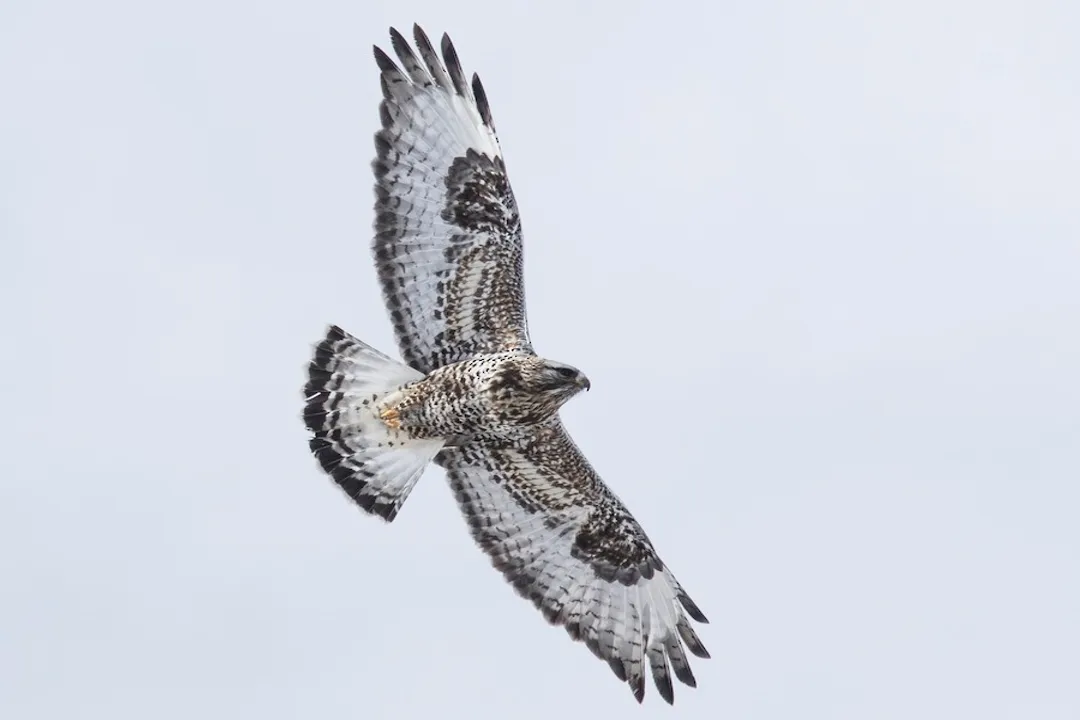
Rough-legged Hawks are long-distance migrants, and their movement is strongly linked to the availability of their primary prey—small rodents, particularly voles and lemmings—which fluctuate drastically between the Arctic summer and the northern winter. [1][4] The timing of their arrival and departure is predictable yet variable, influenced heavily by the weather each year. [4]
In North America, southbound movement typically begins in September and continues into November, with many birds arriving on their wintering grounds by December. [4] The northward return journey begins in late February or March, with birds reaching their northern breeding sites by May. [4] The specific latitude an individual bird reaches in the winter often correlates with how severe the preceding winter was in the north; a colder, harsher northern winter usually pushes the entire population further south across the United States. [4]
This migratory behavior creates distinct patterns of overlap. For instance, during late fall, you might find birds in the northern tier of the US that are still actively migrating, positioned between the true winter residents further south and the stragglers leaving the subarctic. [4] Understanding the difference between a migrant and a winter resident is key to accurately reporting their location using platforms like eBird. [8]
# Preferred Landscape
While the general location dictates the continent and latitude, the type of landscape dictates successful overwintering or breeding success. [5] The name Rough-legged Hawk implies a bird adapted for cold, which is evident in its preference for open country across its entire range. [1]
Consider the contrast between the two primary habitats:
| Habitat Type | Primary Season | Characteristics | Bird Behavior |
|---|---|---|---|
| Arctic Tundra | Summer (Breeding) | Treeless, vast, low vegetation, high rodent availability | Nests on low mounds or slight elevations [4] |
| Open Fields/Grassland | Winter (Non-breeding) | Agricultural fields, prairies, marshes, deserts without dense trees [5] | Perches on fence posts, utility poles, or low structures [4] |
The consistent theme here is visibility. These hawks prefer to hunt where they can easily spot small prey from a distance, utilizing their excellent eyesight. [5] They often hunt by soaring high or performing characteristic hovering flight above open fields, looking down for movement in the grass below. [1][4] This behavior means that even within the wide southern range, they will actively avoid areas with high, dense tree canopies, even if those areas are geographically located within the general wintering zone. [5] A hawk watcher trying to find one in Iowa, for example, should focus on the edges of cornfields or cattle pastures rather than wooded river bottoms. [5]
This habitat preference suggests an interesting ecological pressure: while the Arctic provides the necessary isolation for breeding, the accessible prey base in the southern agricultural zones makes the winter range viable, provided the hawks can find adequate perches. [5] If you look at a range map, the areas where they are not found in winter—like the heavily forested regions of the eastern US or the dense tropical forests—are defined by the lack of this preferred visual corridor for hunting. [3][5]
If you are trying to maximize your chances of observing this species in the lower 48 states, focusing your efforts on the region roughly between the Dakotas and Texas, extending west toward the mountains, during the depths of winter offers the highest probability, as this area encompasses the vast, flat, and open grasslands that mimic the conditions they seek. [4] The species' adaptability to human-modified landscapes, like farm fields, is what allows its winter range to be so broad across the American interior. [4] The bird itself is a symbol of the great, windswept spaces, whether they are the truly wild ones of the Arctic or the managed open expanses of the continent's heartland. [1][2]
Related Questions
#Citations
Rough-legged Hawk - All About Birds
Rough-legged buzzard - Wikipedia
Rough-legged Hawk | Audubon Field Guide
Rough-legged Hawk - Raptor Identification - HawkWatch International
rough-legged buzzard or rough-legged hawk ... Idaho - Facebook
Rough-legged hawk - The Raptor Center
Rough-legged Hawk Buteo lagopus - eBird
Buteo lagopus - Rough-legged hawks - Animal Diversity Web
Rough-legged Hawk - Montana Field Guide