What type of skeleton does a tarantula have?
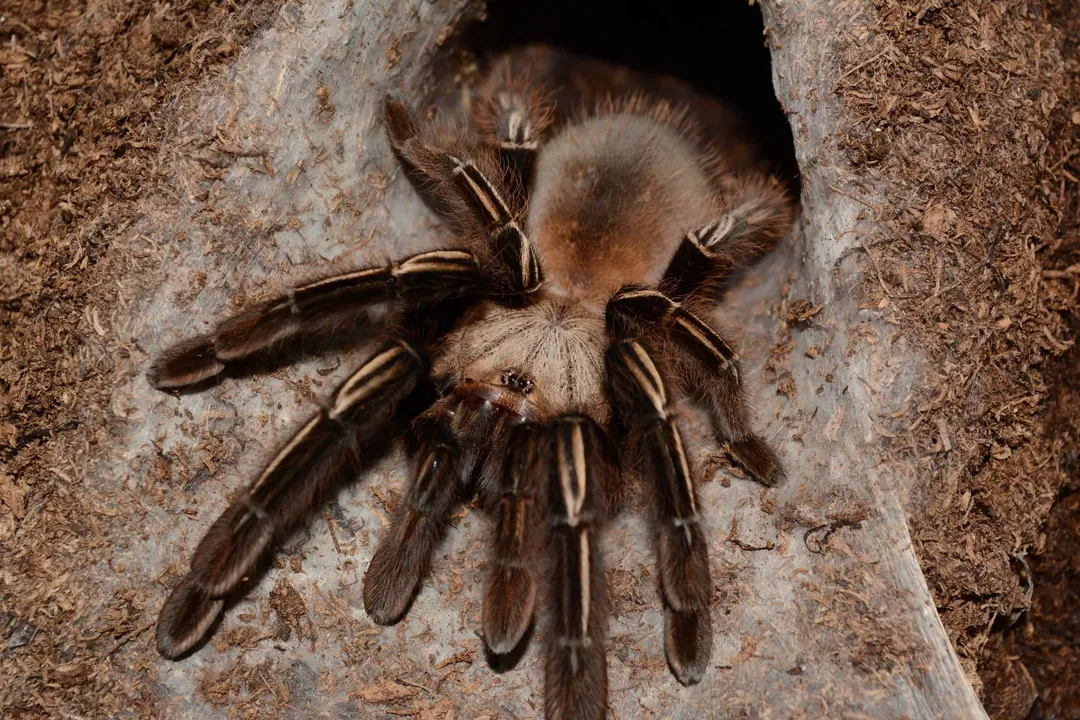
The creature commonly known around the world as the Skeleton Tarantula holds a captivating place among arachnids, largely due to its striking appearance and somewhat intimidating reputation. For those encountering this species, whether in its native jungle habitat or perhaps a specialized collection, the immediate focus shifts to its most defining feature: its peculiar coloration that gives it its name.
# Naming Origin
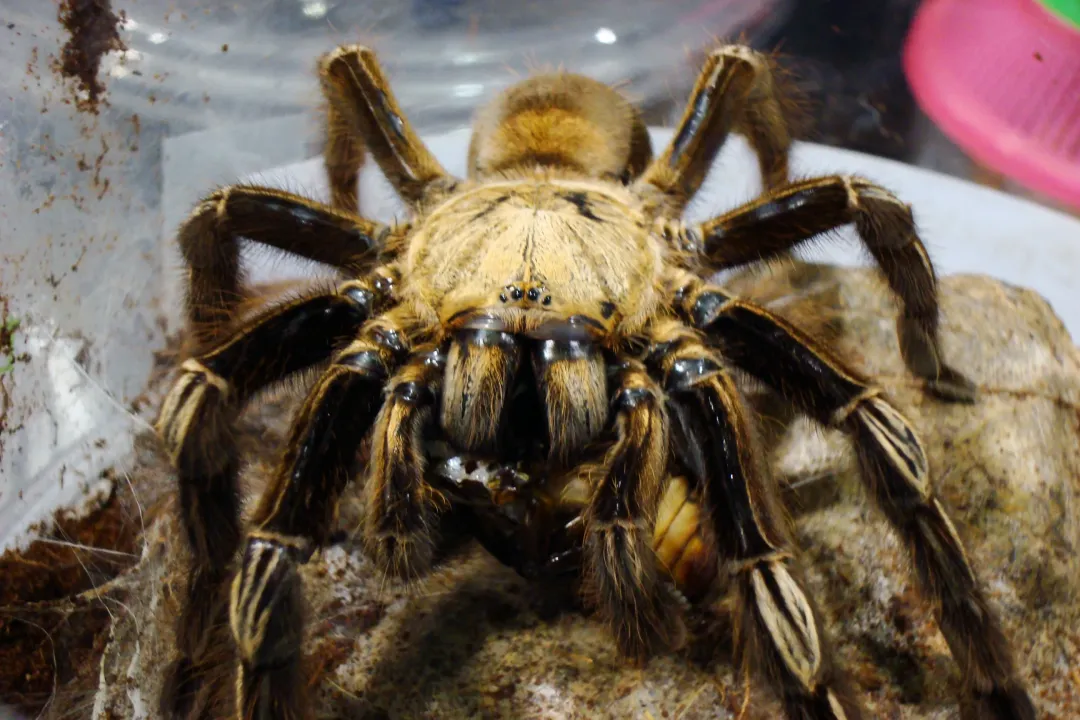
The common name, Skeleton Tarantula, is directly inspired by the visual pattern displayed by this particular species, Ephebopus murinus. Unlike many other tarantulas whose coloring might be more uniformly dark or subtly patterned, the Skeleton Tarantula sports a dark body—often black or deep brown—contrasted sharply by its legs, which are notably pale, frequently described as yellowish-white or stark white. This high contrast gives the illusion, especially when viewed quickly, of pale bones or a skeletal structure supporting a dark central mass. It is sometimes also referred to as the Skeleton Leg Tarantula, or even, confusingly in some contexts, the Purple Starburst Tarantula, though the latter moniker is sometimes associated with different regional color morphs or related species.
# Arachnid Anatomy
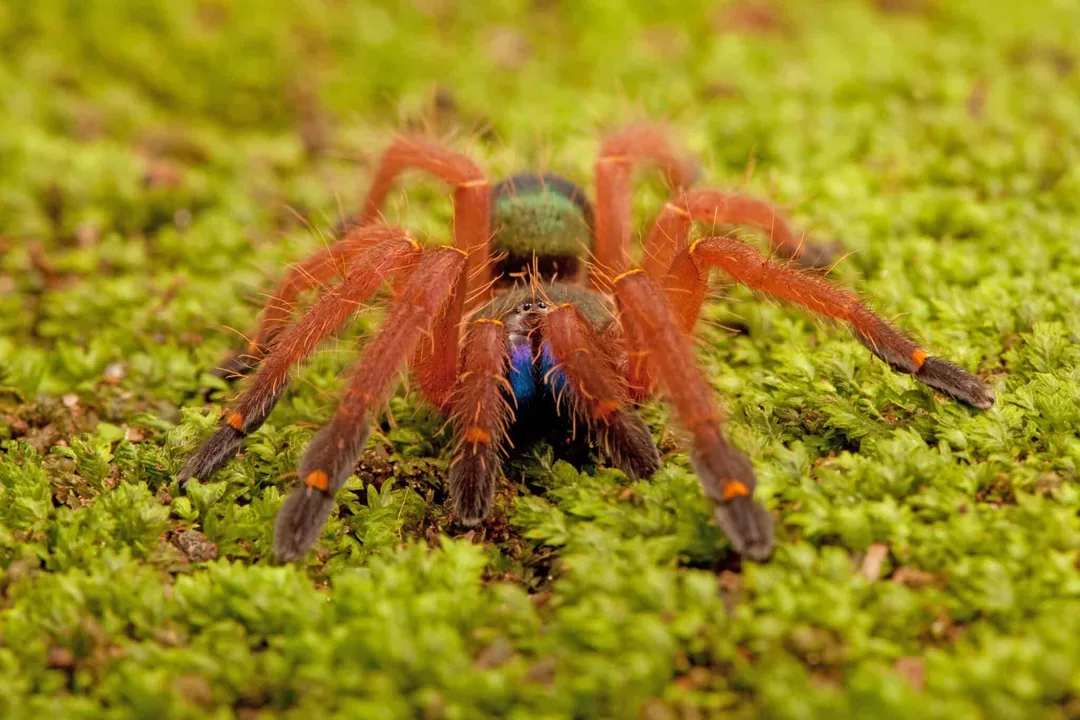
When discussing the "skeleton" of any spider, including the Skeleton Tarantula, we are fundamentally referring to its exoskeleton. Tarantulas, being arthropods, do not possess an internal bone structure like mammals or reptiles; instead, their support system is external. This tough, chitinous outer layer provides protection against predators and physical damage, while also serving as the attachment point for their muscles, allowing for movement. This external armor is periodically shed in a process called molting, allowing the animal to grow. The unique look of E. murinus is purely a result of the pigment distribution within this external casing, where the leg segments lack the dark pigments found on the cephalothorax and abdomen. It’s interesting to consider that while the name suggests a structure akin to a vertebrate skeleton, the reality is a layer of specialized, calcified protein that must be broken and regrown for the animal to increase in size.
# Distribution and Habitat
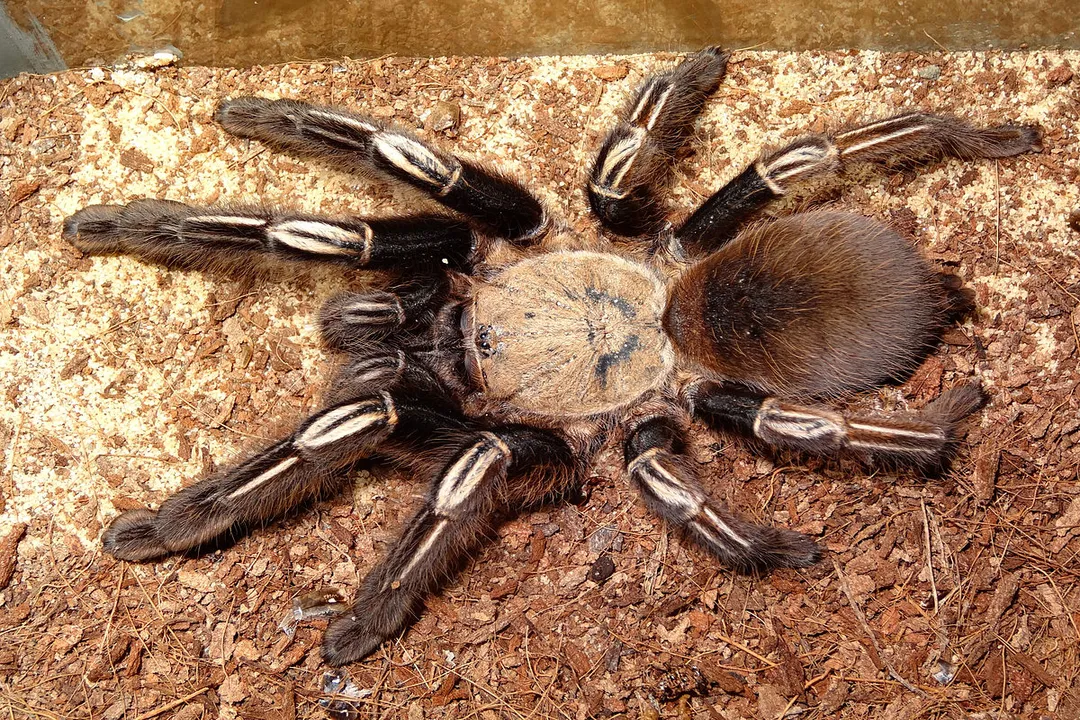
The natural range of the Skeleton Tarantula is rooted firmly in the tropical regions of Northern South America. Specifically, they have been documented in areas like French Guiana, Brazil, and Suriname. These environments are characterized by dense rainforests, which provide the high humidity and consistent temperatures that this species requires to thrive.
Their behavior in the wild is strongly linked to their preference for these damp, shaded locales. Ephebopus murinus is classified as a terrestrial or, more accurately, a fossorial species. This means they are highly adapted to living on or under the ground, spending a significant portion of their lives constructing and residing within elaborate silk-lined burrows. They often create these silk-lined tubes deep within the soil, sometimes near tree roots or fallen logs, using the entrance as a strategic hunting perch rather than roaming widely.
# Temperament and Defense
Interactions with the Skeleton Tarantula, whether in the wild or under human care, often reveal a creature that is decidedly not for the novice keeper. They are generally regarded as fast and possessing a defensive temperament. While all tarantulas possess venom, the E. murinus is known for having potent venom, warranting respect and careful handling—though many keepers prefer observation over physical interaction with this species.
A key behavioral characteristic linked to its defensive posture is its tendency to rear up in a threat display, often showing off the warning colors on its abdomen or presenting its fangs. It is also important to note that, like many New World tarantulas, they possess urticating hairs on their abdomen which can be kicked off as a secondary defense mechanism against perceived threats. When we assess their tendency to bolt or posture, it’s clear their dark, terrestrial life has selected for rapid evasion rather than prolonged confrontation.
If you are observing one that has recently emerged from its retreat, particularly in a captive setting, note how quickly it moves its pale legs across the substrate; this speed is a survival trait honed by its environment, allowing it to escape predators or seize unwary prey in near darkness.
# Husbandry Considerations
For those involved in the pet trade or exotic animal keeping, understanding the Skeleton Tarantula’s needs goes beyond just noting its striking look; their biology dictates specific environmental parameters. Because they are obligate burrowers that require high humidity, keepers must replicate their native forest floor conditions as closely as possible.
One critical aspect of their care revolves around the substrate. Since the Skeleton Tarantula spends so much time underground, the depth of the substrate is more important than for an arboreal species. A common recommendation for a healthy E. murinus setup involves providing several inches of appropriate substrate, often peat moss or coconut coir, allowing them ample material to dig and construct their deep tunnel systems. Failure to provide sufficient digging material can lead to stress or potentially cause injury if the spider attempts to burrow into the hard bottom of the enclosure. Furthermore, maintaining high humidity levels is non-negotiable, usually achieved through deep substrate layers that hold moisture consistently, rather than just misting the surface. For instance, an enclosure might require a substrate layer that is one-third the height of the tank itself to accommodate their natural inclination to excavate deep. This direct adaptation of care to their fossorial nature highlights how much their external skeleton and associated lifestyle influence their survival requirements.
# Comparing Tarantula Skeletons
While the Skeleton Tarantula’s defining characteristic is its name, it shares the basic skeletal framework common to all spiders and other arachnids. The general structure is consistent across the entire tarantula family (Theraphosidae), differing only in subtle ways that reflect lifestyle, such as leg length relative to body size or the thickness of the exoskeleton.
For example, comparing the E. murinus to a highly arboreal tarantula—one that lives in trees—reveals differences in proportion, even though both rely on the same external support system. A tree-dwelling species might have proportionally longer, more delicate legs suited for gripping bark, whereas the terrestrial E. murinus has legs built for supporting weight on the ground and digging. The core components remain the same: the fused head and thorax, known as the cephalothorax, and the abdomen. Their muscles attach internally to the chitinous plates of this exoskeleton, allowing for the precise, rapid movements that both species exhibit, whether scrambling up a trunk or bursting from a burrow. The variation in color pattern, as seen in the Skeleton Tarantula, is a result of pigments within this shared structural template, not a change in the fundamental skeletal design itself.

# Sensory World
Like other spiders, the Skeleton Tarantula relies heavily on vibrations detected through specialized sensory organs on its legs to navigate its world, which is often dark, whether in deep shade or underground. The fine hairs and slit sensilla on their appendages translate ground movement—such as the footsteps of potential prey or a predator—into signals the nervous system can interpret. While their eyesight is generally poor, these vibratory senses are highly acute, making the integrity of their leg structure, protected by that pale exoskeleton, paramount to their survival. A damaged leg on a burrowing tarantula can severely hinder its ability to hunt, dig, or defend itself.
# Video Insights
Viewing footage of the Skeleton Tarantula provides tangible context to the descriptions of its speed and defensive nature. Videos often capture the stark visual contrast between the dark body and the pale legs, confirming the source of its common name. Observing an adult E. murinus move, even if it is only crossing a glass enclosure, emphasizes the efficiency of its external support system. The movements are often startlingly quick, showcasing an almost instantaneous transition from stillness to full sprint, which is a hallmark of a species that relies on ambush tactics from a fixed location. Pay close attention in high-resolution footage to the subtle way they use their legs to test the substrate before committing to a full movement—it speaks volumes about their reliance on tactile information over visual cues.
This species’ life hinges on its burrow, which acts as a safe zone where it can rest, regulate humidity, and monitor its surroundings for meals without the constant risk of exposure to predators or harsh sunlight. The exoskeleton protects the soft tissues during the vulnerable molting process, which happens within the safety of this silk-lined haven. When we consider the environmental pressures of a rainforest floor, the dual function of that hard, external structure—protection and support—becomes the central element defining the success of Ephebopus murinus.
#Videos
Halloween Species Showcase, Ephebopus murinus - YouTube
Skeleton Tarantulas! Ephobopus Genus Care ft. 4 Species - YouTube
Related Questions
#Citations
Skeleton tarantula - Wikipedia
Skeleton Tarantula - What is It? Are They Dangerous? What You ...
Butterfly Pavilion's post - Facebook
Skeleton Spider Guide: Costumes, Care & Complete Facts - Blog
Skeleton Tarantula Ephebopus murinus - Reptile Apartment
Skeleton Tarantula: Breed Info, Temperament & Adoption - WeRescue
Halloween Species Showcase, Ephebopus murinus - YouTube
Skeleton Tarantula - Ephebopus murinus - A-Z Animals