Where do rough-legged buzzards live?
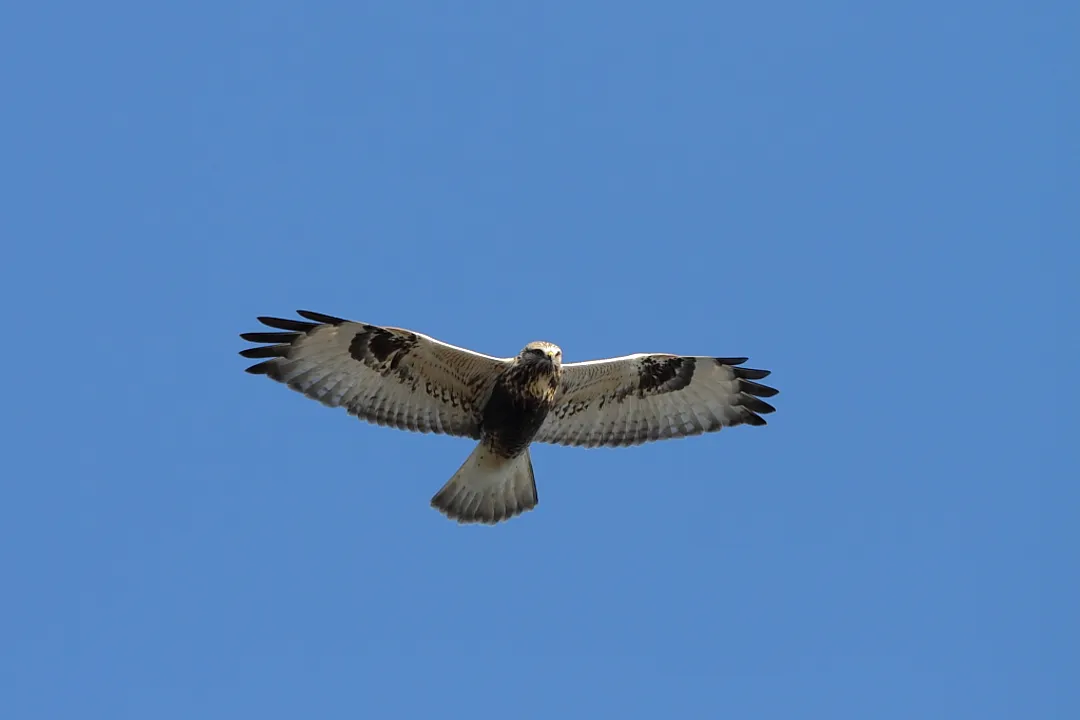
The Rough-legged Buzzard, known as the Rough-legged Hawk in North America, is defined by its incredible seasonal relocation, tying its life cycle to the extremes of the Northern Hemisphere's climate. This bird possesses a truly circumpolar distribution, meaning its breeding and wintering grounds span the globe across the northern latitudes. [1][8] To understand where these magnificent raptors live, one must look at two very different worlds: the frozen expanse where they raise their young, and the warmer, often flatter lands where they escape the deep winter cold. [6][9]
# Arctic Territory
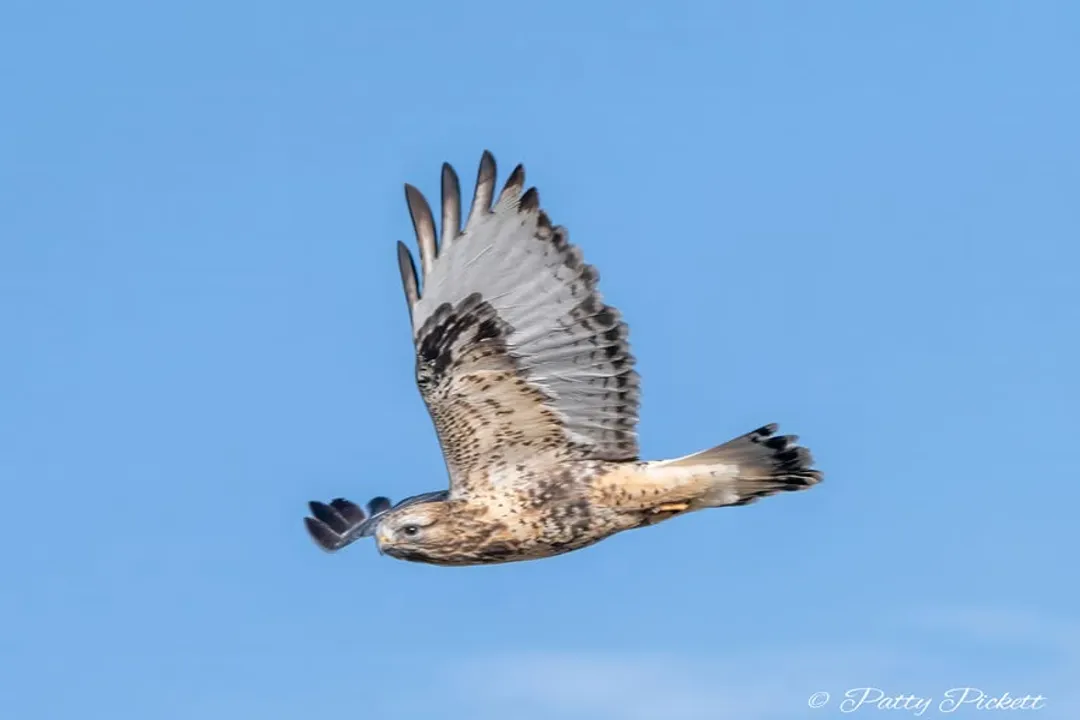
The primary nesting areas for the Rough-legged Buzzard are located deep within the Arctic regions. [5] These birds choose the vast, treeless expanses of the Arctic tundra, as well as the transitional zones of the taiga and boreal forest for establishing their breeding territories. [1][9] This harsh northern environment provides the open sightlines necessary for hunting their primary prey during the short summer months. [1][7]
The breeding range splits distinctly between the Old World and the New World. In North America, the population establishes its nests from northern Alaska and stretches across the expansive territories of northern Canada. [1][7] Greenland is also included in the North American breeding map. [1] Across Eurasia, the nesting map covers Scandinavia, Finland, and extends eastward across the immense Siberian landmass. [1] Essentially, wherever the continuous permafrost and low, scrubby vegetation define the landscape, you are likely to find them nesting during the short Arctic summer. [8] Their success in rearing young hinges on the seasonal explosion of small mammal populations, like lemmings, that populate these northern zones. [7]
# Seasonal Shifts
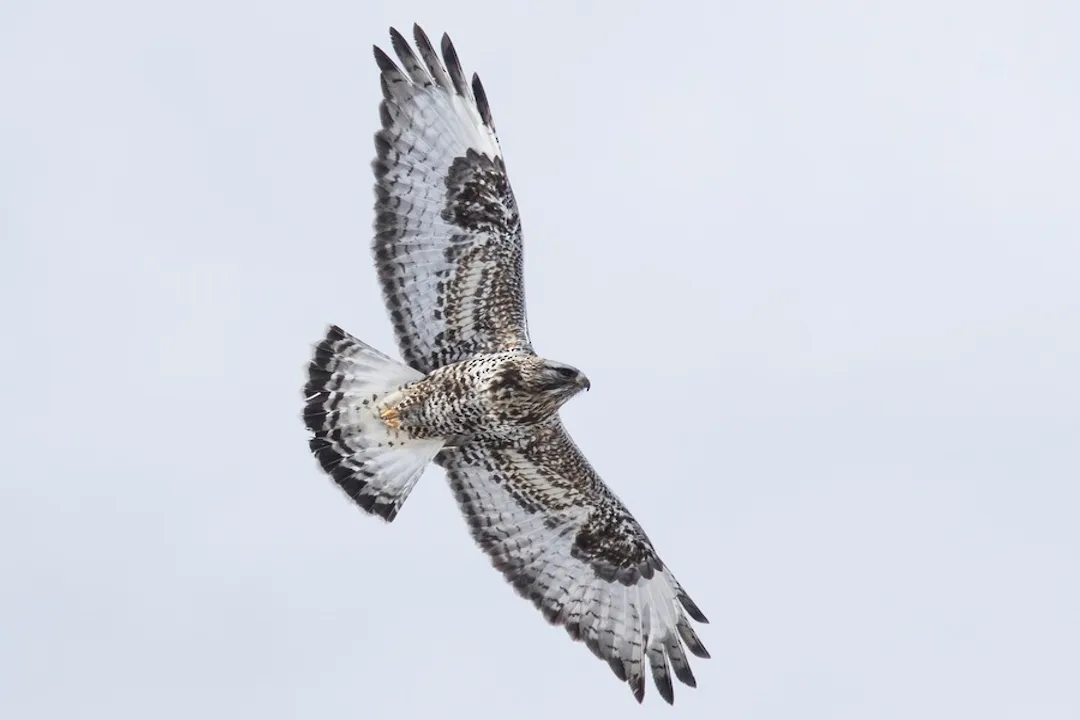
The decision to leave the tundra is not a whim; it is a biological imperative driven by environmental stress. As the Arctic begins to freeze over and the ground solidifies, the availability of the small rodents and birds that sustain the buzzards drops dramatically. [6] This sharp decline in food resources triggers their massive southward migration, a journey undertaken by the entire population. [3]
The migration itself is a testament to endurance. These raptors are known to undertake significant long-distance movements to reach more hospitable wintering locations. [3] Unlike some migratory birds that move in dense flocks, the movement of Rough-legged Buzzards is often spread out over time, making their presence an indication of the changing seasons across broad latitudes. [1]
When comparing the requirements of the breeding season versus the non-breeding season, the shift is profound. During the summer, they need a vast, low-vegetation zone for hunting small mammals in open terrain. [1][8] By winter, they seek areas where the ground cover is sufficient to support rodents but where the snow cover is less persistent or less deep than the high Arctic, allowing them to still hover and spot prey near the surface. [9] This fundamental difference—from nesting above the tree line to wintering in grasslands—means the bird occupies two completely different ecological niches within the same annual cycle.
# Wintering Grounds
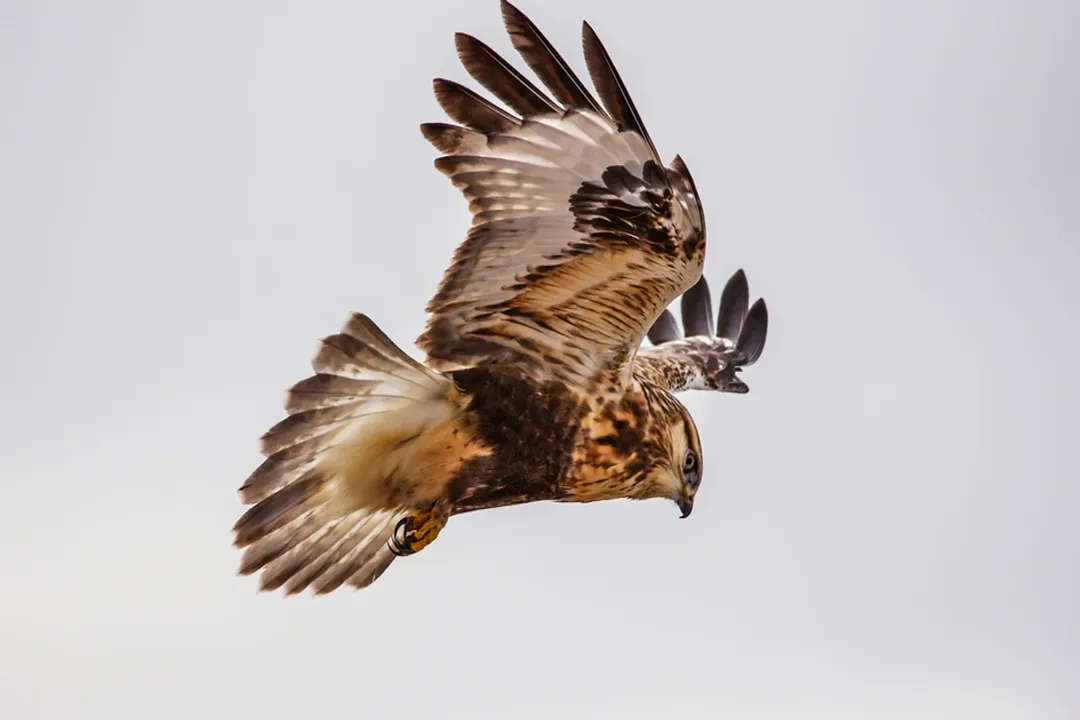
Once the migration is complete, the Rough-legged Buzzard settles into its wintering habitat, which is notably more temperate and geographically spread out than its breeding grounds. [1][7] In North America, the birds travel south across the lower 48 states. [9] They are frequently observed across the central United States, reaching states like Kansas, Missouri, and Oklahoma, and often extending down toward the Gulf Coast, including Texas and Louisiana. [7] While they are winter visitors to the central US, sightings further south, even into the southern border states, are recorded, though less common than in the central plains. [1]
Across the Eurasian continent, the wintering map covers Southern Europe, extends into North Africa, touches the Middle East, and reaches deep into Southern Asia. [7] While they spend summers soaring over the treeless expanse, their winter territories favor environments that still offer excellent visibility for hunting, but with more shelter options nearby. [1]
The preference for open country remains consistent across continents during winter. You are most likely to spot a Rough-legged Buzzard perched on fence posts, telephone poles, or low trees scattered across prairies, grasslands, coastal dunes, and marshes. [1][9] These areas offer the same crucial advantage as the tundra—unobstructed views of the ground to locate voles, mice, and shrews, which form a large part of their winter diet. [7]
# European Passage
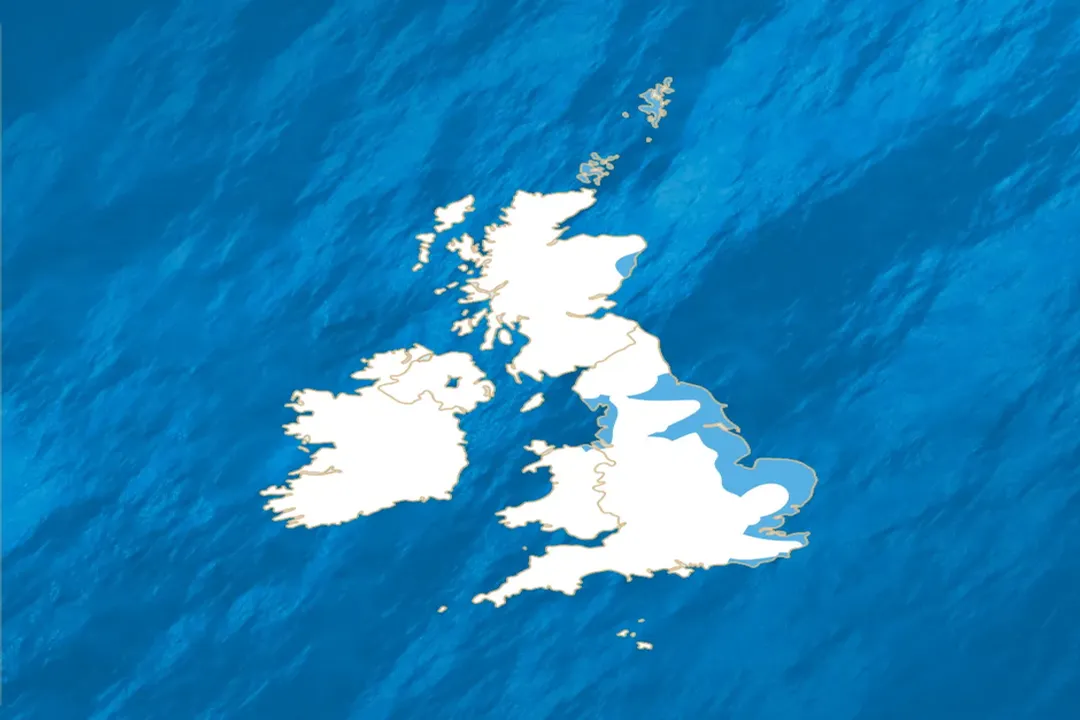
For observers in Western Europe, the Rough-legged Buzzard is more of a transient visitor than a year-round resident, with the exception of a few determined individuals. [3][6] The United Kingdom, for instance, experiences the bird primarily as a passage migrant, meaning birds passing through on their way further south, or as a scarce overwintering species. [6]
When they do decide to stay in the UK for the winter, the majority tend to concentrate in eastern England. [6] Here, the flatter, often agricultural landscapes and coastal wetlands provide suitable foraging areas that mimic their preferred southern habitats in continental Europe. [1] However, even in their preferred European wintering spots, they are generally less numerous than the resident raptors, making any sighting a notable event for local birdwatchers. [3]
# Observing Their Presence
For birders interested in tracking this species, understanding the timing of their arrival and departure from intermediate areas is key. For instance, in areas like the central US, the peak of winter presence might be between November and March, with early spring observations showing birds beginning to orient northward again. [7] A helpful strategy when looking for them in a transitional zone, such as the Great Plains in mid-winter, is to focus scouting efforts near large, flat agricultural fields bordered by scattered lines of trees or power lines, rather than dense woodland areas, as the latter offers poor hunting visibility. [1][9] This behavior contrasts sharply with many resident Buteos that prefer woodland edges or more complex topography for hunting year-round. Their reliance on low-lying prey in open environments dictates their presence more than proximity to human settlements, although they are quite tolerant of human activity when hunting is good. [7]
The sheer scale of their required habitat to support the entire population, from the Arctic breeding grounds to the temperate wintering grounds, means that conservation efforts must span multiple continents and ecosystems. A healthy population of Rough-legged Buzzards serves as an indicator of the health of the distant Arctic tundra, as their numbers directly reflect the stability of those remote northern ecosystems. [1][6]
Related Questions
#Citations
Rough-legged buzzard - Wikipedia
rough-legged buzzard or rough-legged hawk ... Idaho - Facebook
Fascinating Facts About the Rough-legged Buzzard
Rough-legged Hawk Buteo lagopus - eBird
Rough-legged Buzzard Facts For Kids | AstroSafe Search - DIY.ORG
Rough Legged Buzzard Facts | Buteo Lagopus - RSPB
Buteo lagopus - USDA Forest Service
Buteo lagopus - Rough-legged hawks - Animal Diversity Web
Rough-legged Hawk | Audubon Field Guide