What historically caused the parti pattern to appear less frequently in mainstream Miniature Schnauzer breeding lines?
Answer
Early breeders often culled or downplayed the gene pool, favoring deviations from the emerging ideal standard.
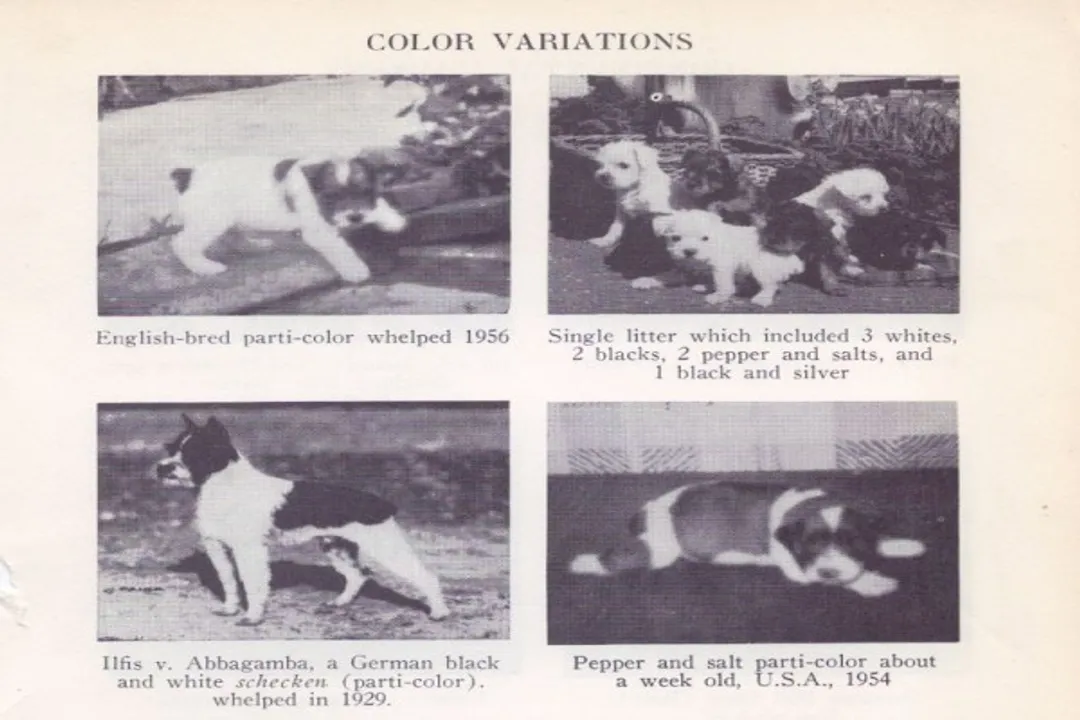
The parti pattern is noted as being present in the Schnauzer lineage since the breed's inception, appearing naturally in litters alongside standard colors. The reason for its reduced frequency in mainstream lines stems from historical breeding decisions. Early breeders focused intensely on establishing an 'ideal standard,' and any deviation, particularly colors perceived as complicating the breed's image or marketability, was often actively eliminated or de-emphasized through selective breeding practices aimed solely at meeting the prevailing recognition standards.
Related Questions
What four main colors does the American Kennel Club (AKC) officially recognize for the Miniature Schnauzer?What official status does the AKC assign to a Miniature Schnauzer exhibiting the classic parti pattern in the conformation show ring?Which major international body, unlike the AKC, does recognize the parti coloration in Schnauzers?What historically caused the parti pattern to appear less frequently in mainstream Miniature Schnauzer breeding lines?What is a common financial consequence for acquiring a parti Schnauzer puppy in the U.S. market compared to a standard-colored counterpart?What is the main reason breeders focusing exclusively on achieving top AKC show titles often avoid intentionally producing parti puppies?What practical consideration should be paramount for a family seeking a parti Schnauzer primarily for companionship?What distinguishes the genetic reality of the parti pattern from its implied frequency within AKC-focused breeding pools?How is the physical appearance of a Parti Schnauzer defined in terms of its coat coloration?What implication does the AKC's rejection of the parti color have on a breeder's program that prioritizes show success?