Are parti Schnauzers rare?
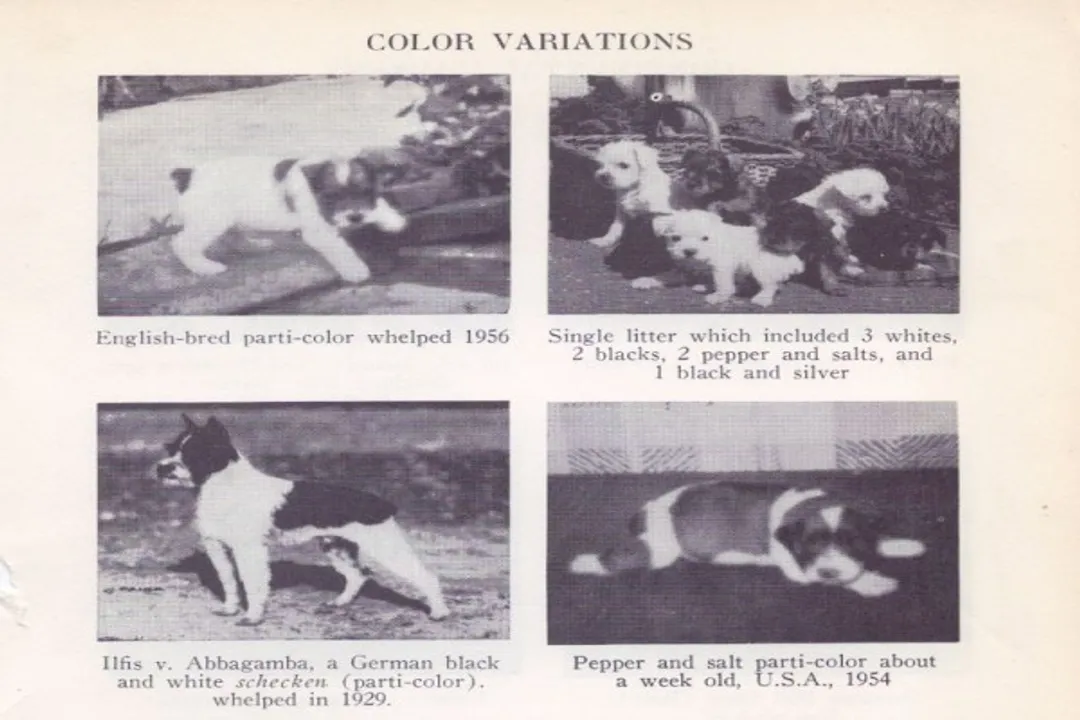
The Parti Schnauzer, displaying patches of white alongside a standard color like black, salt and pepper, or silver, occupies a curious space within the breed community. While visually striking, the primary question surrounding their abundance often circles back to official acceptance rather than sheer genetic frequency. To many prospective owners looking for a Miniature Schnauzer, the parti coloration appears infrequently, leading to the assumption of true rarity. However, the story is less about scarcity and more about standards and market demand driven by kennel club rules. [3][7]
# Color Recognition
The core of the Parti Schnauzer's perceived rarity lies in the differing viewpoints of major international kennel clubs regarding coat color. [3][6] In the United States, the American Kennel Club (AKC) recognizes four main colors for the Miniature Schnauzer: Salt & Pepper, Black & Silver, Solid Black, and Solid White. [4][8]
A dog exhibiting the classic parti pattern—which involves distinct patches of white combined with any of the accepted colors—is officially considered a disqualification or a fault in the eyes of the AKC show ring. [4][7][8] This designation means that even if a parti-colored puppy is structurally perfect and possesses excellent temperament, it cannot compete for championship points in an AKC conformation show. [6][8]
Conversely, other international bodies, such as the Fédération Cynologique Internationale (FCI), do recognize the parti coloration. [3][6] This international acceptance means that genetically, the color is just as valid as the solid colors. The distinction is purely administrative and affects how breeders orient their programs within specific geographical markets. [6]
# Historical Presence
The parti pattern is not a modern aberration or a new crossbreed; it has been part of the Schnauzer lineage since the breed's inception. [3] Historically, these multicolored dogs appeared naturally in litters alongside the now-standard salt and pepper puppies. [3] Early breeders, however, often viewed any deviation from the emerging ideal standard—especially colors that might complicate the breed's image or marketability—as something to be eliminated. [3]
This historical culling or downplaying of the parti gene pool, often favoring puppies with the "correct" solid or patched coloring recognized by early kennel clubs, contributed to their less frequent appearance in mainstream breeding lines that aimed solely for breed standard recognition. [3]

# Market Dynamics
Because the AKC does not recognize the parti color for championship status, there is a noticeable difference in how these puppies are valued and marketed compared to their standard-colored counterparts in the U.S. market. [1][4] Breeders focusing exclusively on achieving top show titles often avoid intentionally producing parti puppies because they are automatically relegated to companion or pet-only registration status by the AKC. [6][8]
This lack of conformation potential often translates directly to the purchase price. Buyers have reported acquiring parti Schnauzer puppies for less money specifically because they are not AKC-recognized colors. [1][9] For instance, if a breeder has a litter where the standard colors are intended, a parti puppy appearing is viewed as a deviation from the primary goal, leading to a lower price point for the pet-seeking buyer. [9]
It is interesting to observe how the market reacts to this genetic reality. A breeder focused on pet homes might happily produce parti puppies because the temperament and structure are what matter most to their clientele, while a show-focused breeder might selectively place them, often with strict spay/neuter contracts, or sell them to pet homes at a reduced fee. [1][5] The existence of dedicated breeders who specialize in parti Schnauzers, as indicated by specialized breeder websites, shows there is a stable, if niche, demand for these distinctly marked dogs. [5]
# Measuring Actual Frequency
If the color is genetically present, how rare are they truly? Anecdotally, they appear irregularly across litters. [2] One breeder noted a small litter of three where two puppies were parti-colored, resulting from parents that were a black/silver and a salt/pepper. [2] This illustrates that the genes responsible for the pattern are present even in lines that primarily produce standard colors. [3]
While we don't have official registry statistics tracking the birth rate of parti Schnauzers versus standard colors, we can infer a couple of points based on the breeding focus:
| Color Type | AKC Recognition Status | Typical Market Emphasis | Implied Breeding Frequency |
|---|---|---|---|
| Salt & Pepper/Black & Silver/Solid Black/Solid White | Accepted for Championship | Show Ring & Breeding Stock | High |
| Parti (Patched White) | Disqualification/Fault | Pet Homes/FCI Markets | Lower in AKC-focused lines |
If a majority of established, registered breeders are prioritizing the four AKC-recognized colors to maintain championship lines, the likelihood of any given puppy being a parti is statistically lower within those specific breeding pools. [7] It is a matter of selection pressure applied by breeders aiming for a specific outcome, not necessarily a reflection of the gene being difficult to express naturally. [3]
If you are considering a parti Schnauzer primarily because you love the unique look, understanding the breeder’s focus becomes an important first step. A breeder who advertises exclusively AKC Grand Champions might have fewer parti puppies simply because they are actively screening them out of their breeding stock, whereas a dedicated parti breeder is actively selecting for the pattern. [5] In essence, one might be rarer than the other depending on which kennel you are looking at.
# Choosing a Parti Puppy
When seeking out a parti Schnauzer, prospective owners need to be aware that they are buying a dog whose lineage may not trace back through generations of AKC champions, regardless of the dog’s quality as a companion. [8] This is less about the dog's worth and more about the paperwork it carries.
For the average family seeking a loyal, intelligent, bearded companion for companionship, the lack of an AKC championship title is irrelevant to their daily happiness. [9] The temperament, training response, and health screening of the parents should remain the paramount concerns, just as they would for any purebred dog. [4] A responsible breeder, whether parti-focused or standard-focused, should be able to provide health clearances for common Schnauzer issues, irrespective of the coat color they produce. [7]
One practical consideration for prospective owners is understanding the long-term implications of registering with smaller clubs. While the AKC may not recognize the color, registration with other organizations might still be possible, though typically this is only necessary if the owner intends to show the dog in performance events or companion shows that do not restrict color. [6] For pet ownership, the focus should remain tightly on responsible sourcing rather than pedigree minutiae. The vibrancy of the parti pattern is often a direct indicator of the underlying genetics being expressed, and choosing a breeder who celebrates that expression ensures you find a dog that fits your aesthetic preference from the start. [2]
Related Questions
#Citations
Parti Schnauzer : r/MiniatureSchnauzer - Reddit
Can liver or parti miniature Schnauzers be shown in conformation?
Parti History of the Miniature Schnauzer
Miniature Schnauzer Colors
Stearns.Parti.Minischnauzer.Haus
Are Parti colours acceptable or not? - The Schnauzer Forum
What are the rarest Mini Schnauzer colors? - Quora
AKC Miniature Schnauzer Color Information
Expert Answers on Purebred and Parti Schnauzer Puppies