Are parti-colored Schnauzers purebred?

The striking appearance of a parti-colored Schnauzer often prompts a question among newcomers to the breed: is this dog truly a purebred Schnauzer? Their coats, featuring distinct patches of color—often black, white, liver, or combinations thereof—stand in sharp contrast to the solid or traditionally marked Schnauzers seen in the show ring. While they possess the characteristic furnishings, alert expression, and temperament of their breed counterparts, their coloring places them in a unique and sometimes debated category within the purebred world.
# Standard Colors

To understand the status of the parti Schnauzer, one must first look at what major breed registries officially recognize as standard. The American Kennel Club (AKC) recognizes three primary colors for the Miniature Schnauzer: Salt and Pepper, Black and Silver, and Solid Black. The American Miniature Schnauzer Club (AMSC) also confirms that the accepted colors are Salt & Pepper, Black & Silver, and Solid Black. A solid white dog is also sometimes seen and may be accepted by some kennel clubs, but within the AKC standard, white is actually listed as a disqualifying color for championship competition, though white dogs can still be registered. This focus on a limited palette immediately highlights why the parti pattern deviates from the expected norm.
# Parti Definition
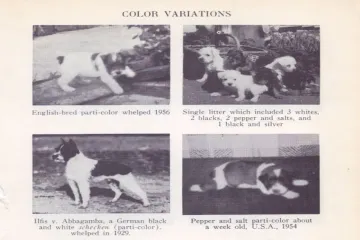
A parti-colored Schnauzer is defined by having a base color with distinct patches of white, covering less than fifty percent of the body. This pattern is not a random mix but a specific genetic expression. While the traditional Schnauzer colors are accepted by the AKC, the parti pattern is generally listed alongside other non-recognized colors such as merle, liver, and wheaten, depending on the specific club's current registry rules. A specific variation sometimes mentioned is the Liver and Tan Parti Schnauzer. Despite the difference in coat appearance, these dogs share the same essential breed characteristics and genetic heritage as their recognized counterparts.
# Recognition Status

The key distinction for the parti Schnauzer rests not on parentage—as they are often the result of two recognized Schnauzers breeding—but on registration and exhibition rules defined by governing bodies. The American Miniature Schnauzer Club has been clear: colors like merle and parti are not recognized by the AKC. This means that while you may meet a dog whose pedigree traces back entirely through purebred lines, if it exhibits the parti pattern, it is generally ineligible to compete for conformation championships in the AKC ring. For many owners and enthusiasts, this is a critical point of understanding; the dog is purebred by lineage but not by conformation standard.
If a puppy is born from two registered Miniature Schnauzers, it inherits a purebred pedigree. However, if a recessive or previously unseen color gene expresses itself as a parti pattern, the resulting dog is subject to the non-recognized color clause in the breed standard. In the context of the AKC, which dictates the rules for American championship shows, this means the dog carries a disqualification for that specific judging venue.
# Genetic Inheritance
The appearance of the parti color is simply the result of a specific set of genes being inherited, often recessive ones, which are present in the Schnauzer gene pool. It is not an indication of crossbreeding, though this is a common assumption when an unexpected color appears. Think of it like inheriting a specific eye color; if both parents carry the gene for blue eyes, they might both have brown eyes but still produce a blue-eyed child. In the case of the Schnauzer, the genes responsible for the distinct colored patches are present but are masked or overridden by the genes dictating the standard Salt and Pepper, Black and Silver, or Solid Black appearance. For a breeder deeply committed to the show circuit, producing a parti puppy means accepting that the dog, despite its excellent temperament and structure, cannot earn the official titles that contribute to a championship title.
When considering a parti Schnauzer, prospective owners are often choosing a companion animal whose primary appeal lies in its personality and structure, rather than its show potential according to the mainstream kennel clubs. This creates a bifurcated community where one segment focuses intently on the written standard for competition, and another celebrates the genetic variation that yields these beautiful, unique coats. Many owners of parti Schnauzers are happy to accept this classification, appreciating that their dog is structurally sound and possesses the wonderful Schnauzer nature, even if the color itself falls outside the established norms for competition.

# Breeder Intentions
The decision to register or intentionally breed for parti colors is where the focus shifts from genetic purity to breed standard adherence. A breeder who produces a parti Schnauzer from two recognized parents has produced a purebred dog that fails to meet the visual standard for show competition. Conversely, a breeder intentionally producing parti Schnauzers might register them in clubs that do recognize the color, or they might simply focus on producing healthy pets without concern for official conformation rankings.
This distinction often confuses buyers. If you see a parti Schnauzer advertised, the critical question is whether the breeder is marketing it as a purebred pet or as a dog eligible for AKC/CKC/KC championship points. Because the color is a known genetic possibility within the breed, they are, by lineage, purebred, but they are disqualified from competing against the standard. A good rule of thumb for any potential owner is to request to see the pedigree papers, which will show the lineage of recognized ancestors, confirming the dog's heritage even if the color is non-standard.
It is interesting to observe how this situation forces a decision point in breeding philosophy. If a breeder consistently produces parti puppies, they are implicitly prioritizing genetic expression outside the established AKC aesthetic. This results in a strong line of dogs that are excellent companions but which cannot officially "prove" their conformation quality in the most visible competitive arenas. The continued presence of these dogs in the gene pool, even if they are not actively shown, demonstrates the persistence of these color genes within the overall Schnauzer population.
# Community Acceptance
While kennel clubs impose strict rules for official recognition, the general dog-loving community often embraces the variation. Online groups and forums dedicated to Schnauzers frequently feature discussions and photos of parti-colored individuals, with many members confirming their dogs' purebred status through ancestry documents. This ground-level enthusiasm suggests that for the vast majority of pet owners, temperament, health, and familiar structure outweigh adherence to a specific color regulation set by a registry.
The presence of multiple colors, including the controversial ones like merle and parti, reminds us that breed standards evolve and sometimes lag behind the natural genetic expressions present in the population. For a prospective owner, deciding if a parti Schnauzer is "purebred" becomes a matter of definition: are you asking if it has Schnauzer ancestry (yes) or if it meets the official, color-specific show requirements of the AKC (no)? Ultimately, the parti Schnauzer represents a segment of the breed whose beauty is recognized by many, even if the show system deems its coat a deviation from the established ideal.
Related Questions
#Citations
Can liver or parti miniature Schnauzers be shown in conformation?
Parti Schnauzer! Yes, he's really a schnauzer. - Reddit
Gallery of Colors - The American Miniature Schnauzer Club
Miniature Schnauzer Colors
Miniature Schnauzer Dog Breed Information - American Kennel Club
Parti Schnauzer Dog Breed - World Animal Foundation
Parti Schnauzer Dog Breed Complete Guide - A-Z Animals
Liver and Tan Parti Schnauzers