What functional adaptation were the proportionally long forelimbs of *Xiaotingia* hypothesized to be used for?
Answer
Flapping
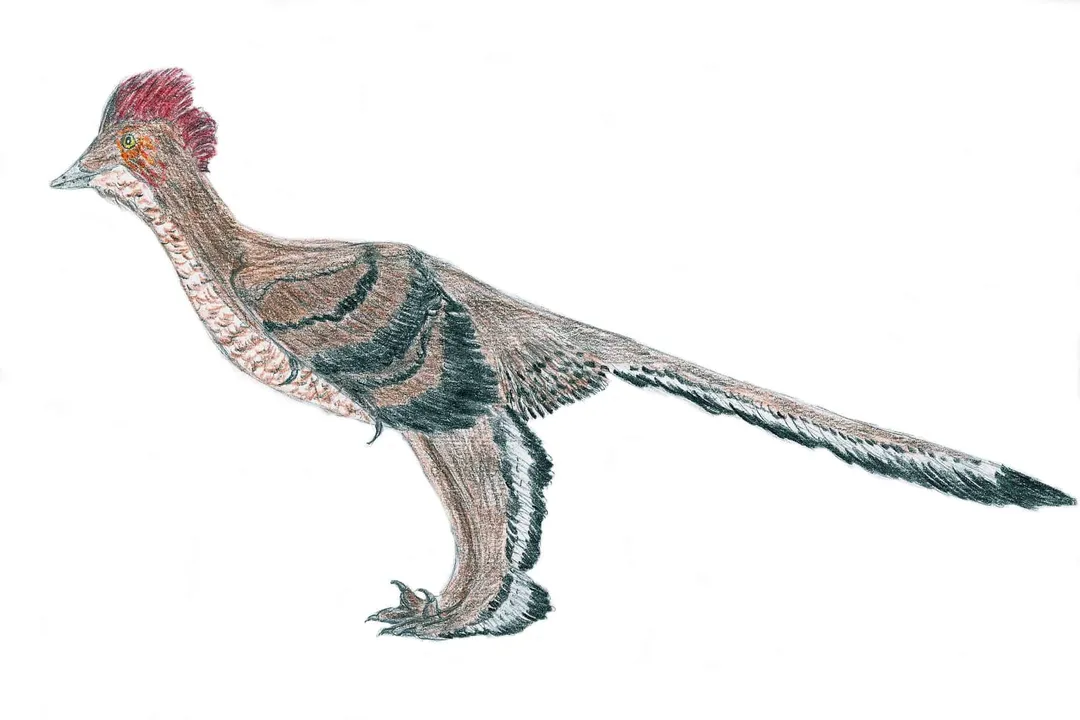
The structure of the limbs in *Xiaotingia* is crucial for understanding its locomotion. Although the creature was fundamentally bipedal, its forelimbs were proportionally long, and these were heavily feathered. Experts hypothesize that these elongated, feathered forelimbs were adapted specifically for flapping motions. This capability, combined with evidence suggesting short-distance flight, points to an evolutionary step where forelimb manipulation became important for aerial maneuvering.
Related Questions
To which biological family does the dinosaur *Xiaotingia zhengi* belong, alongside its relatives?What was the approximate average length reported for the very small, bird-like dinosaur *Xiaotingia zhengi*?What functional adaptation were the proportionally long forelimbs of *Xiaotingia* hypothesized to be used for?Where were long, pennaceous feathers specifically noted to adorn the lower hindlimbs of *Xiaotingia zhengi*?What significant anatomical measurement relationship exists between the femur and the humerus in *Xiaotingia*?What is the presumed main component of the carnivorous diet for *Xiaotingia zhengi*, suggested by its reduced dentition?Which term describes the combination of lifestyle attributes for *Xiaotingia*, involving time spent both on the ground and in trees?How many teeth were believed to be present in the dentary bone of *Xiaotingia zhengi*?What was the maximum recorded length of the feathers growing from the femur of *Xiaotingia zhengi*?By approximately how many million years did *Xiaotingia zhengi* predate *Archaeopteryx* based on their respective geological ages?