Xiaotingia Physical Characteristics
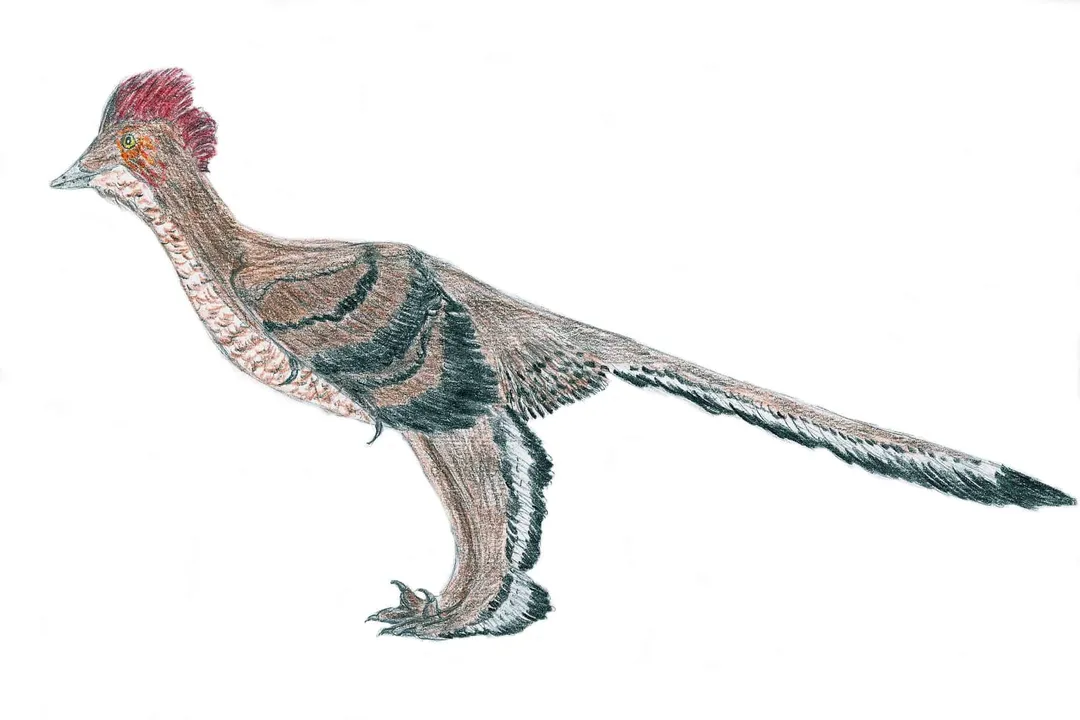
The discovery of Xiaotingia zhengi has added a fascinating piece to the puzzle of dinosaurian evolution, particularly concerning the origin of birds. Formally classified in 2011, this genus, found in deposits from western Liaoning, China, provides compelling fossil evidence alongside relatives like Archaeopteryx that birds arose from small theropod dinosaurs. Pronounced roughly “zhow-tin-gee-ah,” this extinct creature belongs to the Anchiornithidae family and existed during the Middle to Late Jurassic Period. Its near-complete skeleton, designated the holotype STM 27-2, was unearthed from the Tiaojishan Formation in the Linglongta area of Jianchang, China. This single, well-preserved specimen allows paleontologists a detailed look at a creature that straddled the line between non-avian dinosaurs and early avians.
# Size and Stature
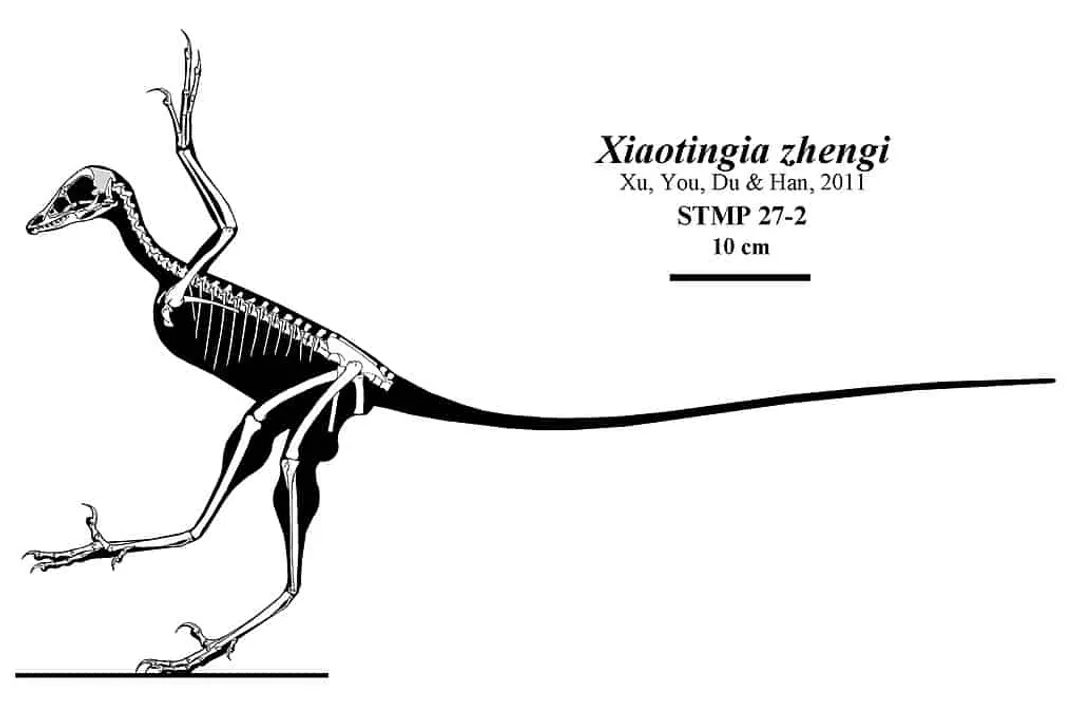
Xiaotingia was certainly not a giant among the Jurassic fauna; rather, it was a very small, bird-like dinosaur, often likened in stature to a modern hen or pigeon. Its average length is consistently reported as approximately 23.6 inches (60 cm). When considering mass, the figures are quite close: one assessment places the average weight at about 1.8 pounds (0.8 kg), while another estimates it slightly lower at 0.82 kg. Such minor variations in weight estimation are standard when dealing with skeletal remains, underscoring the difficulty in perfectly reconstructing the precise soft tissue mass of a creature that lived approximately 155 million years ago. Its relatively petite size meant that, despite its adaptations, it was likely easy prey for larger predatory dinosaurs roaming its habitat.
# Feathered Covering
One of the most striking physical attributes of Xiaotingia is the extent of its feather coverage, which supports its placement near the base of the avian lineage. Feathers were not restricted to just the body; they covered most of the dinosaur’s exterior, including the head, body, forelimbs, and hindlimbs. Experts specifically noted the presence of long feathers on the nape region. On the lower hindlimbs, long, pennaceous feathers adorned the tibia and metatarsus. The femur, or upper leg bone, also supported substantial plumage, with reports indicating these feathers reached lengths of up to 55 mm or about 2.16 inches. This density and distribution strongly suggest a creature heavily invested in its integumentary structures, moving far beyond simple filaments.
# Limb Structure
The structure and proportions of Xiaotingia's limbs are critical to understanding its behavior and evolutionary placement. It was fundamentally bipedal, standing and moving exclusively on its hindlimbs. However, the upper limb bone measurements reveal an interesting pattern: the femur was longer than the humerus. Despite this, the overall description notes that the forelimbs were longer than the hindlimbs. This apparent contradiction in upper limb measurements versus overall limb length points toward the lower sections of the arm—the structures analogous to the hand in modern birds—having significantly elongated feathers or perhaps a more extended metacarpal structure, which collectively contributed to the greater reach of the forelimb assembly.
These proportionally long forelimbs, heavily feathered as they were, appear adapted for more than just terrestrial movement. Experts hypothesize that they were used for flapping. Furthermore, the presence of long feathers on the hindlimbs, combined with the overall morphology, suggests Xiaotingia was capable of short-distance flights. This capability might have been achieved by using the feathered hindlimbs in conjunction with the forelimbs, essentially employing all four feathered limbs as a type of wing surface for short bursts of aerial movement. Given its probable arboreal tendencies, this short-range aerial ability would have been beneficial for navigating tree canopies or escaping immediate ground threats.
# Dentition and Diet
Moving toward the head, Xiaotingia displayed features that align it closely with basal avians. The dentary—the bone forming the lower jaw—is believed to have held fewer than 10 teeth. The morphology of these teeth is reported to be similar to those found in basal birds. While the exact structure of its snout is less detailed in the available summaries, this reduced tooth count is significant when compared to more primitive theropods. Based on its association with deinonychosaurs, which were largely carnivorous, Xiaotingia is presumed to have had a carnivorous diet, with insects likely forming the main bulk of its food intake. This suggests that the smaller, bird-like dinosaurs may have specialized in smaller prey items compared to their larger, more robustly toothed cousins.
# Phylogenetic Significance
The physical characteristics collectively paint a picture of a transitional form. Xiaotingia lived slightly before Archaeopteryx—around 155 million years ago, compared to Archaeopteryx's approximately 144 million years ago. Its size, feathered body, and limb structure place it firmly within the discussion of early bird evolution, leading to its classification within the Avialae. The fact that it shares the same environment in Jurassic China as other feathered dinosaurs like Anchiornis suggests that this region was a hotspot for avian experimentation. The specific anatomy, such as the femur being longer than the humerus, provides a different measurement baseline than some other early fliers, adding necessary contrast to the evolutionary path taken by creatures like Archaeopteryx. Analyzing this particular combination—the relatively long forelimbs combined with the feathered hindlimbs potentially acting as wings—offers a valuable case study in the varied experiments nature ran while developing powered flight from terrestrial runners.
| Feature | Xiaotingia zhengi (Estimate) | Comparison/Note | Citation Index |
|---|---|---|---|
| Length | ~60 cm (23.6 inches) | Similar to Archaeopteryx | |
| Weight | 0.8 kg to 0.82 kg (1.8 lbs) | Size of a hen or pigeon | |
| Femur vs. Humerus | Femur > Humerus (84mm vs 71mm) | Indicates forelimbs were still proportionally long overall | |
| Teeth Count | Less than 10 in dentary | Similar morphology to basal avians | |
| Feather Length (Femur) | Up to 55 mm (2.16 inches) | Long pennaceous feathers on tibia/metatarsus |
This creature's lifestyle would have involved spending significant time both on the ground and in trees, classifying it as partly terrestrial and partly arboreal. Given its limited flight capability—suggested for short distances only—it likely favored shorter trees rather than attempting to soar between very tall ones. The physical structure of Xiaotingia thus presents a complex picture of a small theropod developing key avian traits, perhaps utilizing its entire feathered limb surface for rudimentary aerial maneuvers, which informs our understanding of the varied strategies employed during the dinosaur-to-bird transition.
Related Questions
#Citations
Xiaotingia - Fossil Wiki - Fandom
Xiaotingia zhengi - A-Z Animals
Xiaotingia | fossil animal - Britannica