What feeding mechanism is implied for securing slippery squid without prominent grasping teeth?
Answer
Reliance on suction feeding or powerful jaw clamping.
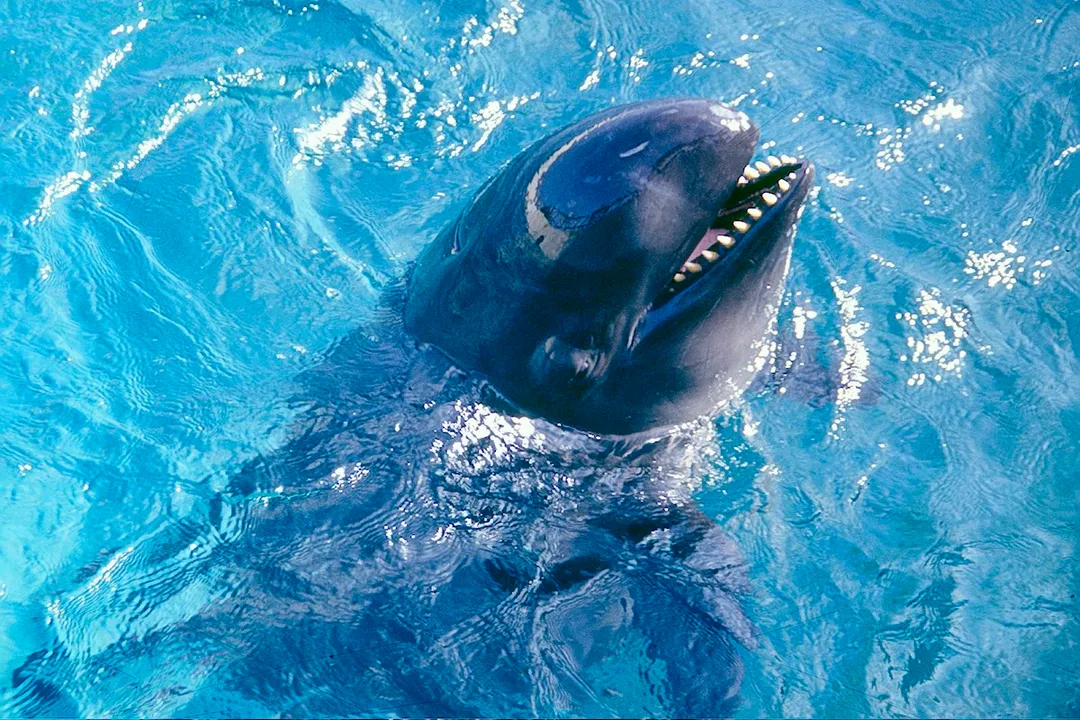
The anatomy of the false killer whale lacks the prominent grasping teeth found in some other toothed whales, creating a puzzle regarding how they successfully secure large, slippery prey like squid. To overcome this, it is inferred that they must heavily utilize powerful oral mechanics. This likely involves employing strong suction capabilities inherent in their jaws or exerting significant clamping force to firmly grip the prey item immediately prior to swallowing it whole. This capability demonstrates the considerable functional versatility of their oral anatomy necessary for capturing fast-moving cephalopods.
Related Questions
What constitutes the foundational diet for Pseudorca crassidens?How does the false killer whale's primary prey scale compare to the true killer whale (orca)?What role does squid consumption play in the diet of the false killer whale?What group of animals sets the false killer whale apart from being solely a fish-eater?Which specific pelagic fish species are confirmed prey for Hawaiian false killer whales?What type of fish dominates the diet of the Main Hawaiian Islands Insular Population?What feeding mechanism is implied for securing slippery squid without prominent grasping teeth?What social aspect likely facilitates the transfer of successful hunting techniques for specific prey?What inaccuracy does the common name of Pseudorca crassidens suggest regarding its kinship?How is the consumption of other marine mammals characterized in the false killer whale diet?