Are false killer whales friendly to humans?

The perception of false killer whales often begins with confusion. They are, despite the name, not true killer whales (orcas). [4][5] Instead, they hold the title of the largest member of the oceanic dolphin family, Delphinidae. [2][5] This distinction is important because while orcas are cetaceans often grouped separately in public consciousness, the false killer whale (FKW) shares lineage with faster, more traditionally "dolphin-like" species. [2] Their common name derives not from their behavior, but from the shape of their skull, which bears a resemblance to that of the orca, Orcinus orca. [10][5]
# Species Identity

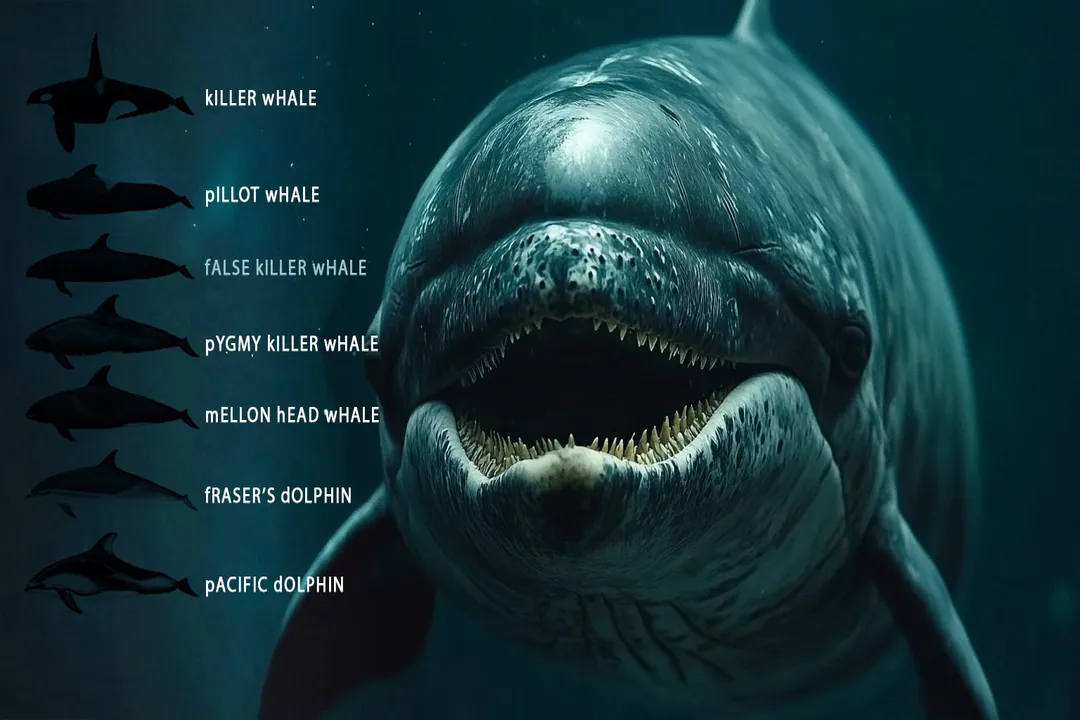
Understanding what they are helps contextualize their interactions, or lack thereof, with people. The false killer whale belongs to the genus Pseudorca. [10] They are large marine mammals, often appearing sleek and dark. [5] In terms of size, they are significant—though smaller than their namesake, the orca—and possess a streamlined body. [5] Their coloration is typically dark gray to black on the back and sides, contrasting with a lighter gray patch on the belly. [4][5] They possess a distinct, somewhat hooked dorsal fin and a blunt, rounded head, lacking the pronounced beak seen in many smaller dolphins. [5] This physical resemblance to a miniature orca is the primary reason for the lingering confusion regarding their temperament and classification. [4]
# Pod Living
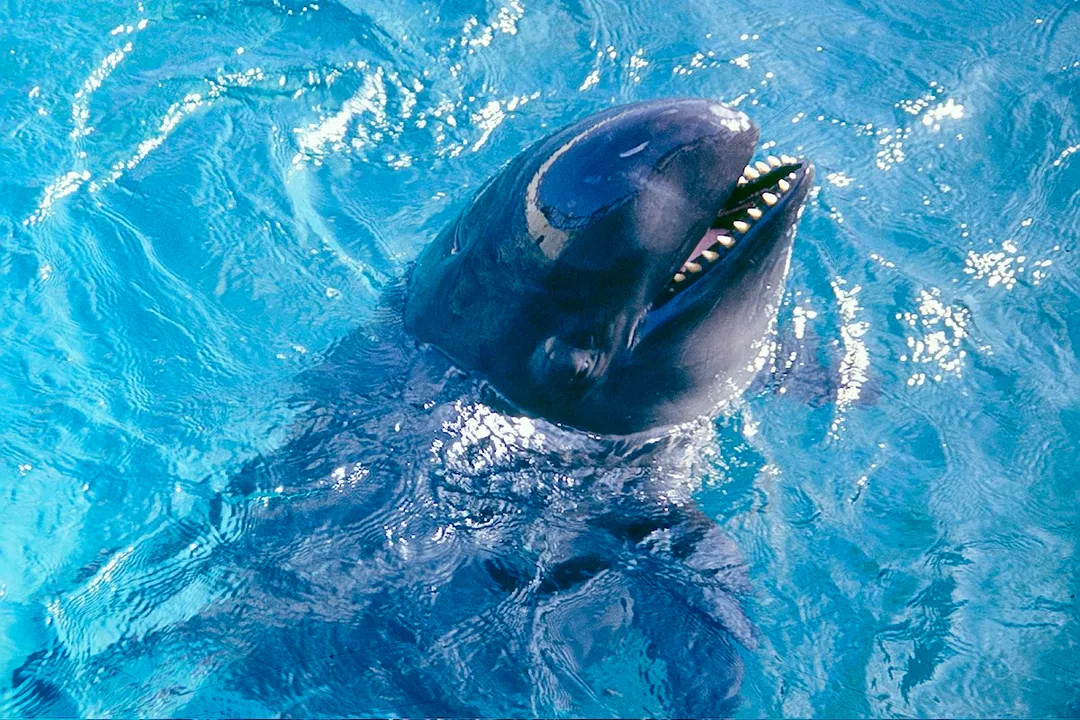
Like many other toothed whales and dolphins, false killer whales are intensely social animals. [5] They aggregate in groups, often referred to as pods, which can sometimes number in the hundreds, though smaller family units are also common. [3][5] This highly social structure implies complex communication and cooperative behavior, traits often associated with intelligence in cetaceans. [5] Observing them in these close-knit groups suggests a reliance on group cohesion for survival, hunting, and protection. [5] While the specific nuances of their social dynamics compared to bottlenose dolphins or orcas are still subjects of ongoing study, their obligate social nature is well-established. [5]
# Ocean Hunter

When assessing whether any wild animal is "friendly," one must look at its role in the ecosystem. False killer whales are apex predators within their niche. [7] Their diet is varied and robust, consisting primarily of fish, squid, and even smaller cetaceans, including other dolphins and small whales. [5][10] This places them firmly in the category of powerful hunters, not passive grazers. One description notes that while they look friendly, they hunt with the precision of an assassin. [7] This duality—a member of the dolphin family that rivals larger predators in its feeding habits—is key to understanding human interactions. They are not known for the playful curiosity often attributed to smaller, less imposing dolphin species. [7] Furthermore, some observers have noted behavior patterns that concern those who study them, implying a level of intensity or unpredictability in their actions. [9]
# Direct Contact
The core question regarding friendliness hinges on direct encounters with humans. Unlike some other cetaceans known for proactively approaching boats or swimmers, systematic documentation of consistently friendly behavior from false killer whales toward people is less prominent in general literature. [8] They are occasionally sighted near vessels, which could be interpreted as curiosity or opportunism, but they are not routinely listed among the species actively sought out by people hoping for close, safe contact. [8]
Given their size, predatory nature, and known ability to hunt cooperatively—a sign of high intelligence and coordination—any close encounter should inherently warrant caution. [5][7] While an animal might not be actively aggressive toward a human, its large size and powerful nature mean that an accidental interaction or a perceived threat could result in serious harm, simply due to the power differential. [9]
An interesting comparison can be drawn here: orcas, despite their "killer whale" moniker, often display nuanced interactions with humans, sometimes showing avoidance or curiosity without aggression in specific contexts. [6] False killer whales, however, carry the reputation of a highly effective predator that doesn't necessarily broadcast its intentions in the same way. [7] Thus, projecting the behavior of one dolphin species onto another is unwise.
One analytical point arises when considering the public's emotional response. People are often drawn to the idea of a sleek, dark dolphin that resembles a small orca, hoping for a friendly encounter typical of smaller dolphins. [3] However, recognizing that they are capable of taking down other marine mammals forces a necessary reappraisal of that expectation. [7][10] The apparent calmness or aloofness witnessed during brief sightings might simply be indifference or a neutral baseline, rather than an invitation for interaction.
Another angle for consideration involves their environment. Because they often travel in deep waters and deep pods, direct interactions are statistically less frequent than with coastal species like bottlenose dolphins, meaning the existing anecdotal evidence base is smaller and potentially skewed toward unusual events rather than routine social interaction. [5] For instance, if a pod is engaged in a coordinated hunt, approaching them would certainly trigger a defensive or non-receptive response, regardless of their species’ general disposition toward people.
# Behavioral Patterns
Reports hinting at "terrifying behavior patterns" associated with false killer whales underscore the need for respect and distance. [9] While the term is vague, in the context of a large, intelligent predator, it likely points toward high-speed chases, coordinated attacks on prey, or perhaps defensive maneuvers when threatened or harassed by boats. [9][5] True friendliness in marine mammals usually involves approachability, voluntary interaction, and a lack of predatory posturing toward the observer. For the FKW, the available evidence leans more toward acknowledging their capability as formidable hunters who should be observed from a respectful distance. [7]
If one were to create a simple guideline based on the known facts, it would be this: treat the false killer whale as a powerful, wild predator, much like one would an orca, rather than a playful companion like a smaller spinner dolphin. Their intelligence is used for complex group hunting, which requires focus and efficiency—qualities that generally do not translate into casual friendliness toward unfamiliar large objects like boats or swimmers. The physical appearance cues friendliness, but the ecological data suggests otherwise.
# Final Summary
To directly answer the question: false killer whales are not reliably documented as "friendly" to humans in the way that some smaller, more terrestrial-oriented dolphin species might be. They are large, highly intelligent, cooperative apex predators whose primary focus is hunting large prey. [5][7] While they may not actively seek confrontation, their power demands caution. [9] Any interaction that occurs is more likely to be characterized by the animal’s indifference or focus on its own social activities than by demonstrable approachability or playfulness toward people. [8] They are best appreciated from a distance, recognizing them as majestic, powerful members of the dolphin family whose name reflects their ancestry, not their temperament toward us. [4][10]
Related Questions
#Citations
Orca's more menacing relative. The False Killer Whale. - Reddit
False Killer Whales: The Overlooked Dolphins of the Sea
Viral Video Has People Terrified Of False Killer Whales - GreaterGood
If you thought this animal was a killer whale, that would be false ...
False killer whale - Whale & Dolphin Conservation USA
Why are orcas so friendly towards humans but one of the most ...
The Fascinating False Killer Whale: Separating Fact from Fiction
False Killer Whale Behavior Patterns Concern People
False killer whale - Wikipedia