What factor related to Xenoceratops's size necessitated an efficient method of initial plant breakdown by the beak?
Answer
Estimated weight over 2 tons requiring substantial daily raw material
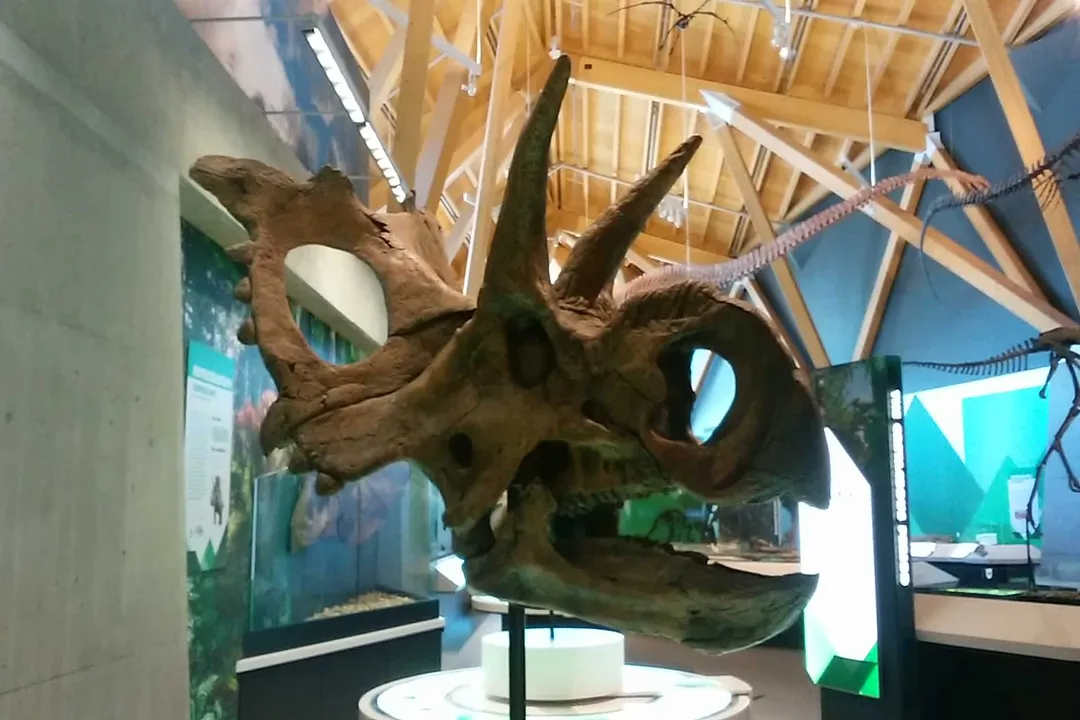
Xenoceratops was an extremely large animal, estimated to weigh over 2 tons and stretch about 20 feet long. Maintaining such massive bulk requires a huge daily caloric intake, meaning a substantial amount of raw plant material had to be consumed regularly. Because the subsequent internal digestive stages are complex and time-consuming (relying on fermentation), the initial step of processing—handling the sheer volume of bulk foliage—had to be managed by an extremely efficient mechanism. This efficiency was provided by the cutting and shearing action of the parrot-like beak.
Related Questions
What kind of existence did Xenoceratops foremostensis share with the Triceratops family?What was the likely purpose of the unique cranial ornamentation on Xenoceratops?Which structure was the workhorse for initial breakdown of bulk foliage in Xenoceratops?Which combination of flora likely constituted the reconstructed menu for Xenoceratops in ancient Alberta?What digestive process was Xenoceratops likely reliant upon for bulk digestion of plant material?Why is Xenoceratops considered a critical data point for tracking specialization in Canadian ceratopsians?How did the existence of dry spells in its environment influence the required robustness of Xenoceratops's anatomy?How was the specialized, parrot-like beak of Xenoceratops designed to function regarding tough vegetation?What does the likely forage selection of Xenoceratops suggest about its browsing habits compared to sauropods?What factor related to Xenoceratops's size necessitated an efficient method of initial plant breakdown by the beak?