Xenoceratops Diet
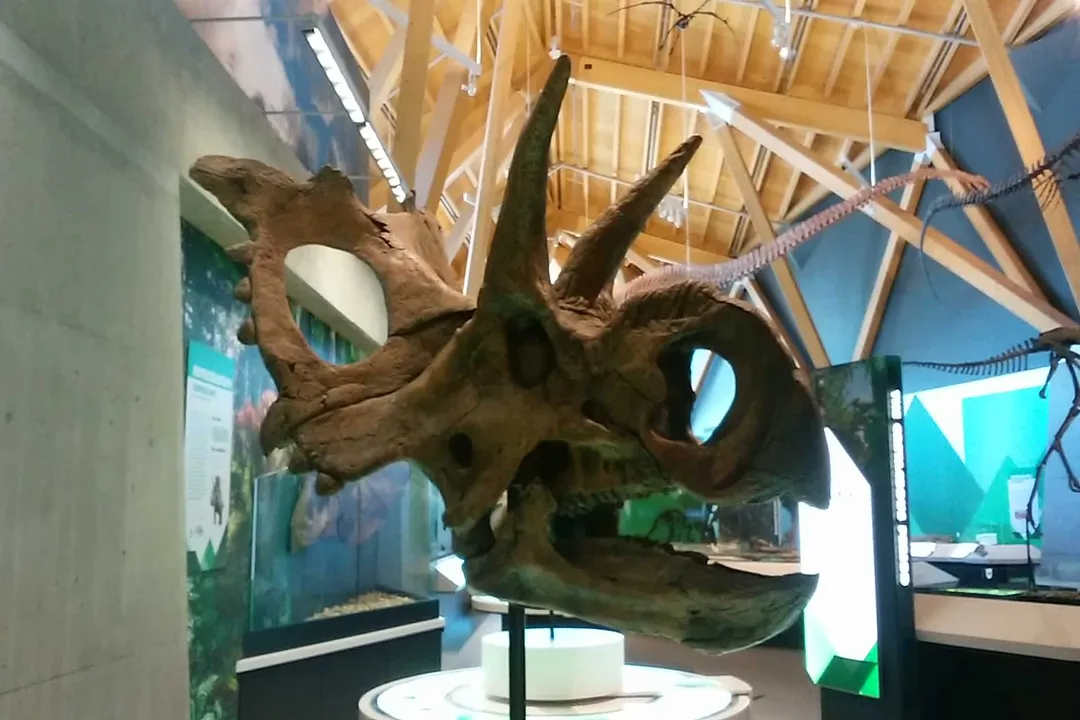
The categorization of Xenoceratops foremostensis as a herbivore is fundamental to understanding its life in the Late Cretaceous world, approximately 80 million years ago. As a member of the massive ceratopsid family, which includes later heavyweights like Triceratops, Xenoceratops shared the common trait of a strictly plant-eating existence. This classification immediately frames its anatomy, particularly the structures on its head, in terms of acquisition and defense, rather than predation.
# Herbivore Status

Being one of the oldest large-bodied horned dinosaurs found in Canada makes Xenoceratops a critical data point for tracking the early specialization within the ceratopsian lineage. All members of the Ceratopsidae family, to which this genus belongs, were quadrupedal herbivores. This shared dietary strategy across the family implies that despite the unique and sometimes bizarre cranial ornamentation—like the large spikes on its frill and the two prominent brow horns—these features were likely less about fighting for sustenance and more about species recognition, defense against giant predators such as relatives of Tyrannosaurus rex, or courtship displays. The primary work of acquiring calories was handled by the front end of the skull.
# Feeding Apparatus

The primary tool for dietary management in Xenoceratops was its distinctive mouth structure. Like its relatives, it possessed a specialized, parrot-like beak. This beak was not merely for gathering; it was designed for cutting and shearing tough vegetation. Given that Xenoceratops was estimated to weigh over 2 tons and stretch about 20 feet long, a substantial amount of raw material was required daily, necessitating an efficient method of processing bulk foliage. While the frill and horns commanded attention, the beak was the workhorse, likely used to crop tough greens and tear away leaves from stalks. Considering the sheer scale of the animal and the energy demands of maintaining that bulk, one can infer that the process of initial plant breakdown via the beak had to be highly effective to support the subsequent, more complex digestive stages necessary for a large herbivore.
# Plant Menu

The environment where Xenoceratops thrived in ancient Alberta—a subtropical region characterized by both regular rainfall and noticeable dry spells—would have dictated its available diet. Scientists reconstruct its menu based on the flora common to Late Cretaceous river deltas during that time. Its likely forage included ferns, cattails, and flowers. This selection points toward a dinosaur that fed low to the ground, browsing on undergrowth rather than high-canopy browsing, which was more typical of some long-necked sauropods. The presence of ferns and cattails suggests access to damp or riparian zones, while the inclusion of flowers hints at a broader consumption pattern as flowering plants were diversifying during this era.
# Internal Processing
Mechanical chewing with the beak was only the first step. The breakdown of bulky, fibrous plant matter like ferns and other tough greens requires significant assistance, which paleontologists suggest came from within. Scientists theorize that Xenoceratops likely possessed an advanced dentition system behind the beak, though the teeth themselves are often fragmented in the fossil record. More importantly, the bulk digestion was probably fermentation-based. This means the dinosaur likely relied heavily on microflora in its gut to chemically break down the plant material it consumed. This digestive reliance on internal bacterial colonies is a common adaptation in large herbivores, enabling them to extract maximum nutrition from low-quality or hard-to-digest cellulose. The sheer size of Xenoceratops would have provided the necessary volume—a massive fermentation vat—to make this process worthwhile.
# Habitat Influence
The combination of its eating implements and its environment offers a glimpse into its feeding strategy. Living in a region prone to dry spells suggests that Xenoceratops could not rely solely on tender, fresh growth year-round. When water was scarce, vegetation would become drier and tougher, demanding greater physical effort from the beak and a more powerful fermentation process internally. This potential shift in food quality throughout the year might explain why the dentition and gut structure needed to be so robust; they were adapted not just for an average meal, but for surviving periods when the available food was significantly less nutritious and harder to process mechanically. The successful transition from being an early ceratopsid to the largest one in its region 80 million years ago, alongside the development of complex headgear, must have been underpinned by this reliable, if demanding, digestive engine capable of handling the seasonal swings of the subtropical climate.
Related Questions
#Citations
Xenoceratops Animal Facts
Xenoceratops - Cloudfront.net
Xenoceratops Facts For Kids | AstroSafe Search
Xenoceratops | Prehistoric Wiki - Fandom
Xenoceratops
Meet Xenoceratops: Canada's newest horned dinosaur