What environmental factor can cause the normally warty skin texture of *A. baxteri* to appear temporarily smoother?
Answer
Emerging from deep mud or following a prolonged aquatic phase
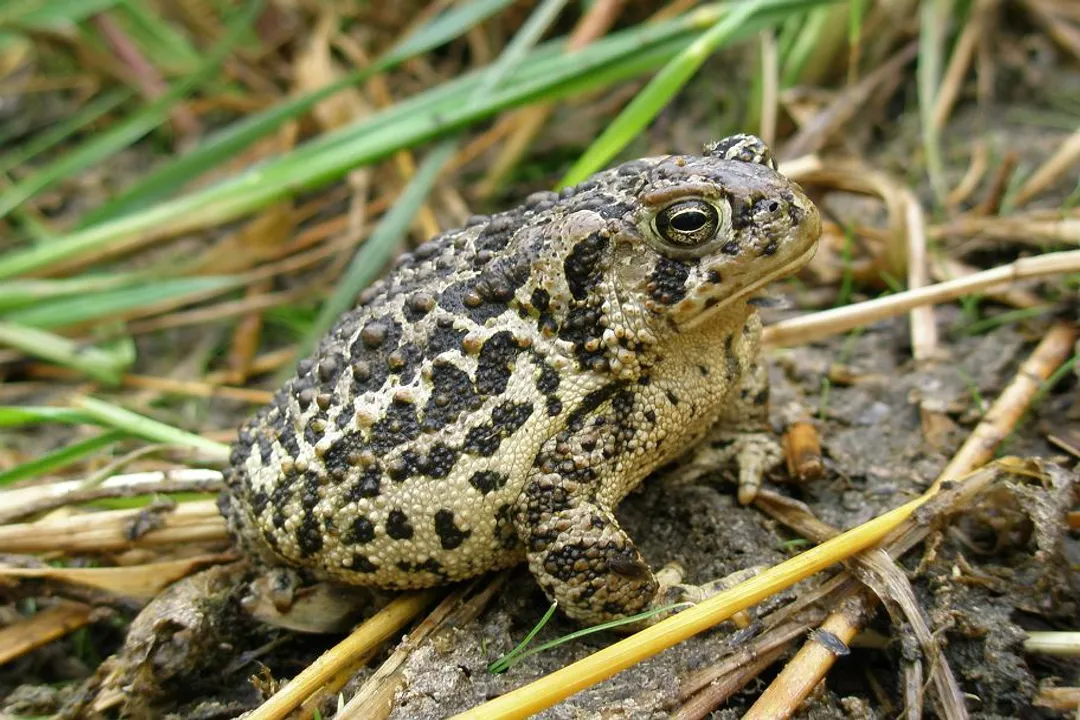
The skin texture of the Wyoming Toad, usually described as bumpy or warty due to its tubercules, is subject to change based on recent environmental conditions and the toad's life stage. If a toad has recently spent time immersed in water or has emerged after burrowing in deep mud, its skin may temporarily exhibit a smoother or slicker appearance. This textural shift highlights why identification cannot rely on skin texture alone, as external factors can temporarily obscure this characteristic difference, making features like cranial crests more critical for accurate classification.
Related Questions
What is the typical snout to vent measurement range for adult Wyoming Toads, *Anaxyrus baxteri*?What structure is considered the most reliable characteristic for differentiating the Wyoming Toad from the Western Toad (*Anaxyrus boreas*)?What term describes the typical background hue ranges for the coloration of the Wyoming Toad?How is the overall body shape of the Wyoming Toad characteristically described?In terms of arrangement, how are the dark, irregular dorsal blotches of *A. baxteri* often aligned?How does the tympanum size of the Wyoming Toad compare to that of the Western Toad (*Anaxyrus boreas*)?What environmental factor can cause the normally warty skin texture of *A. baxteri* to appear temporarily smoother?What combination of features defines the key distinguishing profile used by experts to identify *A. baxteri*?Around what age do the adult morphological features, including the full development of cranial crests, typically become evident in *A. baxteri*?What factor specifically causes identification challenges when trying to distinguish juvenile *A. baxteri* from juvenile Western Toads?