What ecological necessity dictates the bright male's perch choice versus the female's camouflage?
Answer
The bright male must advertise territory on exposed perches while the female incubates.
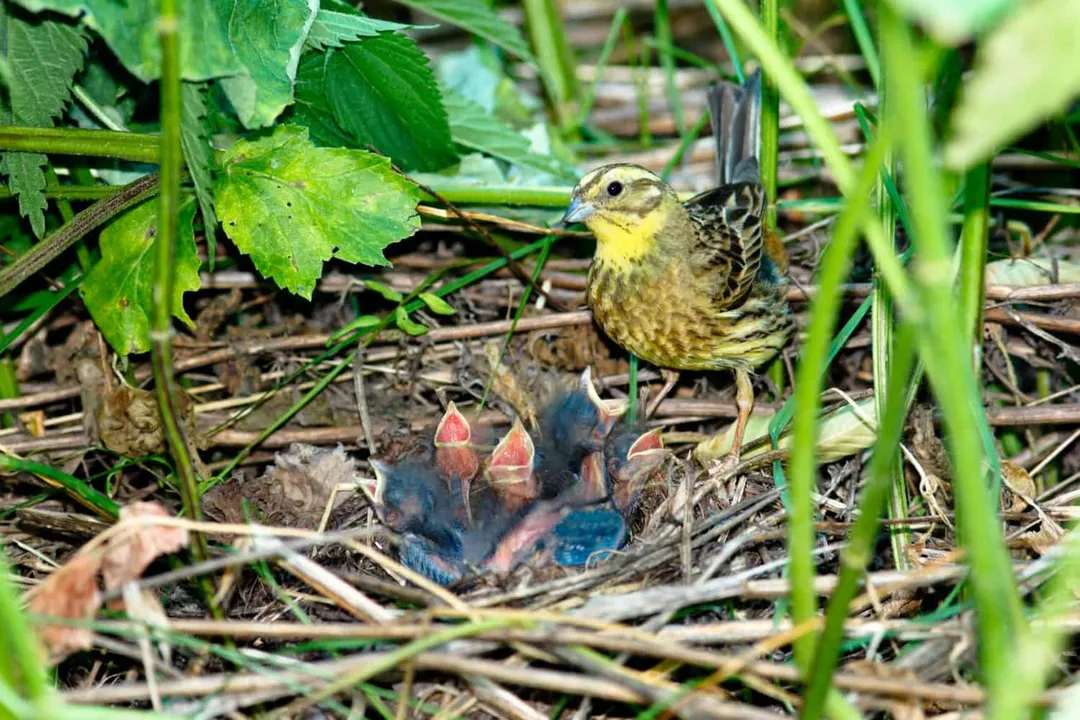
The striking sexual dimorphism in plumage coloration directly influences the behavior and habitat utilization during the nesting period. Because the male possesses bright, highly visible coloration, his evolutionary strategy involves utilizing exposed perches. This action serves the critical function of advertising his territory to rivals and attracting a mate. Conversely, the female's cryptic, camouflaged coloring provides her with superior protection against predators. This camouflage is essential as she spends time incubating eggs either directly on the ground or very close to it, making her less conspicuous in the surrounding scrub and grass.
Related Questions
Where is the male Yellowhammer's vivid yellow wash concentrated during breeding finery?What is the typical total length measurement for adult Yellowhammers?How is the Yellowhammer's bill described, given its seed-based diet?What dominates the overall appearance and palette of the female Yellowhammer?What is the usual weight range reported for the Yellowhammer species?What color are the legs and feet of the Yellowhammer generally described as?What modification softens the male Yellowhammer's brilliant yellow in non-breeding plumage?What is the typical wingspan measurement noted for the Yellowhammer?What ecological necessity dictates the bright male's perch choice versus the female's camouflage?What feature makes the Yellowhammer's rump visibly pale or yellowish in flight when body color is muted?