What crucial niche did Xenacanthus fulfill in the Permian freshwater system regarding population control?
Answer
Controlling smaller aquatic populations.
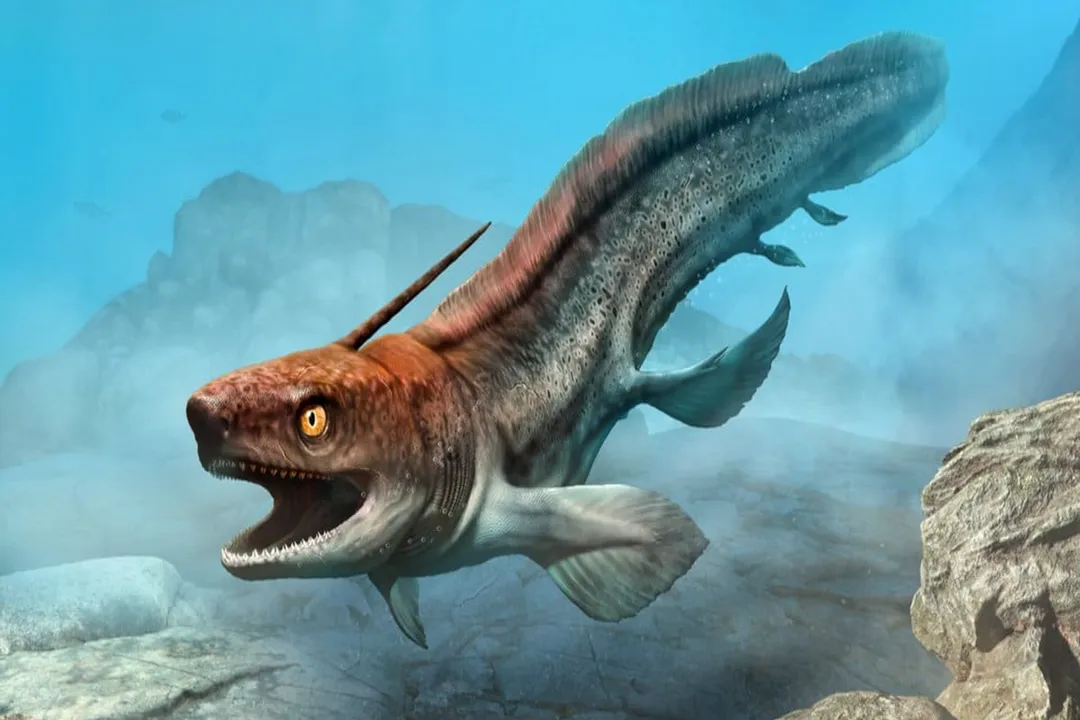
In the complex Permian freshwater setting, where early amphibians and reptiles competed alongside other fauna, Xenacanthus occupied a specialized niche as a dedicated freshwater predator. Its focus on invertebrates, such as crustaceans, and smaller vertebrates like small fish, was crucial for controlling the populations of smaller aquatic organisms dwelling within those same sluggish, swampy habitats. This specialization allowed it to maintain a stable food source and thrive despite inconsistent water quality that might have challenged less specialized predators.
Related Questions
What characterized the ancient Texas swamps inhabited by Xenacanthus?Which specific benthic invertebrates were a strong component of the Xenacanthus diet?To what modern aquatic shape is the unique, elongated body of Xenacanthus often compared?What prominent anatomical feature projects backward from the skull of Xenacanthiformes?What best describes the predatory style of Xenacanthus in stagnant waters?Which geological periods define the span of the Xenacanthiformes order mentioned?What major vertebrate category made up the most frequently cited component of Xenacanthus meals?What crucial niche did Xenacanthus fulfill in the Permian freshwater system regarding population control?What forms of insects were likely targeted by Xenacanthus feeding activity?Why was the diet of Xenacanthus geared toward accessibility rather than bulk?