What best describes the predatory style of Xenacanthus in stagnant waters?
Answer
Opportunistic forager.
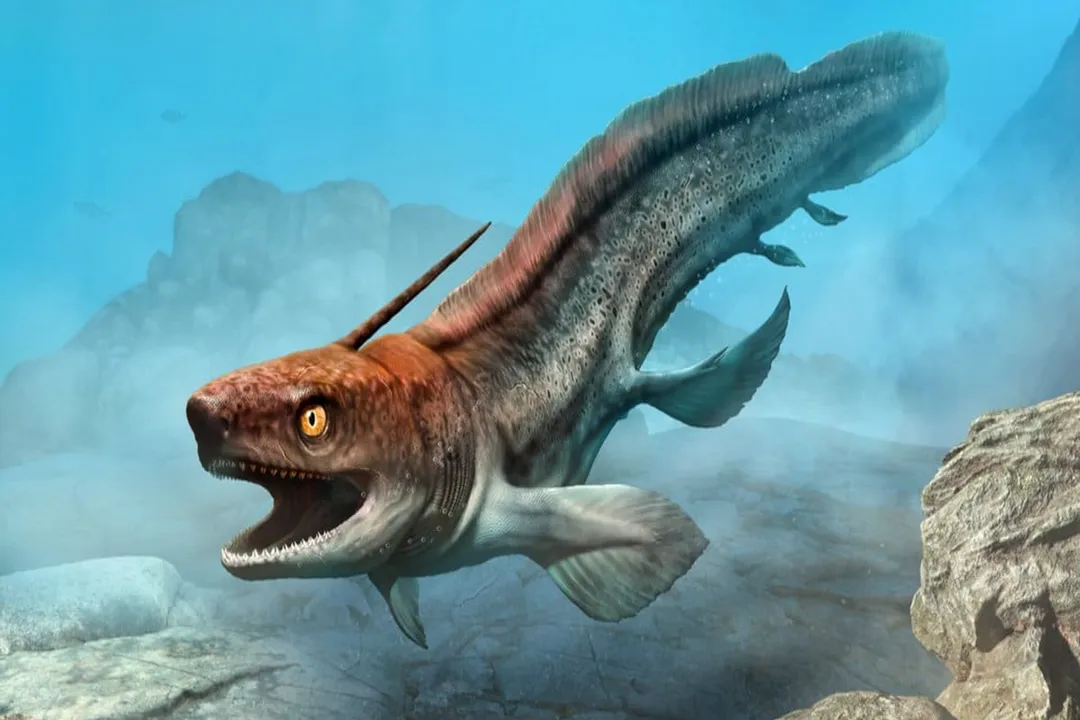
Given its relatively modest size, eel-like profile, and bottom-dwelling nature within slow-moving or stagnant freshwater environments, Xenacanthus adopted a feeding strategy focused on efficiency. It functioned more like an opportunistic forager, sifting through sediment or ambushing prey that hid near the substrate, rather than engaging in energy-intensive pursuit of fast-swimming fish in open water. This meant prioritizing prey that was readily available in its specific ecological setting, optimizing energy use in challenging water conditions.
Related Questions
What characterized the ancient Texas swamps inhabited by Xenacanthus?Which specific benthic invertebrates were a strong component of the Xenacanthus diet?To what modern aquatic shape is the unique, elongated body of Xenacanthus often compared?What prominent anatomical feature projects backward from the skull of Xenacanthiformes?What best describes the predatory style of Xenacanthus in stagnant waters?Which geological periods define the span of the Xenacanthiformes order mentioned?What major vertebrate category made up the most frequently cited component of Xenacanthus meals?What crucial niche did Xenacanthus fulfill in the Permian freshwater system regarding population control?What forms of insects were likely targeted by Xenacanthus feeding activity?Why was the diet of Xenacanthus geared toward accessibility rather than bulk?