What contrasting strategy is recommended for a successful Yellowhammer-friendly garden compared to winter feeding?
Managing spring/summer insect supply via long, uncut native plants alongside winter seed provision
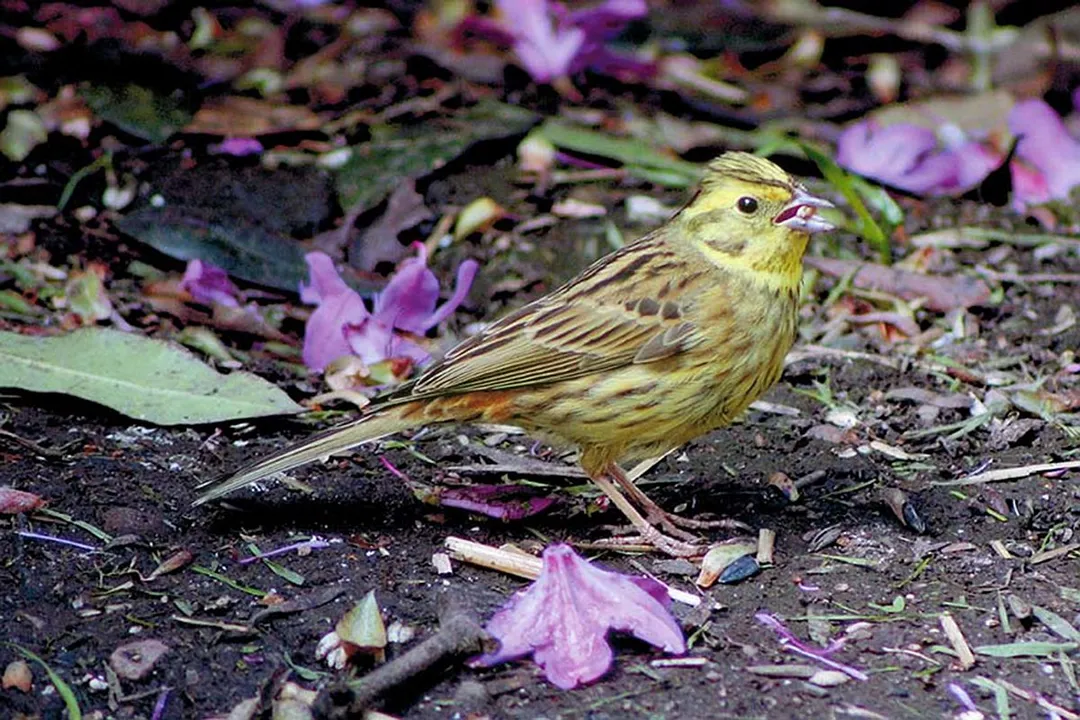
Supporting the Yellowhammer requires acknowledging its dramatic seasonal dietary shift. In winter, the focus is providing carbohydrate-rich seeds (sunflower hearts, corn) on the ground for maintenance. However, in spring and early summer, the focus must flip to supporting insect populations necessary for chick rearing. This is achieved by deliberately allowing areas of grass and native flowering plants to grow long, creating a micro-ecosystem sustaining beetles, spiders, and caterpillars. Therefore, a successful strategy necessitates a 'patchwork approach' that balances dense cover, insect reservoirs, and accessible ground-level seed feeders, recognizing the dual needs of insects for growth and seeds for maintenance.