Yellowhammer Diet
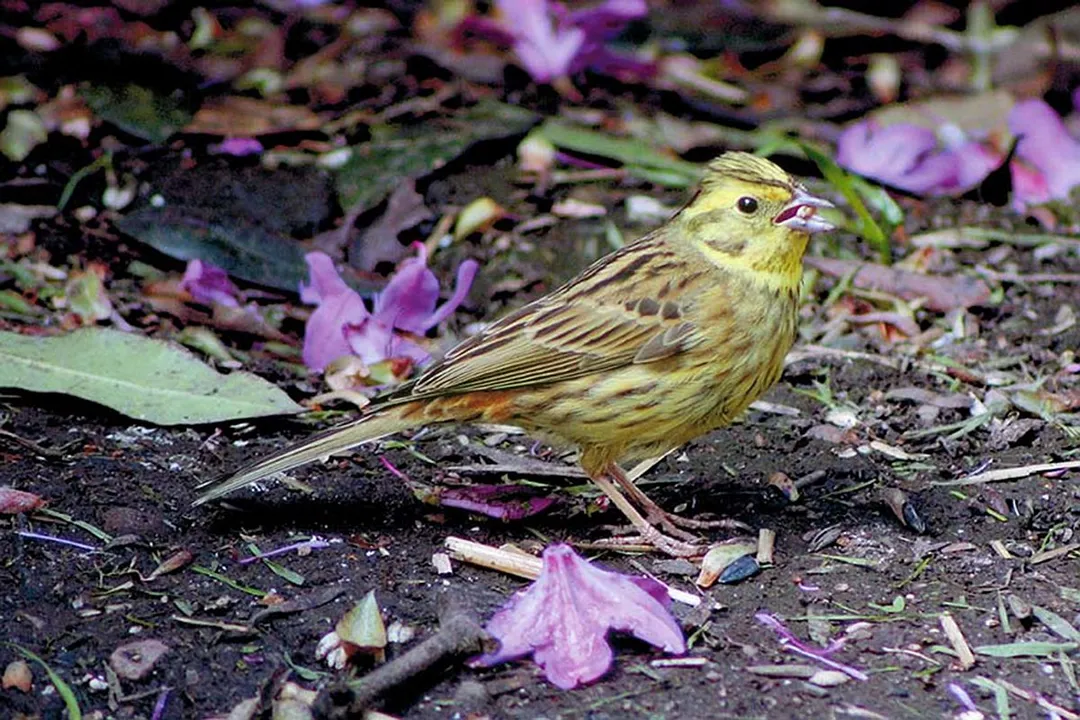
The vibrant flash of yellow that announces the arrival of Emberiza citrinella—the Yellowhammer—is becoming increasingly rare across much of the British Isles, earning it a place on the Red List in both the UK and Ireland. While its distinctive, simple song, often rendered as "a little bit of bread and no cheese," remains a quintessential sound of the open countryside, the bird’s very survival hinges on what it finds to eat throughout the year. Understanding the Yellowhammer’s diet is not just an academic exercise; it is key to understanding why these once widespread buntings are now struggling, as their food supply is intimately linked to the management of our agricultural landscapes.
# Seasonal Sustenance
The Yellowhammer diet displays a clear seasonal dichotomy, shifting dramatically between the non-breeding winter months and the crucial breeding period of spring and summer. During the lean winter, the bird is essentially a granivore. The focus turns entirely to seeds and grains, which they source by foraging on the ground.
When the weather turns cold, Yellowhammers often gather in noticeable flocks, which can sometimes swell to hundreds of individuals, frequently mingling with other bunting and finch species. This flocking behavior is advantageous when foraging for scattered seed resources. Their preference leans towards more starchy seeds, often ignoring oilier options like those found on brassicas. Key winter staples mentioned by observers include the seeds from plants such as common nettle, docks, common knotgrass, fat hen, common chickweed, and yarrow. Furthermore, cereal grains form a significant component of the autumn and winter intake, with wheat and oats being favored over barley. This reliance on residual seed crops and field margins defines their non-breeding survival strategy.
# Breeding Shift
As the breeding season approaches, the dietary requirements change drastically to support the energy-intensive processes of pairing, nesting, egg production, and, most critically, rearing chicks. Although adults continue to consume seeds, they begin to supplement their diet heavily with invertebrates. This insectivorous phase is vital, as these high-protein food sources are necessary for the rapid growth of the nestlings.
The variety of invertebrates taken is quite broad, including creatures like springtails, grasshoppers, various flies, beetles, caterpillars, earthworms, spiders, and even small snails. The accessibility of this insect life directly correlates with the health of the surrounding farm environment, making pesticide use a primary threat to reproductive success.
# Chick Development
The dependency on invertebrates peaks during the earliest stages of a Yellowhammer chick’s life. For the initial few days after hatching, the nestlings are fed exclusively on invertebrate prey. This is the purest form of protein delivery, tailored for building muscle and feather structures.
Interestingly, this exclusive insect diet is not maintained throughout the nestling period. Around the third day, parents begin to introduce cereal grains into the diet alongside the insects. This seemingly simple adjustment might represent a significant evolutionary step in preparing the young for their future as primarily seed-eating adults. The ability of the parents to source both high-quality insects and accessible grain simultaneously is an extraordinary requirement placed upon them during a short window of time. Farmers managing land for Yellowhammers must therefore ensure conditions support both food types concurrently in the spring, rather than just focusing on winter stubble alone.
# Landscape Food Sources
The Yellowhammer’s diet dictates its habitat preference. They thrive where open country meets dense cover, typically favoring lowland arable and mixed farmland punctuated by robust hedgerows and ditches. These structures offer perches for singing males, nesting sites low to the ground among scrub or bankside vegetation, and importantly, they act as corridors and reservoirs for the insects and seeds the birds require.
The preference for hedges of up to two meters tall that are in full leaf before nesting begins highlights the interdependency between cover and food production. The hedges themselves harbor insects earlier in the season, and the associated margins provide the initial seed banks. It is worth noting that while the bird is a ground feeder, the proximity to suitable cover is non-negotiable for security and brooding. If you are looking to support this species, encouraging the maintenance of structural diversity—a mix of tall, thick hedges alongside areas of longer grass margins next to cereal crops—is more effective than simply having a large field of one crop type. A field that is cropped right up to the fence line, or a hedge that is aggressively trimmed back, removes the critical edge habitat where foraging often takes place.
# Agricultural Impact
The severe population decline observed in western Europe is strongly linked to significant shifts in agricultural methods, which directly compromise the two main food sources. Modern farming efficiency, while beneficial for yield, has inadvertently starved the Yellowhammer populations.
# Seed Availability Loss
The change in cereal sowing from spring to autumn has had a severe impact on winter food supply. Autumn-sown cereals establish dense crops early, which can make foraging difficult for ground-feeding birds like the Yellowhammer once winter sets in. Compounding this is the reduction in the quality and extent of winter stubble—the discarded grain and plant matter left after harvest—due to more efficient harvesting machinery. Furthermore, less grain is being left as split grain in animal feed, which used to be a supplemental source. When the primary winter food source—seeds—becomes scarce, the birds must survive on less optimal fare, reducing reserves needed for breeding.
# Insect Availability Loss
Simultaneously, the increased efficiency of pesticides has reduced the density of weeds and insects across agricultural fields. This decline in the invertebrate population hits the breeding season hardest. If the parents cannot locate enough insects or spiders to feed the altricial chicks during the initial, most critical growth phase, nesting success plummets. A landscape that is too 'clean' of weeds and insects leaves the adult birds in a state of perpetual nutritional stress during breeding.
# A Gardener’s Role
For readers living in or near the fragmented habitats where Yellowhammers still persist, understanding the diet offers concrete ways to provide support. Since they feed on the ground, providing food there is essential. If you choose to offer supplementary feeding, items like sunflower hearts, raisins, corn, and general mixed seeds are recommended.
Considering the bird’s seasonal needs, a valuable gardening strategy involves managing the spring/summer insect supply alongside the winter seed supply. Instead of aiming for a perfectly manicured lawn right into the autumn, allowing areas of grass and native flowering plants to grow long provides a micro-ecosystem that sustains beetles, spiders, and caterpillars throughout the spring and early summer when the chicks are most vulnerable. This contrasts with the winter need for open stubble or feeding stations offering carbohydrate-rich seeds. Therefore, a successful Yellowhammer-friendly garden needs a patchwork approach: dense, unmanaged hedgerow cover for security, areas of uncut meadow for insects, and ground-level feeders stocked with high-energy seeds, especially during the colder months. This dual provisioning—insects for growth, seeds for maintenance—is the lifeline for the species in fragmented environments.
# Conclusion
The diet of the Yellowhammer, defined by its seasonal transition from a primary seed-eater in winter to an insect consumer during nesting, serves as a direct barometer of agricultural health. The species’ decline is not due to a lack of yellow plumage or an inability to sing its famous tune, but rather the systemic removal of the varied food sources that sustain its life cycle. From the starchy grains of the winter field to the protein-rich spiders required by a day-old chick, the requirements of Emberiza citrinella are clear indicators of the ecological diversity we maintain on our land.
Related Questions
#Citations
YELLOWHAMMER (Emberiza citrinella) - songbird factfile
Yellowhammer - Facts, Diet, Habitat & Pictures on Animalia.bio
Yellowhammer - NatureSpot
Yellowhammer Bird Facts | Emberiza Citrinella - RSPB
Yellowhammer | TCV - The Conservation Volunteers
Yellowhammer - Wikipedia