The high density of small, inward-pointing teeth in modern salamanders primarily evolved due to pressure favoring what type of feeding?
Answer
Engulfing and holding rather than tearing
The evolutionary pressure favored a large gape and numerous small teeth because their diet consists largely of prey that is swallowed whole or in manageable pieces after being engulfed.
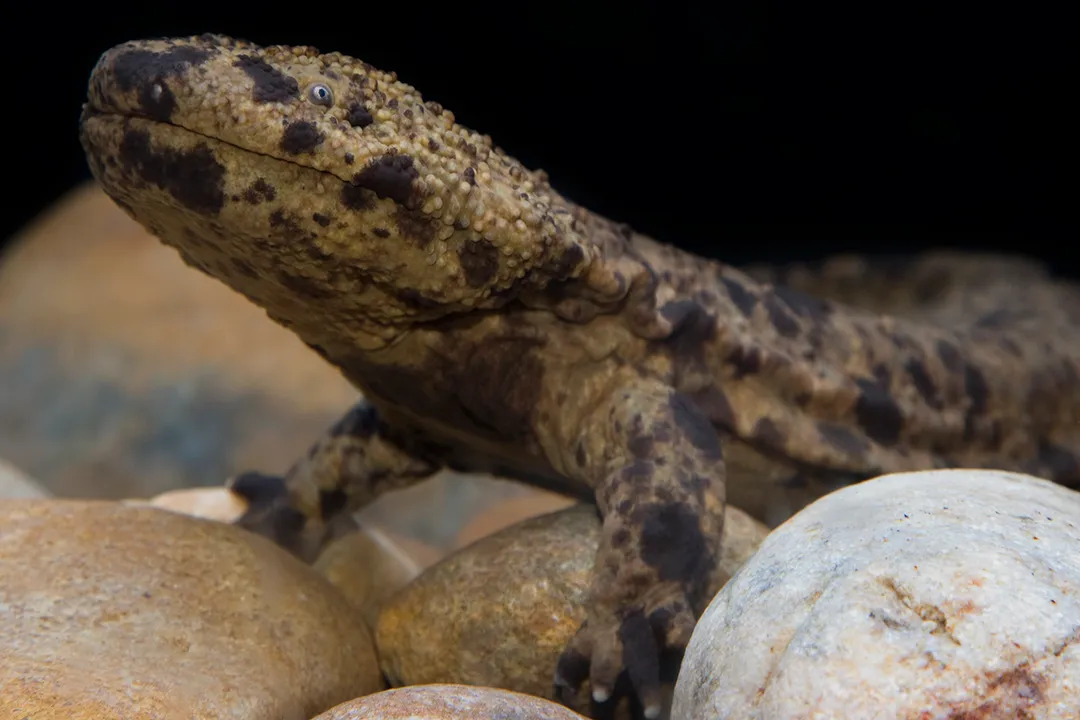
Related Questions
What is the general description of the teeth found in living giant salamanders?What is the primary function of the small teeth in modern giant salamanders?What specific dental structure characterized the extinct relatives of modern giant salamanders?How do modern giant salamanders primarily engulf their prey after securing it with their teeth?The difference between modern retention teeth and prehistoric fangs highlights an evolutionary divergence between what two primary actions?What genus do both the Chinese Giant Salamander and the Japanese Giant Salamander belong to?The high density of small, inward-pointing teeth in modern salamanders primarily evolved due to pressure favoring what type of feeding?What factor, besides the presence of small teeth, contributes significantly to the potential injury from a giant salamander's bite?Which sensory modality do giant salamanders heavily rely on due to their poor eyesight?What common analogy is provided to describe the holding function of the modern giant salamander's backward-pointing teeth?