Do freshwater drum have teeth?
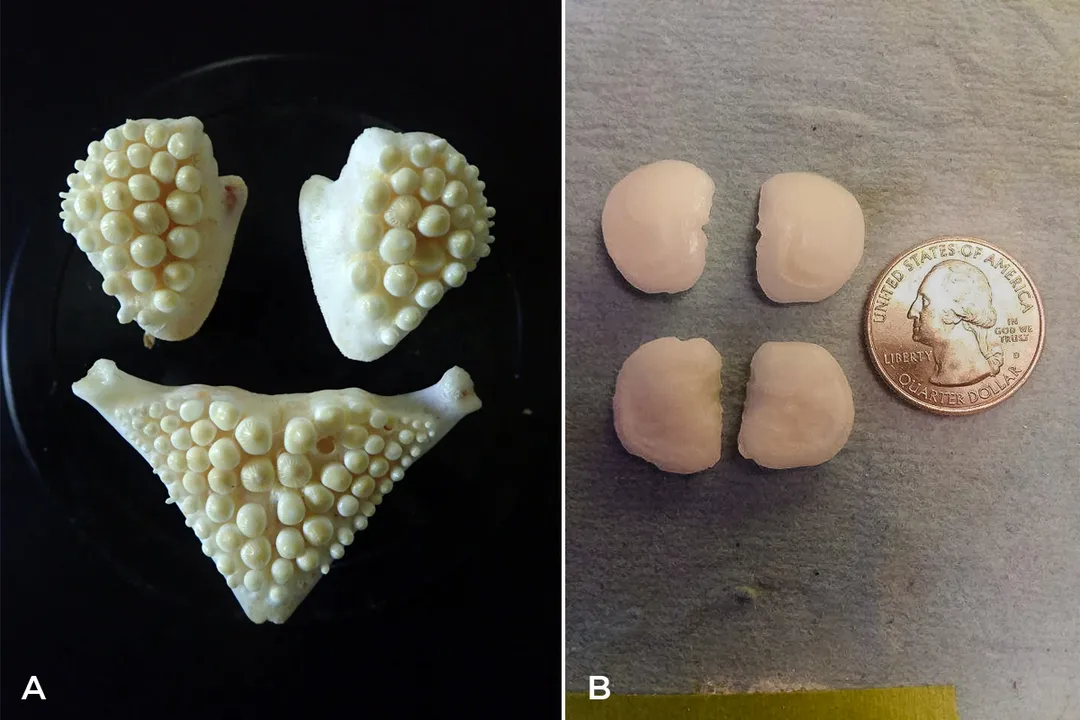
The question of whether the freshwater drum possesses teeth is immediately answered with a "yes and no," depending entirely on where you look inside its mouth. If you inspect the jaws of this common North American fish, you will find them entirely devoid of the sharp points anglers typically associate with predatory species. [2][7][8] However, looking deeper into its throat reveals a remarkable dental arrangement that gives this fish its fighting reputation and its confusing common names. [1][7]
# Jaw Structure
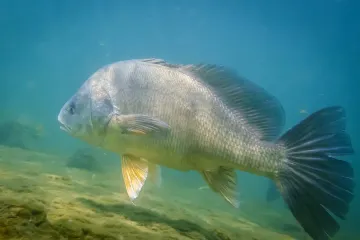
When examining the mouth of the freshwater drum (Aplodinotus grunniens), one notes a distinct lack of conventional teeth set into the jaw bones. [4] This absence of biting implements means the fish cannot easily grasp or tear prey in the way a bass or pike does. [8] This anatomical feature is key to understanding how the drum feeds and why it is often underestimated by those unfamiliar with its specialized anatomy. [6]
Despite the lack of teeth in the front of the mouth, the drum is far from defenseless or incapable of consuming tough meals. Its feeding strategy relies not on slicing, but on crushing and grinding, a process handled by structures located much further back in the digestive tract. [2] This characteristic sets it apart from many other inhabitants of its freshwater domain. [4]
# Throat Grinders
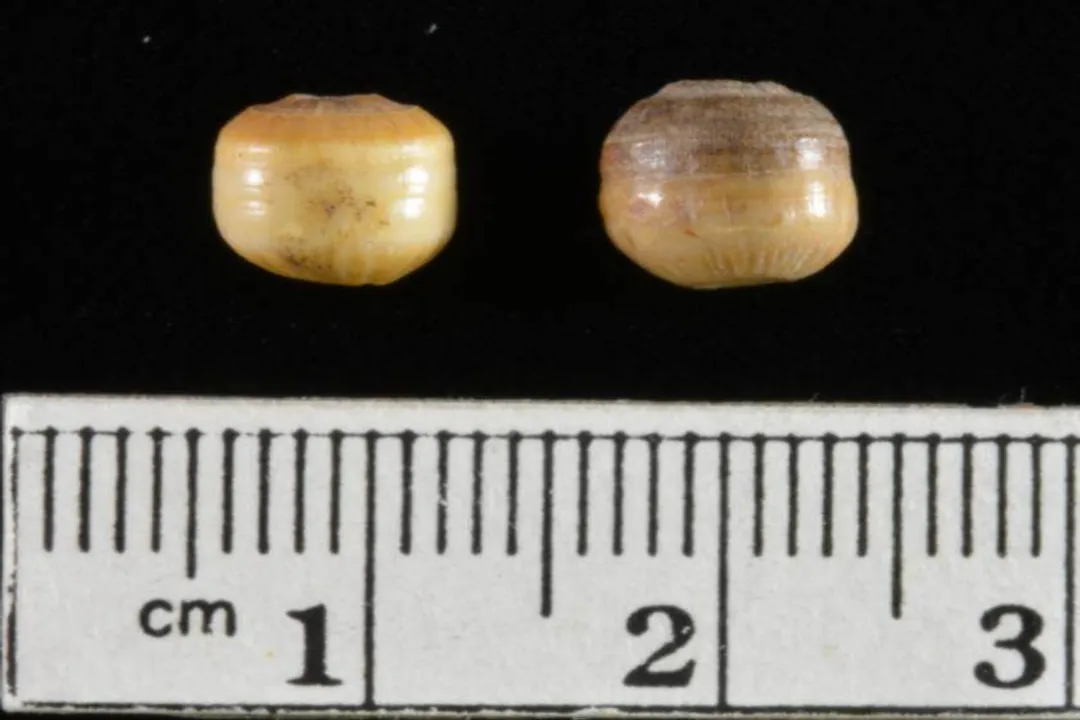
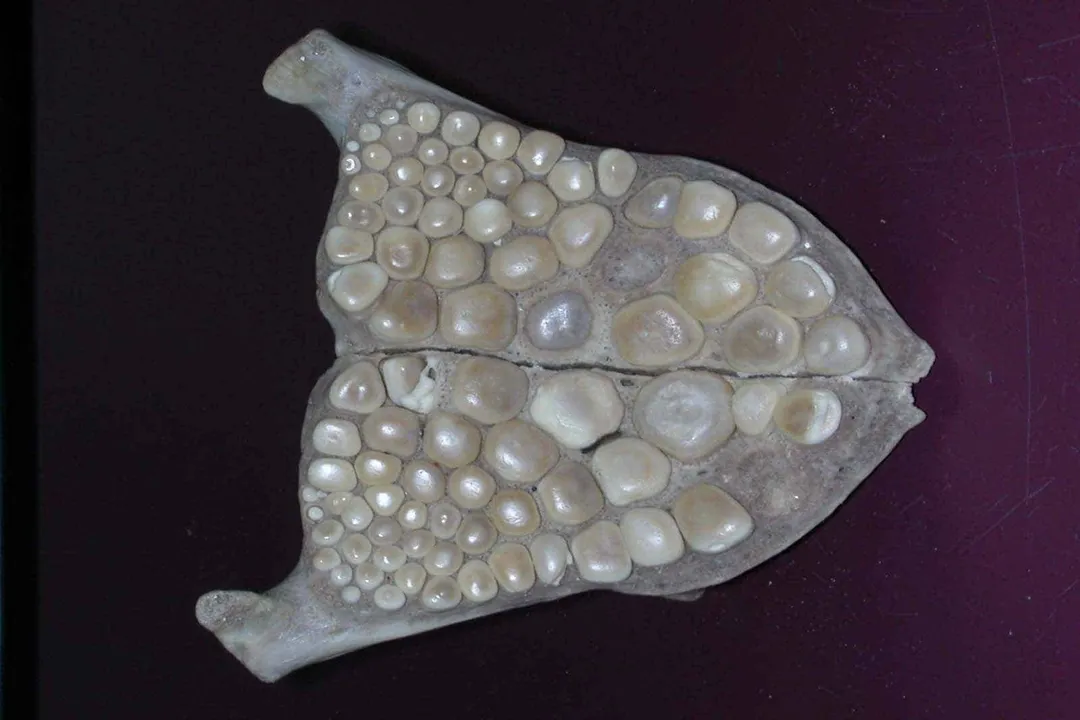
The true dental power of the freshwater drum resides in its pharynx—the throat area—where it possesses specialized structures known as pharyngeal teeth. [1][7][8] These are not the typical pointed teeth found in the jaws of other fish; instead, they manifest as heavy, bony plates or pads. [2][6] These plates are exceptionally strong and serve a function analogous to the molars in mammals or the stones utilized in the gizzard of a bird. [2][7]
This crushing apparatus is perfectly adapted for processing a diet consisting heavily of benthic invertebrates with hard exteriors. [4] Mussels, snails, and the larvae of various insects form a significant part of their sustenance. [4][8] The fish captures these creatures, often using its protrusible mouth to suck them up from the bottom substrate, [2] and then grinds the shells down into manageable pieces before swallowing. [6] The sheer mechanical force these pharyngeal teeth can generate allows the freshwater drum to exploit food sources that remain inaccessible to many other species. [2]
It is interesting to note how this grinding mechanism contrasts with the more abrasive or tearing feeding methods common among other bottom-dwelling fish. While a catfish might use barbels to locate soft-bodied organisms, the drum actively seeks out the toughest shelled prey available in its habitat. [6] This specialization in crushing hard materials means that the drum functions as an essential bio-processor in river and lake ecosystems, turning tough mollusk shells into bioavailable matter. [2] This efficiency in diet processing is likely a major factor contributing to the species' widespread distribution across various water bodies in North America. [4]
# Naming History
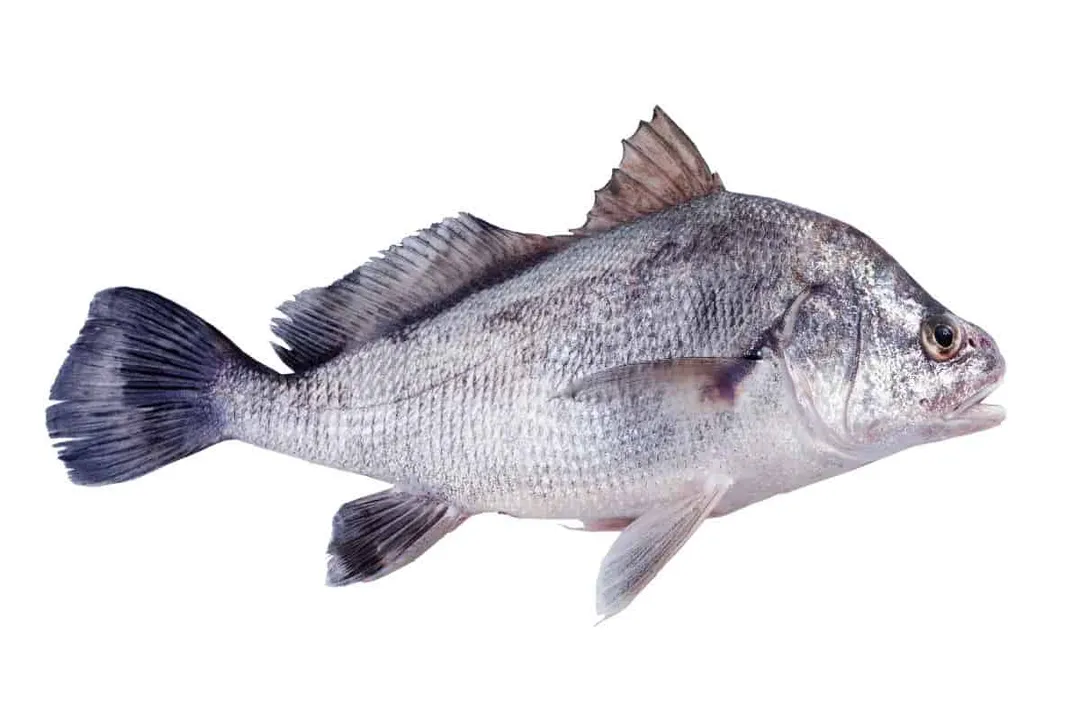
The presence of these unique throat structures has directly influenced the common names associated with the freshwater drum. [7] One of its most frequently used aliases is Sheepshead. [3][5][8] This common moniker is derived from the appearance of the large, rounded pharyngeal teeth, which are said to resemble the dental structure of a sheep. [3][7] Anglers catching a specimen might be surprised to find themselves holding a "Sheepshead," especially if they associate that name with marine species, highlighting a confusing instance of common naming overlap in American fisheries. [8]
The species itself is scientifically classified as Aplodinotus grunniens, which translates roughly from Greek and Latin as "grunting bottom-dweller," referencing another notable characteristic: the drumming sounds they produce using their swim bladders. [4] However, in the context of their mouth structure, the Sheepshead name sticks precisely because of those hard-to-see teeth plates in the back of their throats. [1][5]
# Handling the Fish
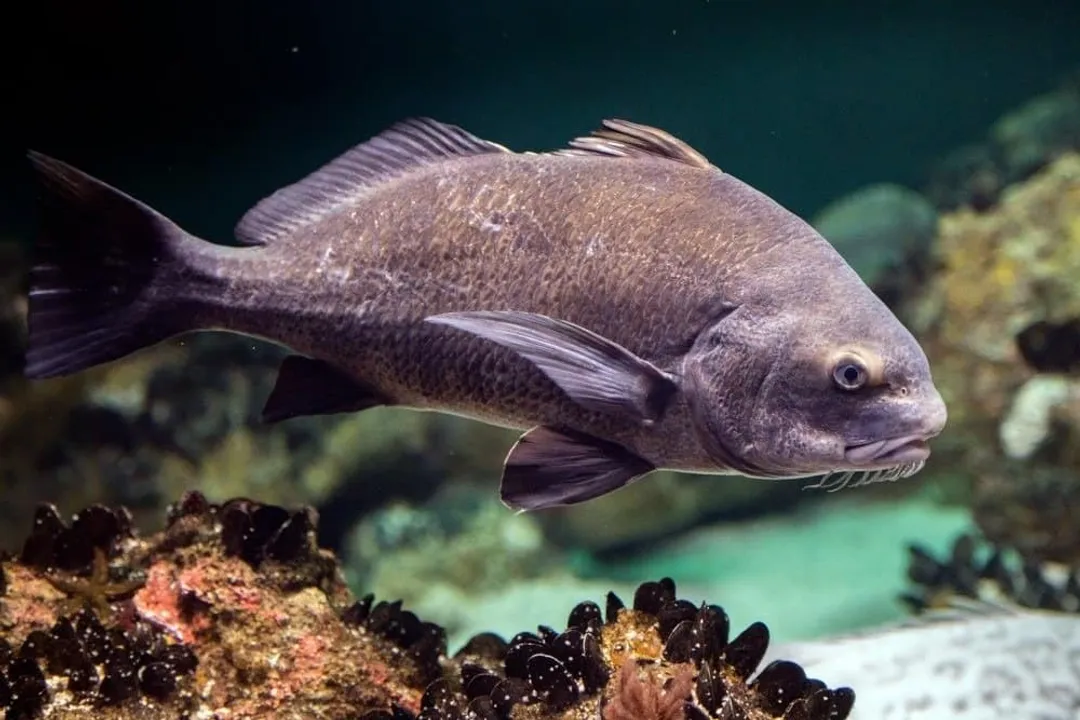
For the recreational angler, understanding the dental makeup of the freshwater drum shifts the concern away from immediate puncture wounds. Since there are no sharp teeth in the jaws, an angler is not at risk of being bitten in the conventional sense. [7] This offers a slight advantage when removing hooks from deeply set baits compared to handling fish known for razor-sharp dentition.
However, this does not mean the mouth area is entirely safe from rough handling. Given that the throat houses powerful crushing surfaces designed to grind shells, applying excessive pressure or rubbing the fish's mouth forcefully against a hard surface, like a boat gunwale or a net made of coarse material, should still be approached with caution. [2] While the scales and body can generally withstand typical netting and unhooking procedures, repeatedly forcing open a jaw that contains these hard pads could potentially cause abrasion or stress to the pharyngeal structure itself, even if it doesn't injure the handler. [6] A simple measure for responsible catch and release is to support the fish's weight properly and use rubberized or knotless nets to minimize external abrasion on all species, including the drum. [6]
# Comparison of Drum Mouths
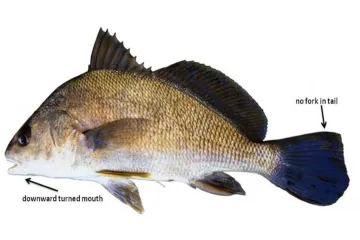
It is important to distinguish the freshwater drum from its marine relatives within the Sciaenidae family, which is known generally as the drum or croaker family. [4] Most other members of the Sciaenidae group inhabit saltwater environments and do possess prominent teeth in their jaws. [4] For instance, the saltwater Red Drum often has a single prominent tooth on its tongue and small teeth in its jaws. [4] This makes the freshwater drum a genuine anomaly—the only species in the entire Sciaenidae family adapted exclusively to freshwater life, carrying with it a unique feeding apparatus that reflects that environmental niche. [4]
We can visualize the functional difference this way:
| Location | Freshwater Drum | Typical Marine Drum (e.g., Red Drum) | Implication |
|---|---|---|---|
| Jaws | No teeth; fleshy lips/pads [2][8] | Often small teeth present [4] | Primary feeding strategy is suction/gulping, not tearing. |
| Pharynx | Hard, bony crushing plates/pads [2][7] | Structure varies, but less emphasized for heavy grinding [4] | Specialized for crushing hard-shelled benthic prey. |
This divergence in dental anatomy highlights a significant evolutionary adaptation driven by resource availability in North American river systems compared to the marine environment. [4] The freshwater drum perfected the art of the grind, securing a stable niche where its marine cousins could not survive. [4]
# Size and Impact
Freshwater drum are capable of growing to considerable sizes, sometimes exceeding twenty pounds, which means their crushing apparatus scales up proportionally. [6] A large drum has a formidable set of internal grinders capable of pulverizing thick clam shells. [7] This capacity means that an angler might pull up a fish that looks relatively harmless from the outside, but possesses internal equipment comparable to specialized heavy-duty machinery. [2][6] While they may not be the most prized game fish universally, their prevalence and specialized diet ensure they maintain a significant ecological role wherever they are found. [3][6] Understanding the mechanics of their mouth—the suction feeding in the front and the crushing in the back—provides a clearer picture of how this unique species manages to thrive across such a broad geographic range. [4]
Related Questions
#Citations
Ever wondered what those Freshwater Drum "throat teeth" looked ...
Do Drum Fish Have Teeth? - A-Z Animals
Freshwater drum | Illinois
Freshwater drum - Wikipedia
The Curious Case of the Freshwater Drum's Pharyngeal Teeth
Freshwater Drum (Aplodinotus grunniens) - Texas Parks and Wildlife
Reason #382 to work in a museum: Surprise Teeth - Ohio History ...
Freshwater Drum/Sheepshead (Aplodinotus grunniens)