How small a thickness can the walrus vibrissae differentiate shapes by?
Answer
3 mm
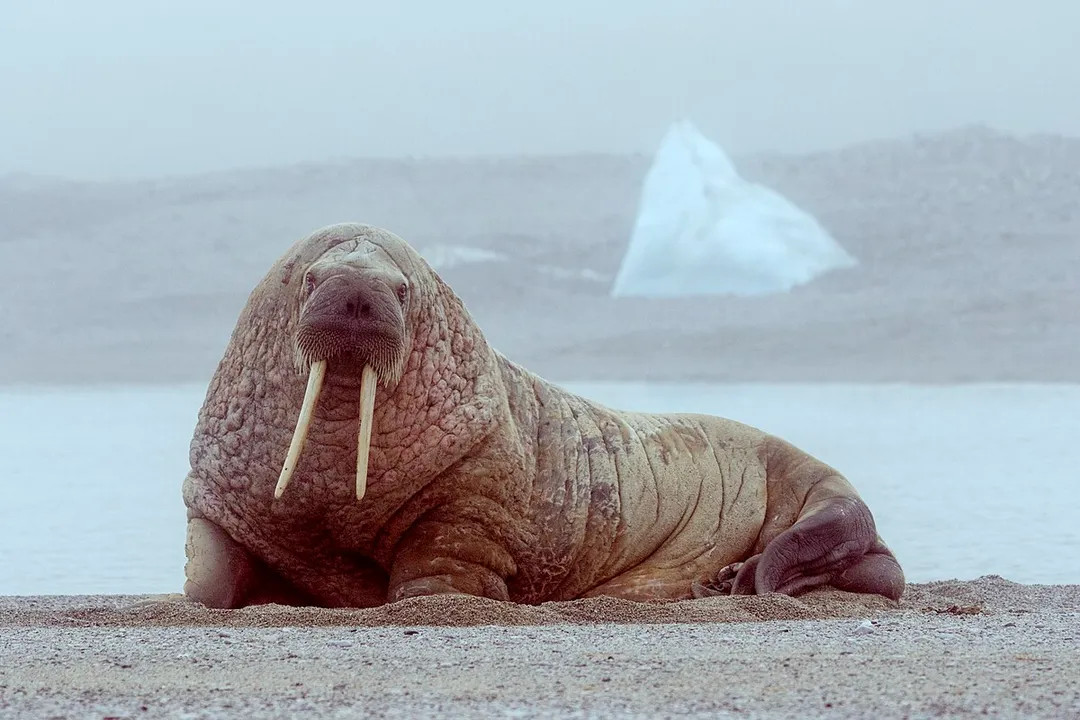
The dense mat of stiff bristles known as vibrissae on the walrus muzzle are highly specialized tactile organs, not merely stiff hairs. They are intricately supplied with blood and nerves and are connected to underlying muscles, granting them exceptional sensitivity. These whiskers are capable of discerning physical differences on the seafloor with remarkable precision. Specifically, they are sensitive enough to differentiate and identify shapes that are only as small as three millimeters thick. This sophisticated tactile ability, centered on the snout, allows the walrus to effectively 'see' its food by rooting along the substrate to locate and manipulate buried prey, which is crucial in often murky underwater conditions.
Related Questions
What family classification does the walrus, *Odobenus rosmarus*, belong to?What primary function is ruled out for the walrus tusks based on abrasion analysis?What physiological process causes the walrus skin to appear pink or reddish when they haul out?How small a thickness can the walrus vibrissae differentiate shapes by?Which group's swimming propulsion method do walruses resemble when moving underwater?What is the approximate maximum weight reached by a Pacific walrus bull?What critical limb rotation allows walruses to walk or clamber across land or ice?What is the maximum known length for the male walrus baculum, or penis bone?What supplementary role do the male walrus pharyngeal pouches serve beyond vocal displays?What does the Greek root of the species name *Odobenus* mean, relating to a physical feature?