How is the movement of bushbabies often described when traveling between feeding and sleeping spots?
Answer
A series of long leaps rather than slow climbing.
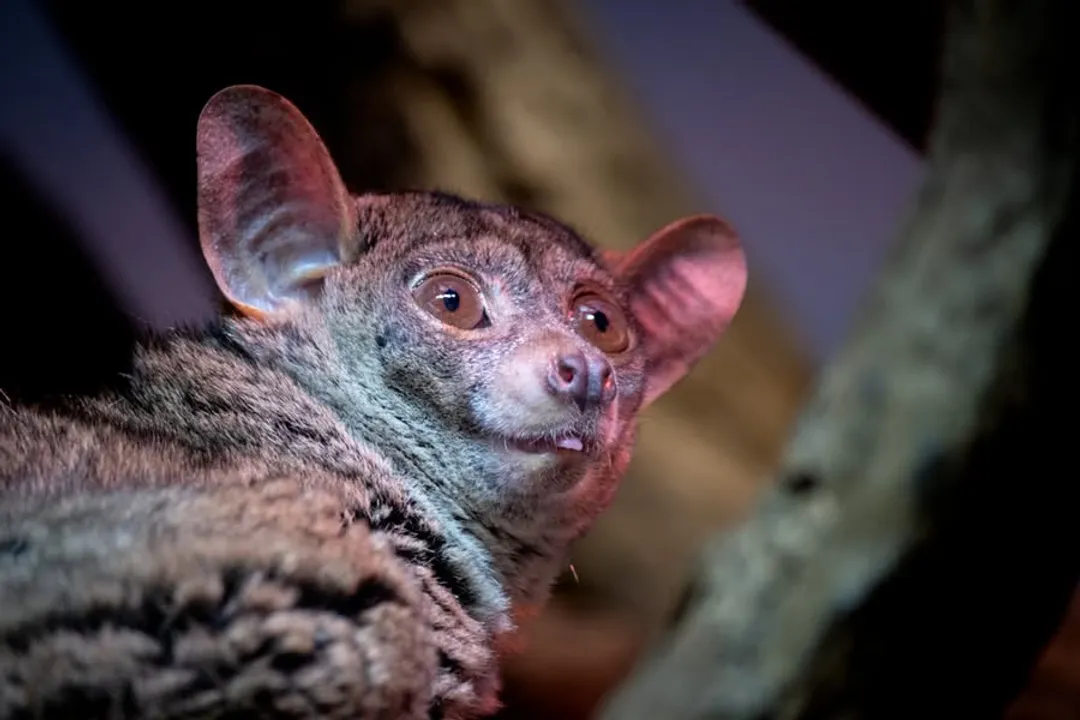
Bushbabies are renowned for their agility, a necessary trait for navigating environments where connectivity between suitable vegetation is crucial. Their method of locomotion between feeding grounds and safe sleeping locations is characterized by rapid, powerful movement. This movement is specifically described as a series of long leaps, indicative of their powerful hind limbs being used to propel them across distances that might separate individual trees or clusters of foliage. This rapid, acrobatic traversal contrasts with the slower, more cautious climbing motions associated with some other arboreal mammals.
Related Questions
Are bushbabies native to Asia or the Americas?Which environment does the Mohol's Bushbaby show a strong preference for?What is the single most critical factor for locating a bushbaby in the wild?What mosaic of environments characterizes Kibale Forest National Park where galagos are observed?Besides insects and fruit, what critical food source seems to influence galago populations in woodlands?How can bushbabies often be given away during a nocturnal search in a park?Which region is the Lesser Bushbaby's range noted to stretch across significantly?How is the movement of bushbabies often described when traveling between feeding and sleeping spots?Why is inquiring about experienced local guides recommended when visiting a known galago area?What element is considered arguably more important than the sheer density of a forest for galagos?