Where do you find the spirit bear?

The Spirit Bear, also known by its scientific designation Ursus americanus kermodei, is a remarkable animal whose location is strictly defined by geography and genetics, making any sighting a truly special event. This iconic white-furred bear is not a separate species or an albino; rather, it is a unique color phase of the American black bear, resulting from a rare, single recessive gene carried by both parents. The creature holds significant cultural weight for the Indigenous peoples of the region, who traditionally call it moskgm'ol.
# British Columbia Home

The definitive answer to where one finds the Spirit Bear is narrowed down to a specific, breathtaking corner of the world: the Central and North Coast regions of British Columbia, Canada. This animal is so intrinsically linked to this area that it has been designated the official provincial mammal of British Columbia. If you travel outside of this precise coastal environment, you will not encounter this distinct white coloration in black bear populations.
# Rainforest Geography
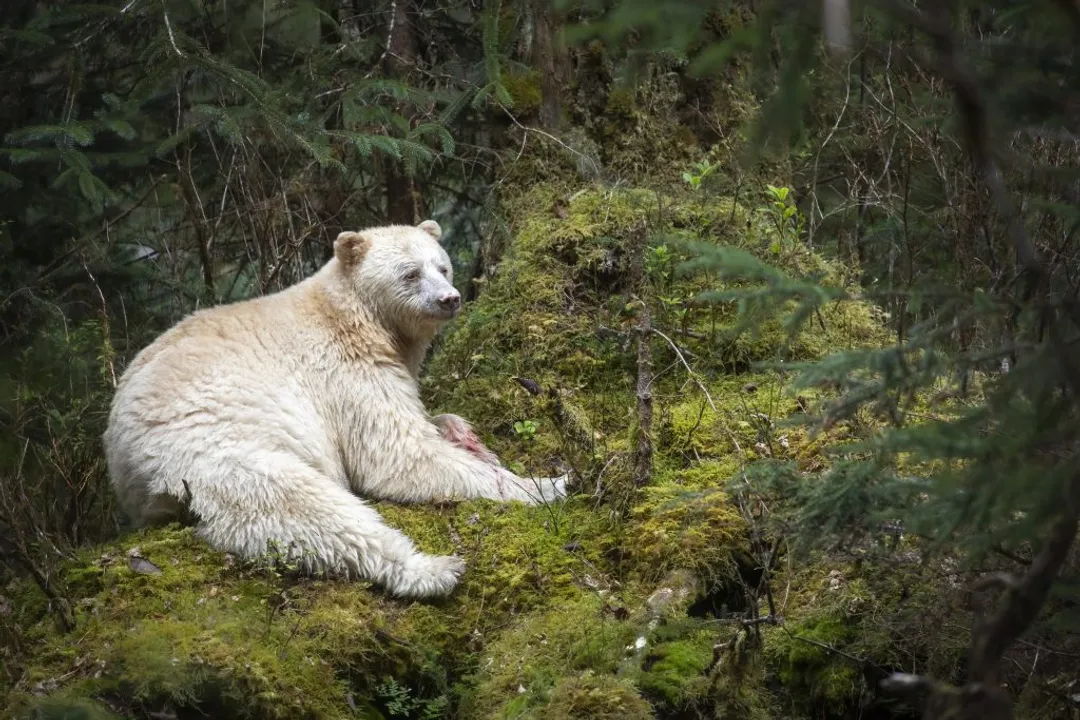
The habitat anchoring the Spirit Bear population is the Great Bear Rainforest. This area is recognized as the world's largest intact temperate rainforest, covering approximately 6.4 million hectares along BC's north and central coast. The environment itself is rugged, characterized by steep, forested islands rising from the sea and deep mainland inlets cradling old-growth forests. These ancient woods are composed of towering trees like Sitka spruce and Douglas fir. The existence of the Spirit Bear is profoundly tied to the health of this ecosystem, particularly the salmon runs that bring vital marine nutrients deep into the terrestrial environment when the bears feast and scatter the carcasses.
# Key Islands

While the Great Bear Rainforest spans a large area, the highest concentrations of the white-coated Kermode bears are island-bound. The three islands most frequently cited as the primary habitat for the white variant are Gribbell Island, Princess Royal Island, and Roderick Island. The habitat extends from Princess Royal Island up toward Prince Rupert, encompassing coastal areas and reaching inland toward places like Hazelton. Furthermore, a small number of these bears are known to reside further north in the remote Nass Valley. The isolation provided by these islands is central to understanding their localized presence.
# Population Ratios
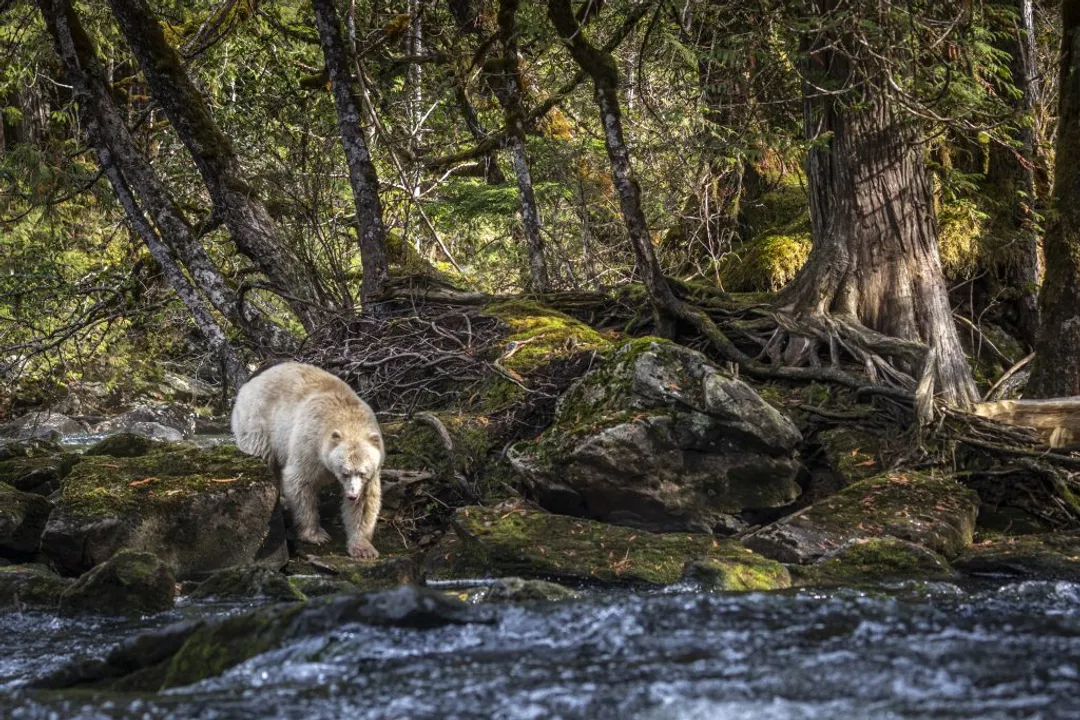
The scarcity of the Spirit Bear contributes heavily to its mystique. Estimates on the total number of white individuals vary, with figures ranging from 50 to 150, up to a maximum of around 400 individuals across the coastal region. Generally, only about one in ten black bears in the general area carries the gene. However, the concentration on the core islands dramatically increases these odds, suggesting the gene has become more pronounced there due to localized breeding patterns. On Princess Royal Island, the ratio climbs to one in ten black bears exhibiting the white coat. The density is highest on Gribbell Island, where estimates suggest one in three black bears is white, despite Gribbell being ten times smaller than Princess Royal.
The fact that the gene frequency is significantly higher on the islands than on the mainland warrants a closer look at population dynamics. The islands, being geographically separated, likely functioned as semi-isolated environments for long periods, allowing the recessive trait to become fixed within those localized gene pools at a much greater frequency than in the larger, more intermingling mainland black bear populations. This distinction highlights how geography can safeguard unique genetic expressions, even within a wide-ranging species.
# Access Required
Reaching the core habitat of the Spirit Bear is not a matter of driving or following major highways; it requires specialized access, often orchestrated through ecotourism operators working in partnership with local Indigenous Nations. Gateway communities like Terrace or Prince Rupert serve as departure points, from which travel proceeds by small aircraft or expedition vessel into the remote inlets.
One significant hub for viewing operations is Klemtu, a community located on Swindle Island, close to Princess Royal and Gribbell Islands. Spirit Bear Lodge, an Indigenous-owned venture in Klemtu within the Kitasoo Xai'xais Traditional Territory, manages access to the largest proportion of the Spirit Bear population and the only designated Spirit Bear Conservancy. Travel into this restricted wilderness often requires navigating coastlines and utilizing local knowledge to find the bears fishing in narrow, secluded tributaries.
# Timing Sightings
For the enthusiastic wildlife observer or photographer, when you look is nearly as important as where you look. The best window for observing Spirit Bears is generally during the autumn salmon run, typically spanning from early September through mid-October. This is when the bears congregate along streams to feast on spawning salmon—their critical protein source before winter hibernation. The white coat offers them an advantage here; studies indicate that pale bears are actually more successful at catching salmon during bright daylight because their coloration provides better camouflage against the bright sky reflected on the water compared to their black counterparts.
While the salmon run provides the most active viewing opportunities, an interesting consideration for dedicated naturalists is the timing outside of this peak season. In the summer months, between June and October, the bears are often seen foraging for berries and plants within the thick forest undergrowth. Observing them during this period offers a different perspective on their omnivorous diet and their role in dispersing plant material throughout the forest before they rely exclusively on the fall catch. This difference in focus—from the dramatic river-side salmon feast to the quieter summer berry foraging—allows for varied ecological observation within the same limited geographic area.
Despite the concerted efforts by conservation groups and First Nations stewardship, even guided tours do not guarantee a sighting, with one lodge noting that roughly 50% of guests glimpse the secretive white bear. The nature of this experience remains one of connection to a wild place, where the search itself is an integral part of the reward.
Related Questions
#Citations
Spirit bear - Wikipedia
Spirit Bear Lodge
Where to See Spirit Bears | Great Bear Rainforest, Wildlife
Has anyone seen a Spirit Bear? Where are the best places to find a ...
Spirit bear guide: where they live, what they eat - and why they're white
Discover the Haunting Beauty of BC's Spirit Bears
Best Place To See Spirit Bears In The Wild | Wildlife Trails