How is *Chrysopelea paradisi* often classified by general informational sources regarding human observers?
Answer
Non-venomous
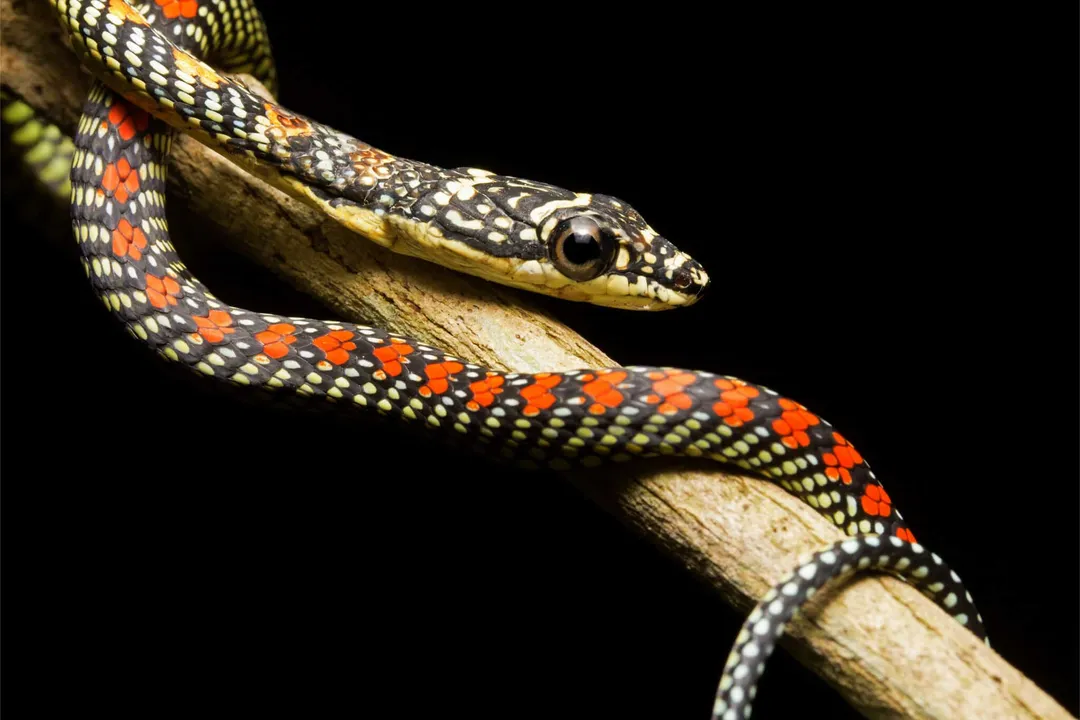
General informational sources often classify *Chrysopelea paradisi* as non-venomous, typically with the human observer in mind, suggesting its oral secretions pose no substantial threat to people.
Related Questions
What is the scientific classification of the Paradise Flying Snake?What shape does the snake's cross-section take when gliding?How does the snake generate lift while airborne during a glide?How is *Chrysopelea paradisi* often classified by general informational sources regarding human observers?What do dedicated scientific inquiries confirm about the snake's venom production?What is the characteristic description of the Paradise Flying Snake's rear-fang delivery system?The venom of the Paradise Flying Snake is described as primarily suited for what purpose?When is the Paradise Flying Snake typically active during the day?Which regions are mentioned as part of the distribution range for *Chrysopelea paradisi*?What remarkable form of aerial locomotion is shared across several species within the genus *Chrysopelea*?What action is usually necessary for this rear-fanged snake to successfully inject venom into prey?