How venomous is an Eastern Brown Snake?

The Eastern Brown Snake, Pseudonaja textilis, carries a significant reputation across Australia, often discussed in hushed tones when considering the country's diverse reptilian residents. Its venom is undeniably potent, placing it among the most medically significant snakes in the world. [1][6] While it may not always hold the top spot in every laboratory toxicity measurement, the practical impact of its venom on human health is profound, leading to more recorded fatalities from snakebites in Australia than any other species. [7] Understanding how venomous this snake is requires looking beyond a single number and examining the complexity of its toxin and its frequency of human interaction. [1]
# Venom Ranking
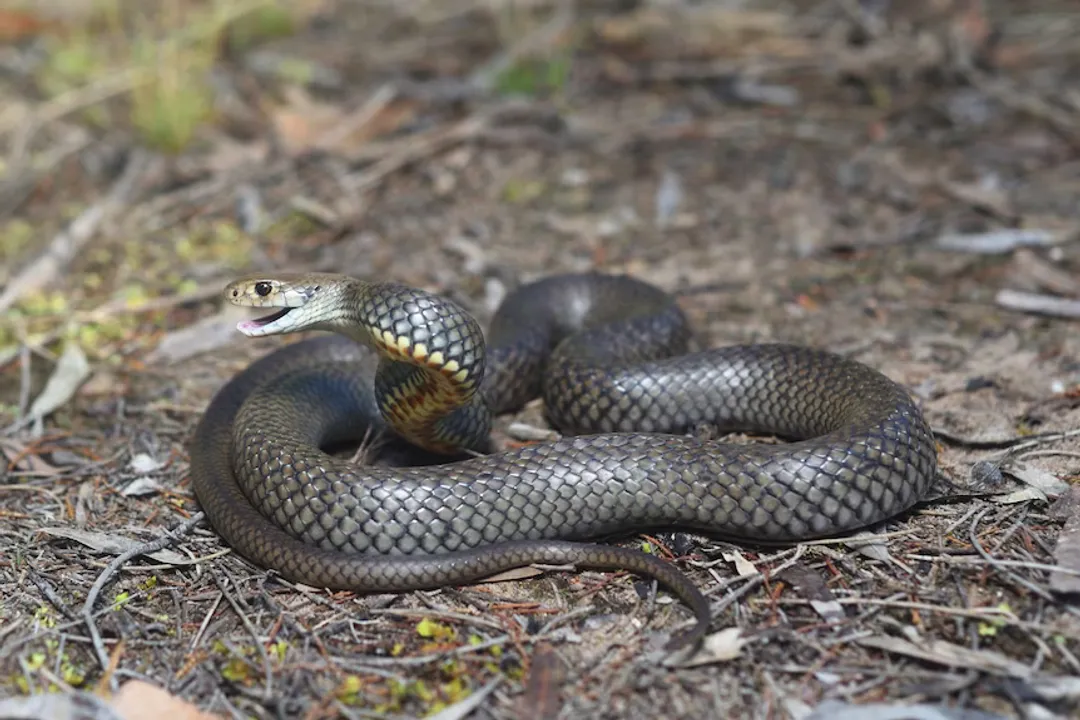
When venom potency is discussed, scientists often rely on the subcutaneous (under the skin) test in mice, which measures the dose required to kill half the test subjects. [4] Based on this common metric, the Eastern Brown Snake is frequently listed as the second most venomous land snake globally, surpassed only by the Inland Taipan (Oxyuranus microlepidotus). [7] However, these rankings can shift depending on the specific study, the age or source of the venom, and the test methodology employed. [4]
The difference between the Eastern Brown and the Inland Taipan is significant in terms of pure toxicity measurement. The Taipan's venom is generally considered the most toxic of all land snakes based on data. [7] Yet, the Eastern Brown's venom is often cited as being more dangerous to humans in real-world scenarios. An adult Eastern Brown typically carries a respectable venom yield, though a single bite from a large specimen can contain enough toxin to prove fatal to several humans. [6] It's important to remember that even if a snake is ranked second in lab toxicity, if it is encountered far more frequently, its overall contribution to snakebite casualties will be much higher. [1]
# Chemical Makeup
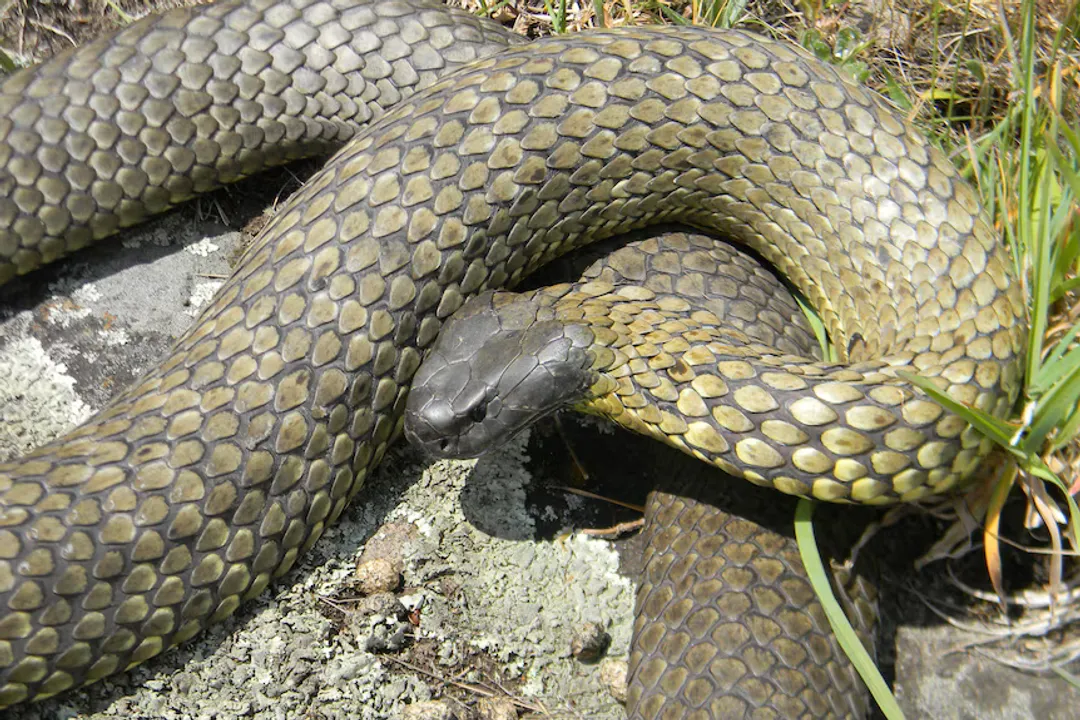
The reason the Eastern Brown Snake's bite is so dangerous lies in the complex cocktail of toxins present in its venom, which acts rapidly and targets several critical systems within the body. [4] The primary components are classified as procoagulants, neurotoxins, and nephrotoxins. [4]
The procoagulant agents are particularly destructive. These substances cause the blood to clot almost immediately upon entering the victim’s system. [4] This initial clotting action rapidly consumes the body's clotting factors, leading to a state called consumption coagulopathy. Once these factors are depleted, the victim is left highly susceptible to severe, spontaneous bleeding internally, including within vital organs. [4] This cascade effect can begin very quickly.
Simultaneously, the venom attacks the nervous system. The neurotoxins present can interfere with nerve signal transmission, potentially leading to paralysis. [4] While paralysis isn't always the most immediate, noticeable symptom, it remains a severe threat. Furthermore, the venom contains nephrotoxins, which are damaging to the kidneys. [4] Kidney failure is a recognized, severe complication following a significant bite from this species. [4]
It is this multifaceted attack—simultaneously blocking clotting, attacking the nervous system, and damaging the kidneys—that makes effective medical response so time-critical. A single venom load targets multiple physiological processes, creating a rapidly escalating medical crisis. [4]
# Fatal Statistics
The true measure of danger often comes down to epidemiology rather than just toxicology reports. In Australia, the Eastern Brown Snake is statistically the most dangerous land snake because it is responsible for the highest number of recorded human fatalities. [1][7] This contrasts sharply with the Inland Taipan, which, despite its supreme venom toxicity, rarely bites people because its habitat is generally remote and it is typically shy. [7]
The Eastern Brown, conversely, is an adaptable species found across eastern mainland Australia, inhabiting grasslands, woodlands, and, critically, areas modified by humans, such as agricultural land and suburban fringes. [6] This frequent overlap in territory means that encounters are far more common. [1] When a bite occurs, the snake's tendency to deliver a full defensive bite, combined with the highly active nature of its venom, results in the high fatality rate observed historically. [7] Before the widespread availability of effective antivenom, mortality rates for untreated bites were extremely high. [1]
It is an interesting, albeit grim, statistical outcome that the snake perceived as the second most toxic is often the first cause of death. This highlights a crucial distinction: absolute toxicity () does not always equal practical danger. Practical danger is a function of toxicity multiplied by exposure risk multiplied by venom yield. The Eastern Brown excels in the exposure risk category compared to its more toxic relatives. [1]
# Encounter Context
To better manage risk, understanding the snake's behavior and appearance is helpful. Eastern Brown Snakes are diurnal, meaning they are most active during the day, often seen basking or moving purposefully in search of prey, which primarily consists of small mammals like mice and rats. [6] They are capable of moving quite quickly when alarmed. [2]
Appearance-wise, they are highly variable in color, which can sometimes lead to misidentification, though this should never delay emergency action if a bite is suspected. [6] They can range from uniform light brown to almost black, sometimes displaying darker banding or orange/yellow underparts. [6] Adults typically reach lengths of around 1.5 meters, though some can grow longer. [6] Their body shape is generally slender to moderately stout. [6]
A key behavioral trait related to danger is the snake's defensive posture. When cornered or threatened, it will often raise the front third of its body into an 'S' shape, ready to strike rapidly. [6] Because they often inhabit areas close to human activity—hunting rodents in sheds, woodpiles, or garden edges—the opportunities for accidental provocation are increased. [6] For instance, anyone regularly moving stored materials around a rural or semi-rural property in eastern Australia should adopt a slow, methodical approach, as these disturbed environments provide both shelter and a plentiful food source for the snake, increasing the likelihood of startling one into striking defensively. [6]
# Bite Protocol
If a bite from an Eastern Brown Snake is suspected, immediate and correct action is paramount, regardless of the perceived severity of the symptoms, as symptoms can be delayed. [4] The universally recommended response in Australia is the Pressure Immobilisation Technique (PIT). [4]
The steps are as follows:
- Call Emergency Services immediately (e.g., 000 in Australia) and state clearly that a snakebite has occurred. [4]
- Keep the victim as still and calm as possible. Movement encourages the spread of venom through the lymphatic system. [4]
- Apply a broad pressure bandage (ideally a crepe bandage) firmly over the bite site, wrapping it up the entire limb, similar to bandaging a sprain, but firmly. [4]
- Apply a second, splinting bandage over the first, immobilizing the entire limb and minimizing movement. [4]
- Wait for medical professionals to arrive. Do not wash the wound, cut the wound, attempt to suck out the venom, or apply a tourniquet, as these actions can hinder diagnosis or worsen outcomes. [4]
The ongoing availability of effective antivenom, developed through collaboration between researchers and antivenom manufacturers, is what has dramatically reduced the mortality associated with these bites since they were first synthesized. [4] Access to prompt medical care utilizing this antivenom transforms a potentially fatal situation into a treatable medical emergency. [4]
# Comparison Pitfalls
While ranking is useful for academic interest, for a resident or visitor, comparing the Eastern Brown to other dangerous snakes like the Tiger Snake (Notechis scutatus) or Coastal Taipan (Oxyuranus scutellatus) often leads to misjudgment of the immediate threat. Tiger Snakes are also incredibly venomous and common in their range (southern Australia). [7] The Coastal Taipan possesses extremely toxic venom, arguably more so than the Brown Snake, but it is generally much more reclusive, preferring wilder habitats away from dense human settlement. [7]
A common pitfall arises when people assume that because a snake is "only" a Brown Snake, the bite is less serious than that from a Taipan. This reasoning fails because the Eastern Brown is both highly toxic and highly interactive with human environments. If one encounters any snake displaying defensive behavior in eastern Australia, the safest assumption, pending expert identification, is that it is an Eastern Brown and requires immediate medical management based on the PIT protocol. [4][6] Relying on color or size alone in a high-stress situation is unreliable; the focus must remain on the standardized emergency response. [4]
#Videos
THIS is the Snake Bite to Worry About - The Eastern Brown Snake
DEADLIER THAN A TAIPAN?!?! How DEADLY Is The ... - YouTube
Related Questions
#Citations
Eastern brown snake - Wikipedia
r/NatureIsFuckingLit on Reddit: The Australian eastern brown snake ...
THIS is the Snake Bite to Worry About - The Eastern Brown Snake
What makes the eastern brown snake so deadly? - ABC News
Eastern brown snake venomous characteristics - Facebook
Eastern Brown Snake - The Australian Museum
How dangerous are Eastern brown snakes compared to other ...
Eastern Brown Snake: Australia's Biggest Biting Culprit