What are the characteristics of a paradise flying snake?
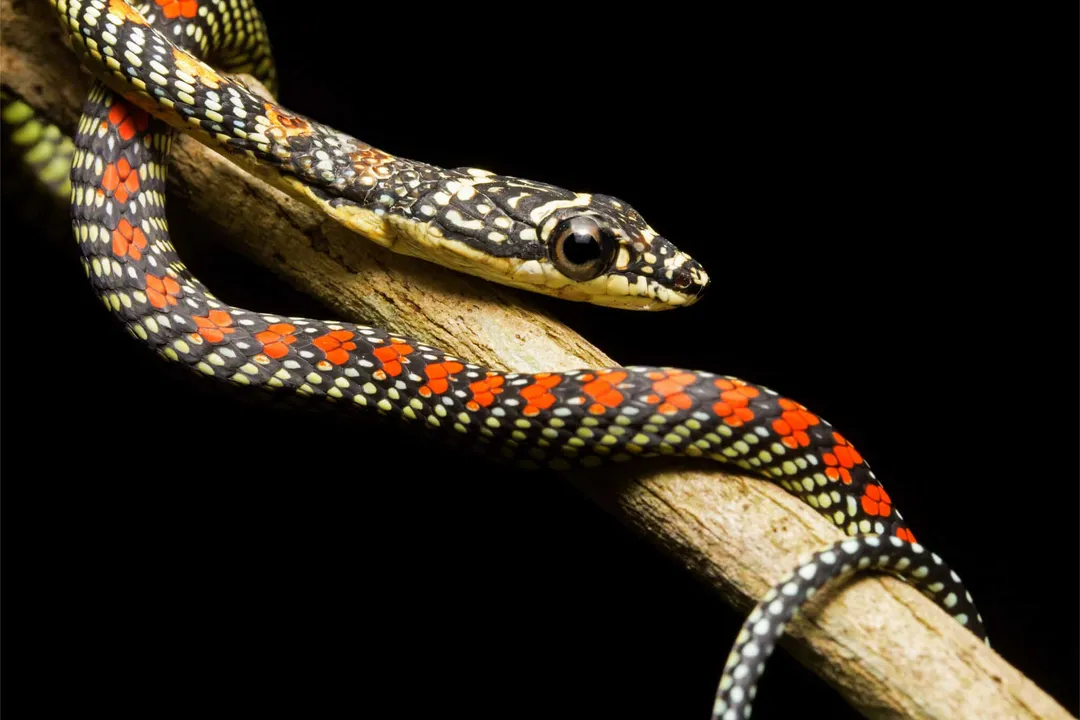
The Chrysopelea paradisi, commonly known across its native range as the paradise flying snake, presents one of the most startling examples of evolutionary adaptation found among reptiles. While the name suggests powered flight, this snake is actually a master glider, transforming its body in mid-air to traverse significant distances between trees. [7][3] Observing one launch itself from a high branch is an experience few forget, fundamentally changing how one perceives the capabilities of a legless creature. [7] These snakes belong to the genus Chrysopelea, which collectively comprises five species known for this unusual aerial skill. [1][7]
# Appearance Details
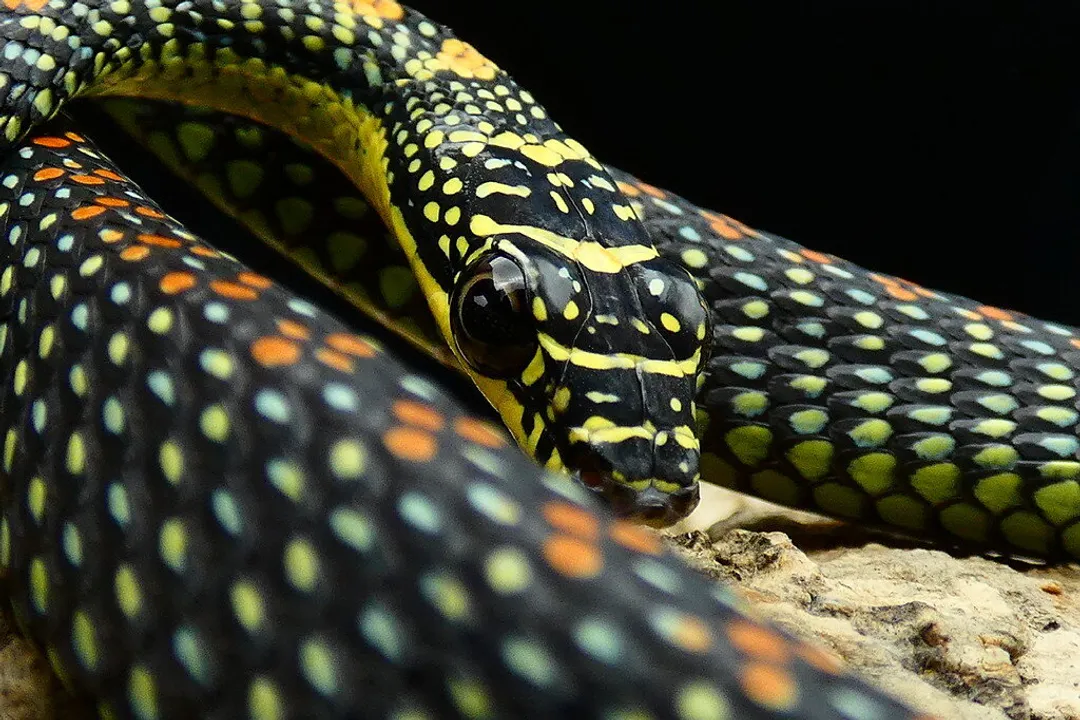
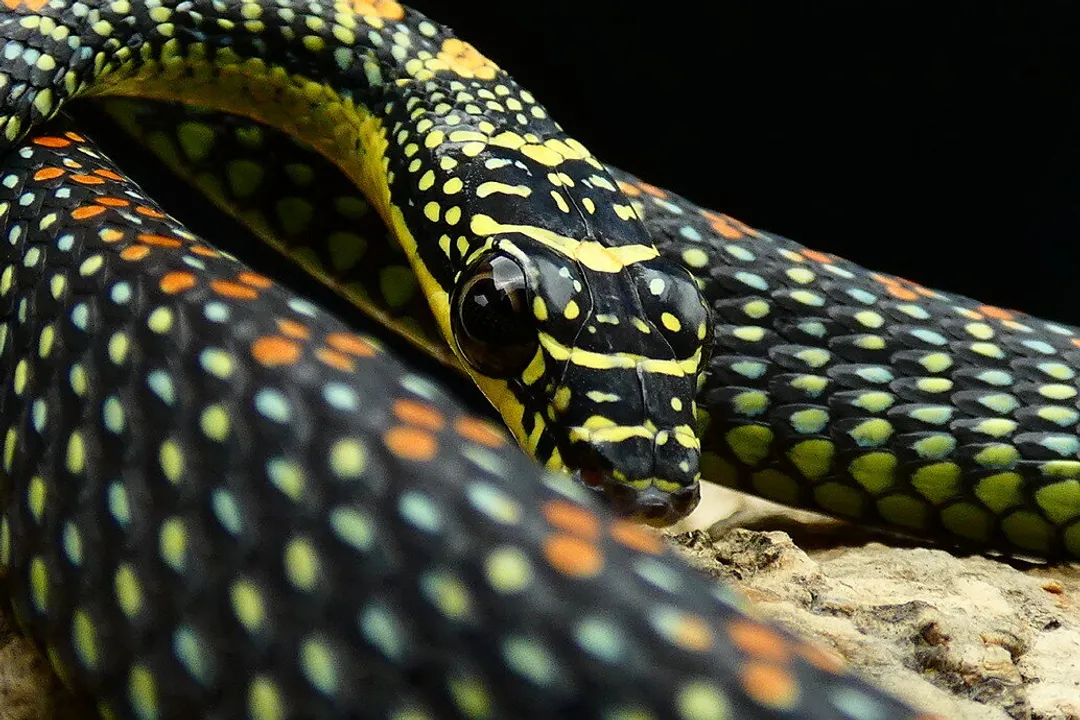
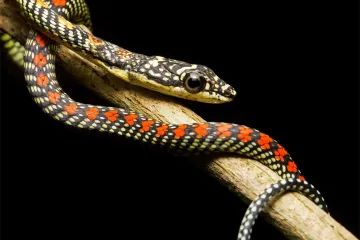
The physical characteristics of the paradise flying snake are striking, designed both for camouflage within the canopy and for the specific physics of gliding. Adult snakes typically reach lengths between two and three feet, though some sources note they can grow up to about 4 feet long. [1][2] There is a notable size difference between the sexes, with females generally being larger than the males. [1]
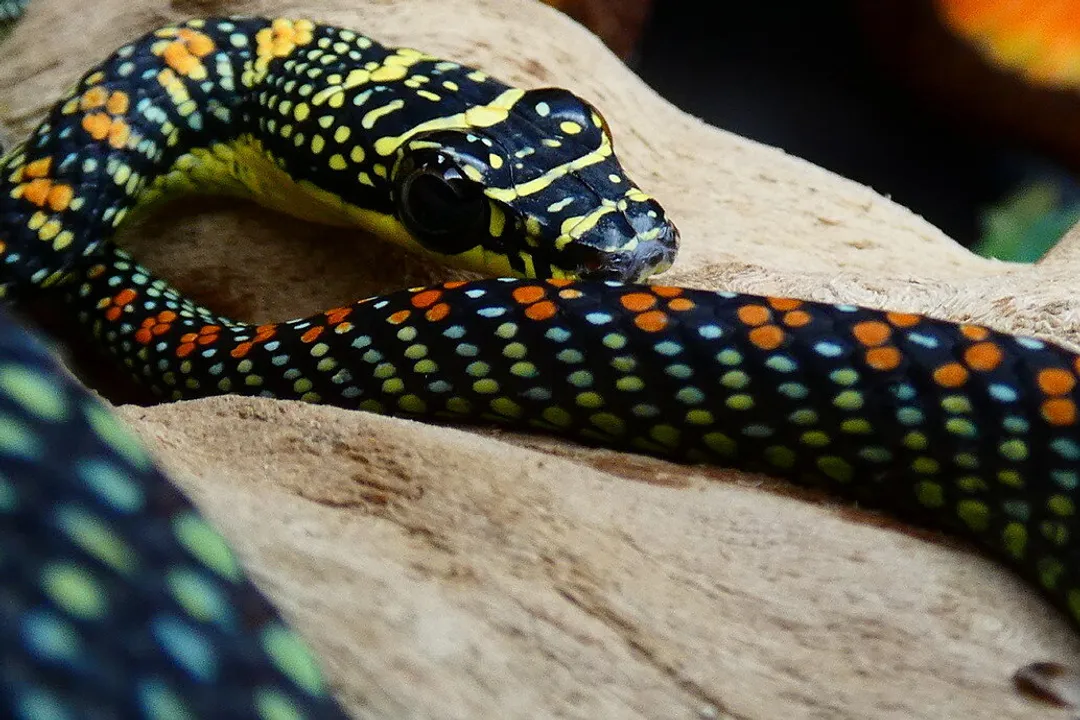
Coloration is highly variable but usually involves a bright, intricate pattern that aids in breaking up the snake's outline against the dappled light of the forest foliage. [1] Many individuals display black banding or cross-bars over a background color that might range from olive green to yellowish or reddish-brown. [1] A key feature often noted by observers is the presence of bright red or yellow scales that form borders along the edges of these dark bands. [1] This combination of bright colors set against dark markings is essential for species identification when encountered in the wild. [1]
The slender build of the paradise flying snake is intrinsically linked to its aerial lifestyle. Unlike bulkier, terrestrial snakes, their relatively thin bodies minimize drag and allow for the necessary maneuverability during descent. [1] If one were to compare the build of a C. paradisi to a heavier-bodied python, the difference in cross-sectional mass highlights the serpentine trade-off: this species prioritizes arboreal agility over constriction power. [5]
# Gliding Action
The method by which the paradise flying snake launches and sustains its glide is the source of its fame and scientific interest. [3][7] This is not passive falling; it requires active muscular effort and precise anatomical manipulation. [3]
The process begins when the snake positions itself on a high branch, often leaning out into open air to gain initial momentum. [3] Upon jumping, the snake instantly changes its posture. Instead of maintaining a cylindrical shape, it flattens its entire body laterally, stretching its ribs outward to create a cross-section resembling a concave wing or an airfoil. [3][1] This flattening process can increase the snake's effective width by as much as 40%. [3]
Once airborne, the snake propels itself forward using rhythmic, side-to-side movements, often described as an exaggerated "S" curve while in the air. [3][7] This serpentine motion keeps the snake airborne longer and helps control direction, countering the forces of gravity and drag. [3] The concavity created by the flattened belly acts to scoop the air, generating lift that allows the snake to glide considerable horizontal distances relative to the height of its launch. [3] While they cannot gain altitude or sustain flight indefinitely—it remains a controlled descent—a successful glide can cover distances exceeding 30 feet. [3][7] The snake ultimately flares its tail right before landing, helping to slow the final approach before it grips a new perch. [3]

# Habitat and Range
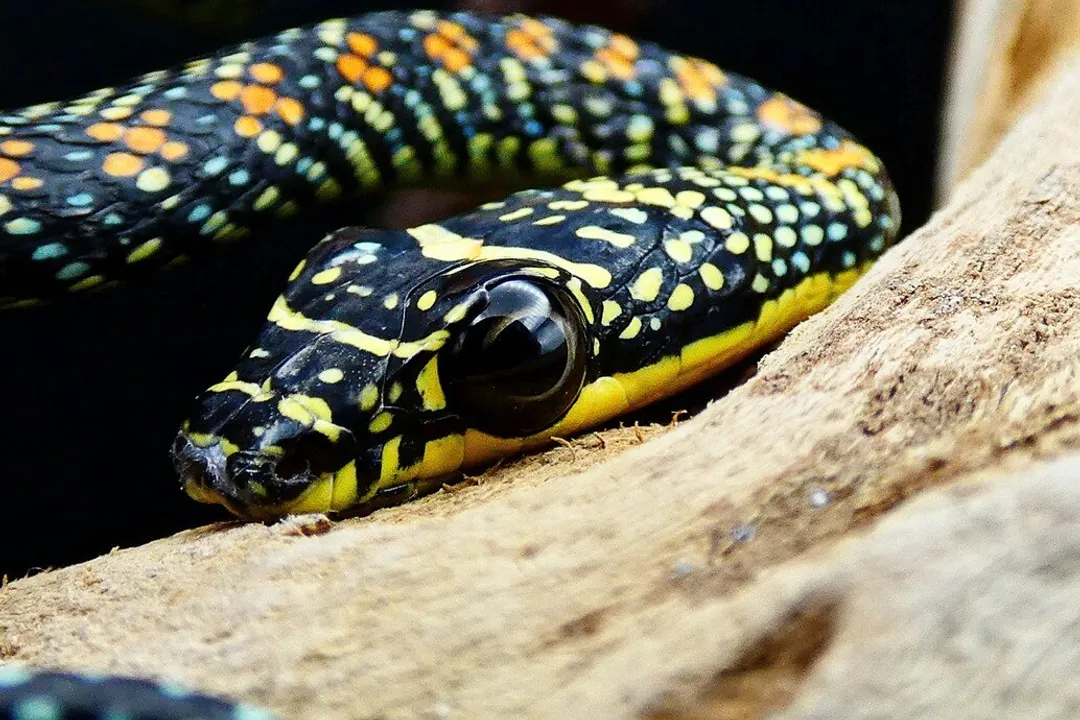
Chrysopelea paradisi is native to a large swath of Southeast Asia. [2][7] Its geographic distribution includes areas like India, Indonesia, Malaysia, the Philippines, Thailand, and Singapore. [1][9] This range suggests a preference for tropical and subtropical environments. [1]
The snake is overwhelmingly arboreal, spending the vast majority of its life high up in the forest canopy. [5][9] This environment provides the necessary launch points for gliding and a rich supply of their preferred food sources. [1] While primarily associated with primary forests, they have shown adaptability, often being found in secondary growth forests, plantations, and even in suburban areas, as long as suitable tall trees are present. [1][8] For instance, sightings near human structures, such as windowsills in Malaysia, confirm their willingness to occupy modified landscapes. [6]
Considering the tropical climate they inhabit, moisture and temperature regulation are constants in their daily life. The ability to quickly cross open spaces via gliding might be an effective way to regulate exposure to ground predators or to reach a sunnier, warmer perch without descending into potentially cooler or damper undergrowth. [5]
# Diet and Predation
As active hunters in the arboreal zone, the paradise flying snake relies on speed and stealth to secure meals. [5] Their diet consists primarily of smaller vertebrates that share their treetop habitat. [2]
The typical prey items include:
This dietary preference reinforces their classification as active predators that patrol the branches, rather than ambush hunters waiting on the forest floor. [5] The swift, darting movements required for catching agile prey like lizards in the branches likely translate well to the necessary quick reaction time needed for a safe launch into a glide. [3]
# Venom and Safety
One of the most frequently asked questions concerning any snake is its danger level to humans. The paradise flying snake possesses venom, making it technically venomous, but it is not considered medically significant to people. [1][3]
The venom is delivered via rear fangs. [1] While it is potent enough to subdue their usual prey—lizards and small amphibians—its effect on humans is extremely mild. [3] A bite would likely result in localized swelling, slight discomfort, or itching, but no serious systemic effects are expected. [1][3] Because their fangs are located toward the back of the mouth, delivering a deep, effective venomous bite to a human is also inherently more difficult for the snake. [1] In essence, the average person should feel more awe than fear when spotting one gliding overhead. [8] They are generally considered non-aggressive toward humans unless provoked or cornered, which is true of most wild snakes. [8]
The inherent caution when interacting with any wildlife remains paramount. Even a non-lethal bite requires basic antiseptic care, much like any minor scratch or puncture wound. [3] Their tendency to flee vertically into the canopy when disturbed supports the idea that ground-level encounters, where a defensive bite might occur, are rare. [5]
Related Questions
#Citations
Chrysopelea paradisi - Wikipedia
Paradise Flying Snake Animal Facts - Chrysopelea paradisi
Paradise Flying Snake Truly Falls With Style | HowStuffWorks
Paradise flying snake facts, distribution & population - BioDB
Comprehensive Care Guide for Paradise Flying Snakes (C. paradisi)
Malaysia. outside my window. Paradise flying snake? - Reddit
Flying Snakes | National Geographic
Flying Snakes - Summit Wildlife Removal
Paradise Tree Snake - Singapore - National Parks Board (NParks)