How does the water loss rate of the Sphaerodactylus parthenopion compare to the big-scaled least gecko?
Answer
It loses water about 70 percent faster
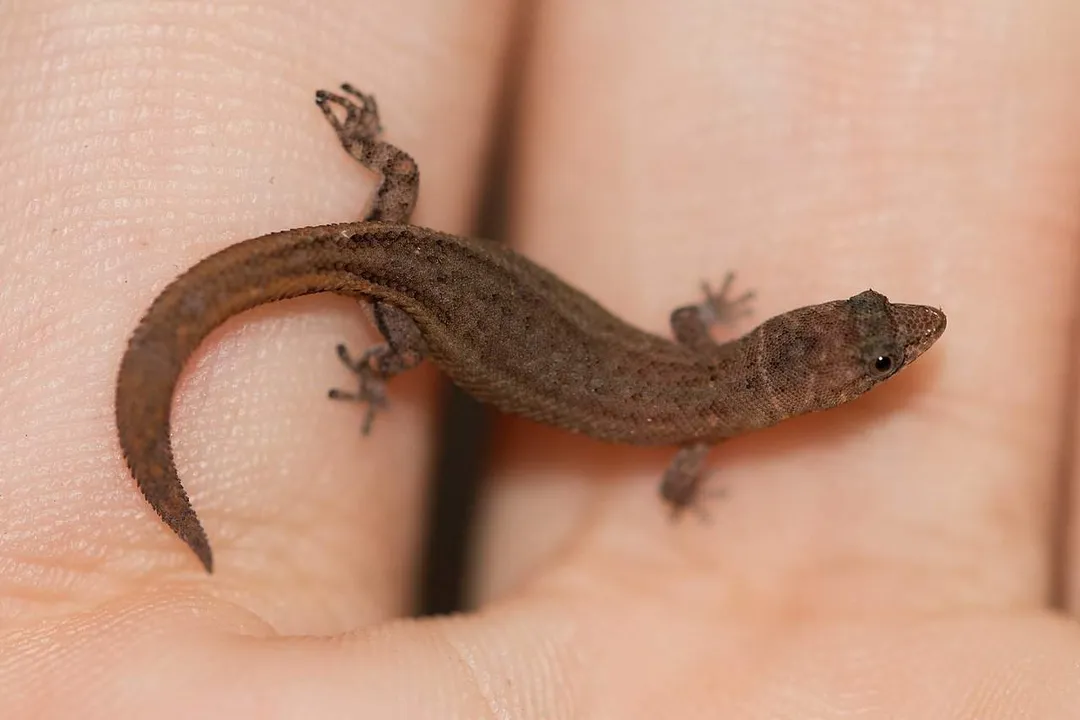
The Sphaerodactylus parthenopion faces a significant physiological disadvantage regarding moisture retention due to its extremely small size, which results in a massive surface-area-to-volume ratio. This physical attribute makes it highly susceptible to dehydration, causing it to lose water approximately 70 percent faster than its slightly larger relative, the big-scaled least gecko, known scientifically as Sphaerodactylus macrolepis. Because it lacks specialized adaptations to mitigate this rapid evaporation, the gecko is forced to restrict its movements to humid microhabitats, such as the undersides of rocks or leaf litter, to survive in its typically dry environment.
Related Questions
What is the approximate snout-to-vent length of the Sphaerodactylus parthenopion?Which geographic locations are identified as habitats for the Virgin Islands Dwarf Gecko?What is the primary dietary classification of the Sphaerodactylus parthenopion?How does the water loss rate of the Sphaerodactylus parthenopion compare to the big-scaled least gecko?Why does the Sphaerodactylus parthenopion prefer the undersides of rocks and leaf litter?What hunting strategy does the Sphaerodactylus parthenopion utilize to capture prey?What makes replicating the wild diet of the Sphaerodactylus parthenopion difficult in captivity?What physical trait creates the most significant challenge for the Sphaerodactylus parthenopion regarding survival?How is territorial behavior linked to the habitat of the Sphaerodactylus parthenopion?What time of day is the Sphaerodactylus parthenopion most likely to reduce its activity?