How does the Titicaca Water Frog primarily sustain itself physiologically?
Answer
It relies instead on extensive cutaneous respiration.
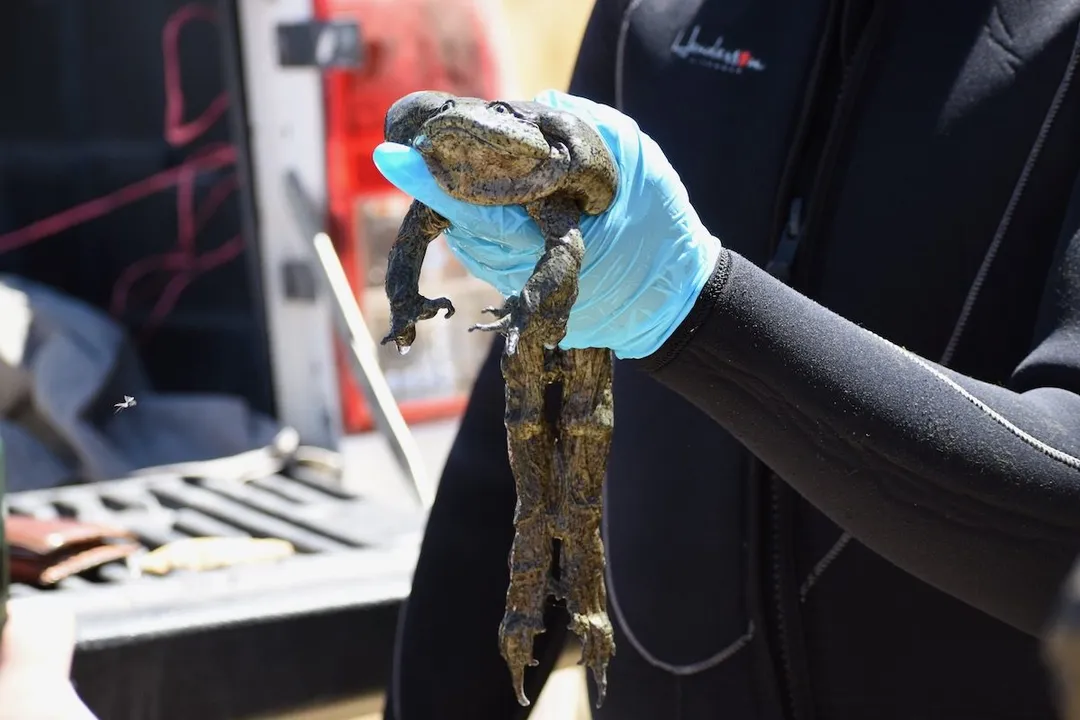
The frog is entirely aquatic and relies on breathing through its skin, a process known as extensive cutaneous respiration, as its lungs are not sufficient for long periods.
Related Questions
What feature gives the Titicaca Water Frog its common name?How does the Titicaca Water Frog primarily sustain itself physiologically?At what approximate elevation above sea level is Lake Titicaca situated?According to official definitions, what is the IUCN conservation status of *Telmatobius culeus*?What alarming population decline estimate has been noted over the last decade for this species?What is the most pervasive threat contributing to the rapid decline of the species?Why does the frog's reliance on cutaneous respiration make it acutely sensitive to water pollution?For what purposes is the frog often harvested for local traditional remedies?What type of conservation strategy involves maintaining colonies outside of Lake Titicaca, such as at Chester Zoo?What must be aligned with the survival of the frog for long-term in-situ success?