How does the coloration of hatchlings and younger black mambas contrast with adults?
Answer
Noticeably darker, frequently appearing black or dark grey
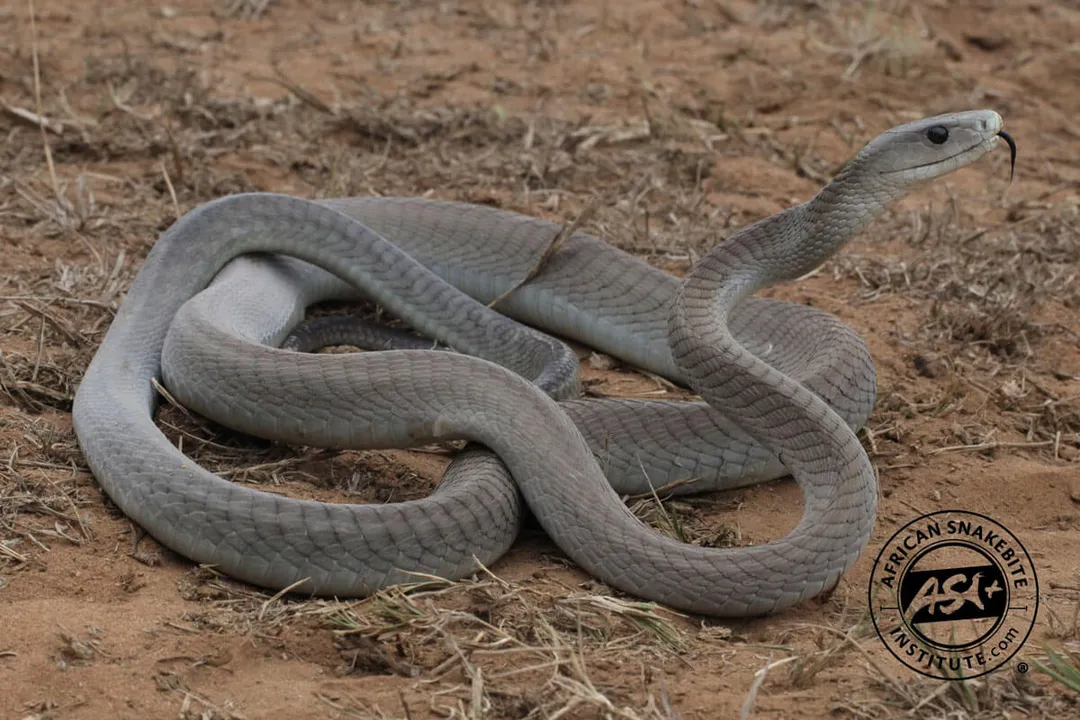
Juveniles, including hatchlings, present a distinct contrast in appearance when compared to mature adults. Younger black mambas often exhibit a noticeably darker coloration, frequently manifesting as black or dark grey tones. This difference suggests a developmental shift in camouflage strategy; younger, smaller snakes may be better suited to blending in with shadowy leaf litter early in life. As they grow and mature, their coloration tends to lighten considerably, transitioning towards the more earth-toned palette characteristic of the adult.
Related Questions
What is the impressive maximum length reported for the black mamba?Unlike bulky constrictors, what is the profile of the black mamba's body for its length?What colors typically describe the exterior coloration of adult *Dendroaspis polylepis*?How does the coloration of hatchlings and younger black mambas contrast with adults?Which specific physical feature gives the black mamba its namesake color across all ages?How is the distinctly long and narrow head structure of the black mamba often described?Where are the specialized, fixed fangs of the black mamba located within its jaw structure?What quality characterizes the smooth scales covering the black mamba's skin?What type of pupils are equipped in the large eyes of the black mamba?What physical attribute is linked to the black mamba's slender profile regarding its movement?What classification does the black mamba hold regarding venomous snakes in Africa based on length?