What are the physical features of a sea snake?
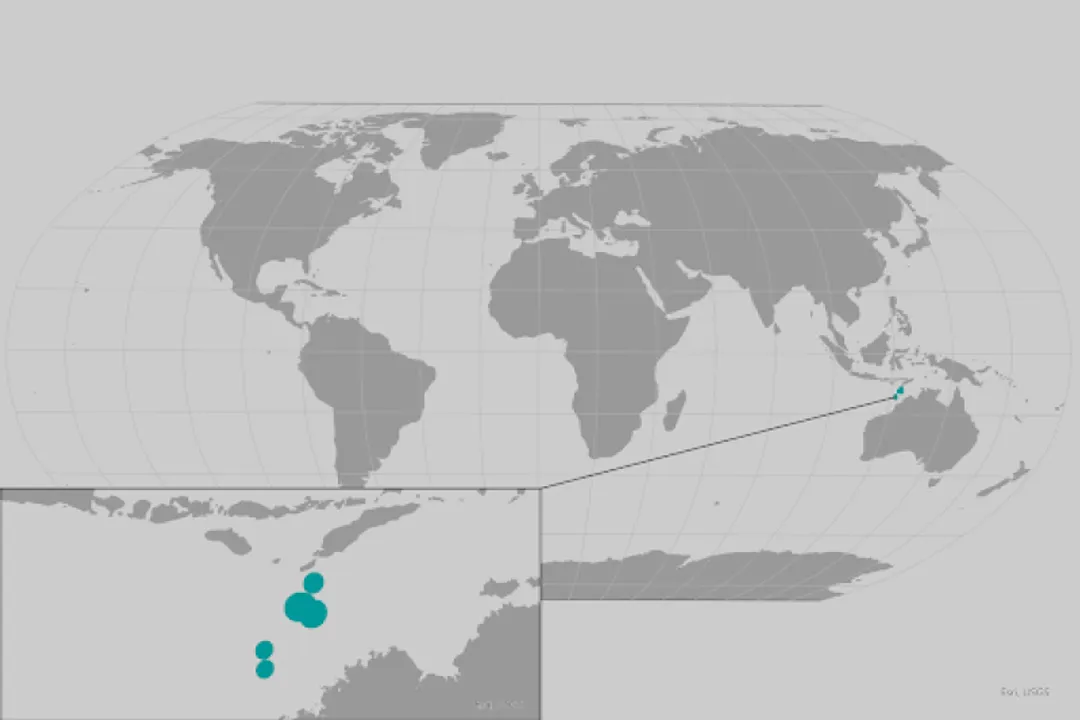
Marine reptiles represent a fascinating curve in evolution, and among them, sea snakes stand out as creatures almost entirely committed to the aquatic environment. Unlike seals or dolphins, which are mammals, sea snakes are reptiles—cold-blooded, air-breathing, and possessing scales—yet they spend virtually their entire lives swimming in the oceans of the Indian and Pacific. [1][5] Of the recognized species, there are approximately sixty-four true sea snakes, known for their specialized anatomy that permits a fully marine existence. [1][8]
# Swimming Adaptations
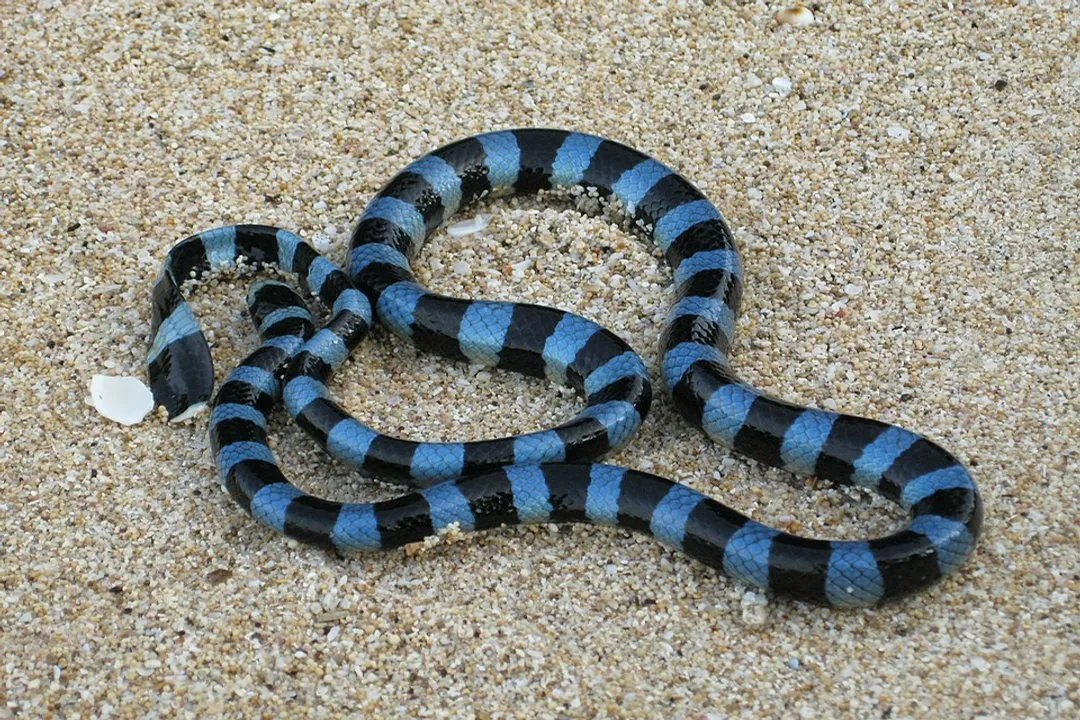
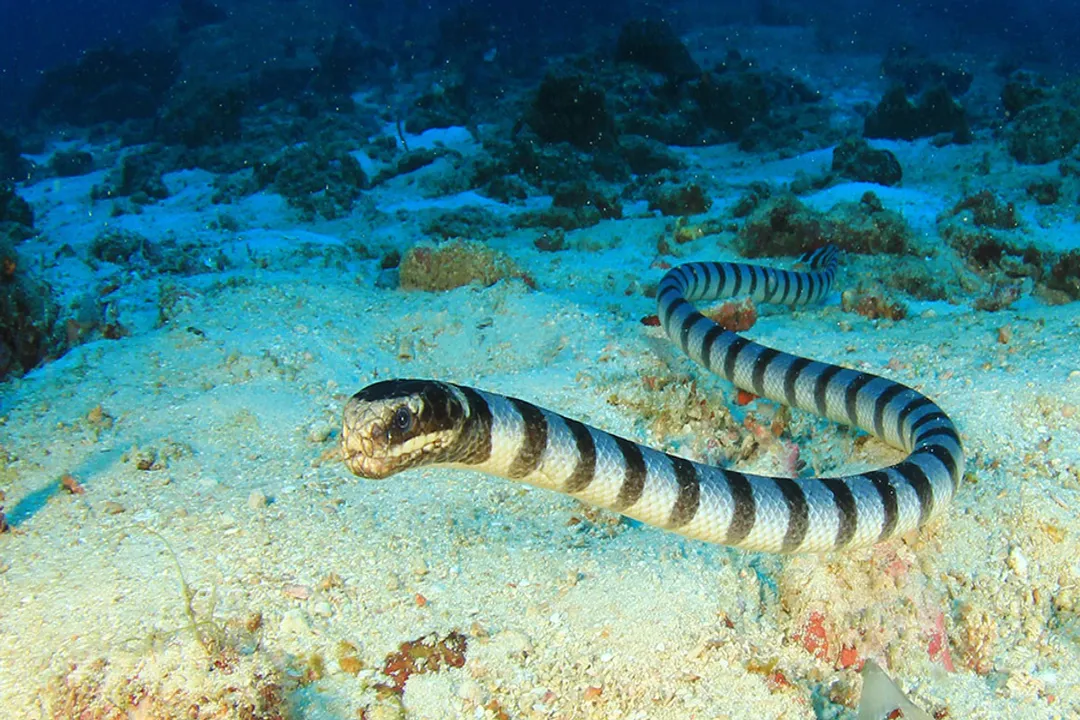
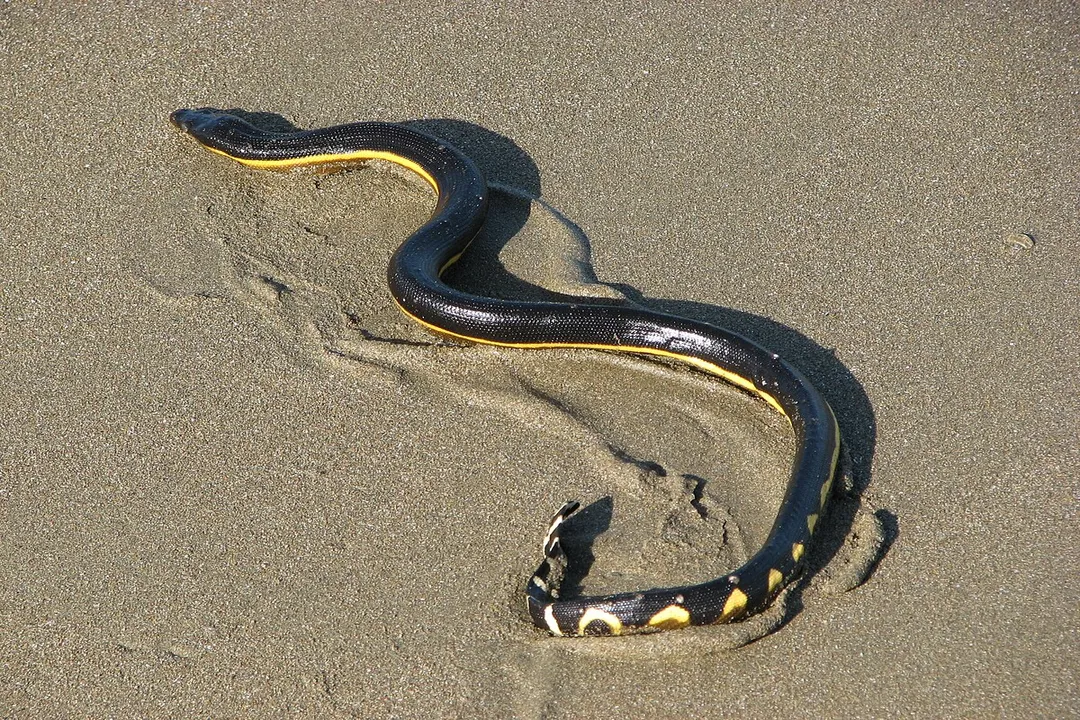
The most immediate physical difference distinguishing a sea snake from its terrestrial cousins is the shape of its posterior. Terrestrial snakes move by sidewinding or rectilinear motion, but sea snakes have evolved a specialized means of propulsion: a laterally compressed, paddle-shaped tail. [3][5] This flattened tail acts like a powerful rudder and propeller, granting them exceptional agility in the water. [9] While some species, like the Olive Sea Snake (Aipysurus laevis), retain a relatively thicker body and a shorter tail, indicating a preference for coastal or reef habitats, the pelagic Yellow-bellied Sea Snake (Hydrophis platurus or Pelamis platura) is characterized by a sleek, slender body and that distinctive paddle tail, perfectly suited for long-distance oceanic travel. [3][7][6]
Further adaptation for life without land contact involves a significant reduction in the scales on their underside. Land snakes rely on their broad ventral scales to grip the ground for locomotion; however, because sea snakes primarily rely on their flattened bodies and tails for movement in the water, these scales are much smaller or virtually absent. [1][5] This reduction minimizes drag in the water, optimizing their hydrodynamic efficiency.
# Air Access
Despite their mastery of the ocean, sea snakes remain reptiles and must surface to breathe atmospheric air. [5] To manage this requirement efficiently while diving or swimming, their respiratory system has been modified. Specifically, their nostrils, located on the top of the head as expected, are equipped with specialized, one-way valves. [5] These valves automatically close when the snake submerges, preventing water from entering the respiratory passages. [9] This ingenious mechanism allows them to feed or rest underwater for extended periods, needing to surface only periodically to exchange gases. [5]
# Salt Glands
Living in the ocean presents a constant physiological challenge for reptiles: managing high levels of salt intake through drinking or absorbing it through the skin during feeding. To counter this, sea snakes have developed remarkable excretory systems. They possess large salt-excreting glands located beneath the tongue. [1][2] These sublingual glands work continuously to process excess salt absorbed from their environment or diet, excreting it as a concentrated brine. [5] It is fascinating to compare this solution to how other marine vertebrates cope; for instance, marine turtles use lachrymal glands near their eyes to "cry out" excess salt, while mammals rely heavily on their kidneys. The snake's modification of a terrestrial gland structure for this intense marine need showcases a highly specialized evolutionary path. [5] If you ever observe a sea snake basking or resting near the surface, you might occasionally see a visible secretion around its mouth, which is often this salty discharge. [2]
# Coloration and Pattern
The external appearance of sea snakes varies widely, often reflecting their preferred environment. The Yellow-bellied Sea Snake provides a stark example of sharp visual distinction: it is typically dark black on the dorsal (top) side and bright yellow on the ventral (bottom) side. [3][6] This dramatic countershading likely serves as camouflage in the open ocean, breaking up its outline against the dark depths when viewed from above and the bright surface when viewed from below. [3] In contrast, species found closer to the substrate, such as the Olive Sea Snake, tend to have a more uniform, brownish-green color, blending better with rocky reefs or seagrass beds. [7] The presence of paired nasal scales is another feature noted in some species, like Pelamis platura, adding another layer to their head morphology. [6]
# Defense and Diet
Sea snakes are notoriously venomous, possessing some of the most potent toxins in the animal kingdom, often far more toxic than those found in many terrestrial snakes. [1][3] This venom is delivered via hollow fangs that act like hypodermic needles. [9] The venom is primarily neurotoxic, meaning it targets the nervous system, leading to paralysis. [3] Despite this incredible chemical defense, most sea snakes are relatively shy and non-aggressive toward humans. [1] Their diet predominantly consists of fish, which they subdue quickly with their venom. [2] An interesting variation exists within the family, however; while many species are piscivorous (fish-eating), the Olive Sea Snake (Aipysurus laevis) has been documented consuming a wider array of prey, including fish eggs and, in some cases, even algae and seagrass, suggesting a less specialized or more opportunistic diet in certain populations or life stages. [7]
# Reproduction at Sea
Perhaps one of the most defining features of their adaptation to the ocean is their reproductive strategy. While most land snakes reproduce by laying eggs (oviparous), the majority of true sea snakes are viviparous, meaning they give birth to fully formed, live young right in the water. [1] These newborn snakes are immediately capable of swimming and breathing air, ready to face the challenges of their marine habitat without needing to immediately seek land. This transition away from egg-laying completely frees them from the terrestrial environment, cementing their status as true pelagic reptiles. [1] The exception lies with the sea kraits, which are closely related but often return to land to lay their eggs, highlighting a divergence in reproductive adaptation even within this related group. [5] Considering that a female sea snake spends her entire gestation period at sea and delivers live young there, the energetic demands placed on her cardiovascular system to support both herself and her offspring while constantly managing buoyancy and gas exchange must be immense, making her physiological performance perhaps the most remarkable feature of all.
Related Questions
#Citations
Sea snake - Wikipedia
Sea Snakes Facts and Information | United Parks & Resorts
Yellow-bellied Sea Snake - The Australian Museum
Dusky Sea Snake | NOAA Fisheries
A deep dive into sea snakes, sea kraits and their aquatic adaptations
Pelamis platura (Yellowbelly Sea Snake ... - Animal Diversity Web
Olive Sea Snake | Oceana
"Sea snakes" can include true sea snakes (of which there are 64 ...
The Yellow-bellied Sea Snake Slithers in the Open Ocean