What are the physical features of a robin?
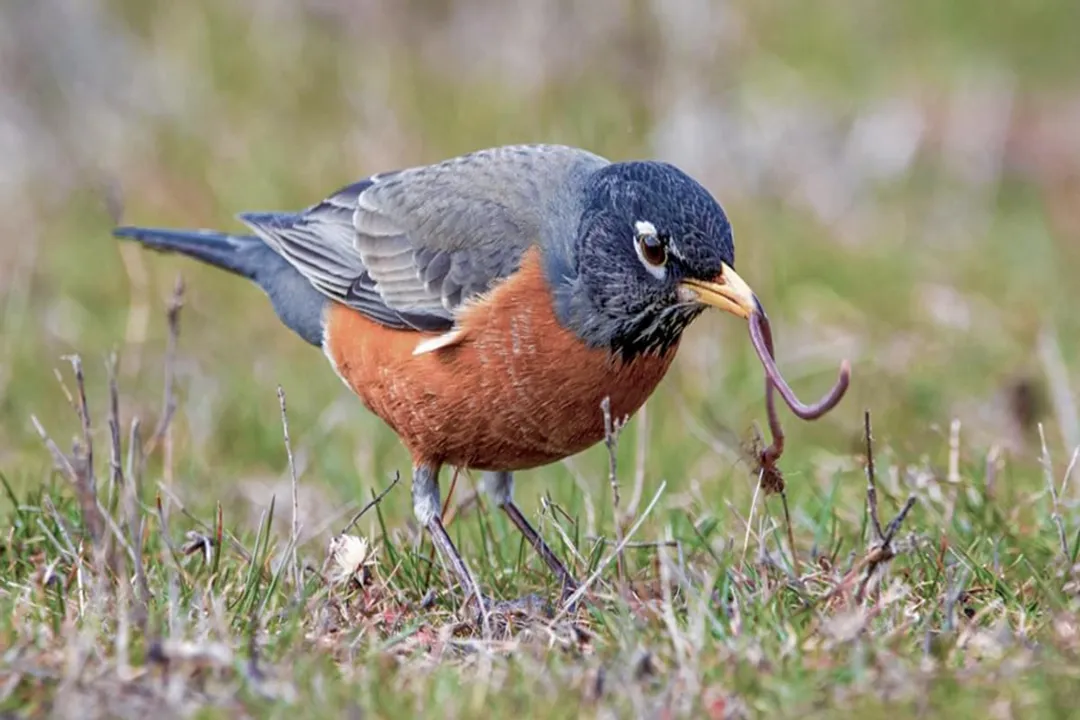
The American Robin, or Turdus migratorius, is perhaps the most recognized songbird across the continent, often signaling the shift from winter to warmer months. Its familiarity, however, often means its specific physical details are overlooked. While its brick-red breast is iconic, a closer examination of its structure reveals a bird perfectly engineered for its adaptable, ground-foraging lifestyle, from the deepest woodlands to manicured suburban lawns. Understanding these features paints a clearer picture of how this common thrush manages to thrive across such a vast geographical range.
# Size Stature
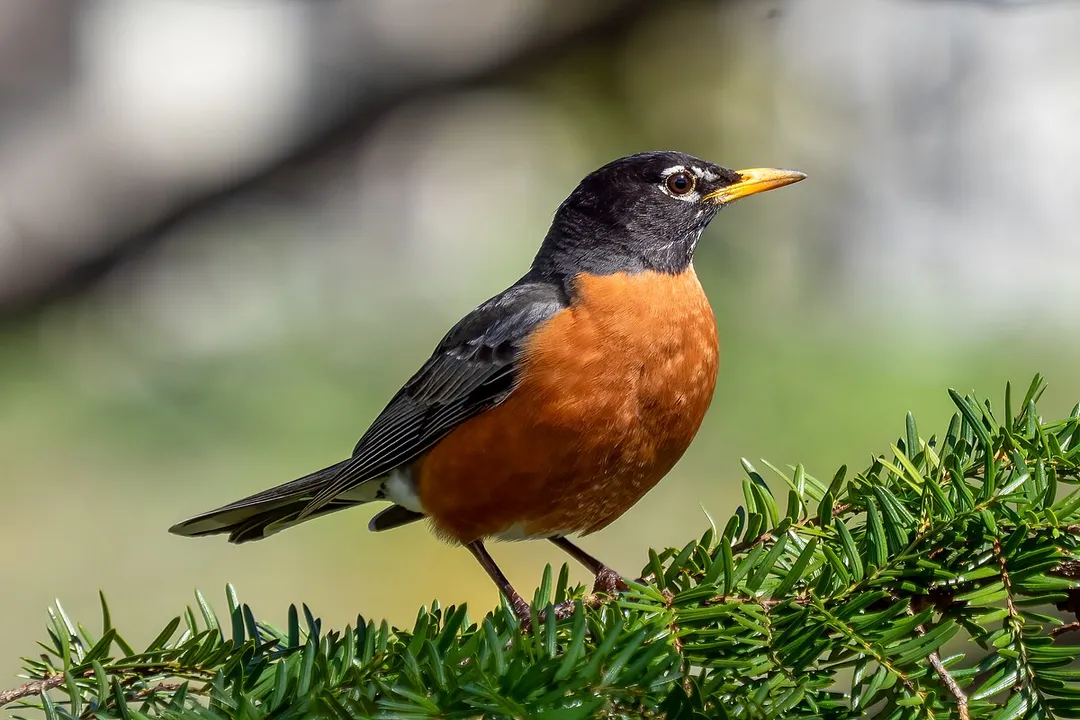
The robin holds a significant presence among its avian relatives, classifying it as a large songbird. Adults measure between 8 and 11 inches in length, though some observations place the range slightly tighter at 9 to 11 inches from bill to tail tip. When it comes to wingspan, the measurement typically spans from about 12 inches up to 16 inches, with specific metrics noting ranges like 14 3/4 to 16 1/2 inches. Despite its relatively large visual profile, its weight is quite moderate, generally falling between 2.7 and 3.0 ounces, which translates to roughly 77 to 85 grams. This places it firmly as the largest of the North American thrushes. For context, this weight is often compared to roughly three AA batteries. This combination of moderate weight and substantial length contributes to its distinct, round-bellied, upright posture when standing on the ground.
# Color Pattern
The patchwork of color on an adult robin is what makes it instantly identifiable, though this pattern shows subtle but important variations based on sex and region. The defining characteristic is the breast and belly, which displays a warm, rusty, or brick-red hue. This contrasts sharply with the upperparts, which are generally a muted, gray-brown. The head color is a key area of difference between the sexes. Male robins typically sport a darker, nearly black head, providing a striking contrast against the back and breast. Conversely, females possess a paler head, often appearing more grayish-brown, which creates less severe contrast with the back feathers.
Both sexes share a white throat region, which is characteristically streaked with blackish or whitish markings, more pronounced in males. Completing the body pattern is a white patch located on the lower belly, right where the underside meets the tail feathers; this white area is a very noticeable field mark when the bird is viewed in flight from below.
The American Robin is not entirely uniform across its range, however. Populations in western North America are often observed to be slightly paler overall compared to their eastern counterparts. The T. m. confinis subspecies, isolated in the Sierra de la Laguna mountains of southern Baja California, presents the most dramatic difference: it is described as the palest of all recognized subspecies, featuring a uniform pale gray-brown head and upperparts, with underparts of a pale buffy orange tone, often lacking the typical white on the tail corners. This regional variation means that observing the degree of redness or the darkness of the head can actually offer clues about where a specific bird originated.

# Head Features
The robin’s head structure is essential for both its diet and social signaling. Its bill is primarily yellow, featuring a dark or dusky tip that can become more extensive as the bird moves into winter. It is described as being medium-length and slightly curved, a shape well-suited for its varied diet. This strength allows the bird to pull tenacious earthworms from moist soil, as well as to pluck and crush the berries that form a large part of its winter sustenance.
The eyes are large and round, contributing to the bird's excellent vision, which is crucial for its hunting style. Robins can perceive fine detail and may even see a broader spectrum of colors than humans, allowing them to react quickly as they fly through dense foliage. A distinct facial feature is the ring of white markings—white arcs or crescents—that surround the eyes, contrasting against the darker head feathers.
When considering its body structure for survival, it is interesting to note that the robin’s physiology has adapted specifically to its dietary needs, particularly its ability to handle large volumes of fruit in the fall and winter. Their esophagus is exceptionally stretchy, allowing them to consume huge quantities of berries quickly before dark. Furthermore, their intestines have specialized in processing the waxy coatings found on berries, ensuring they extract maximum caloric value from this seasonal food source when insects are scarce. This digestive flexibility, coupled with a fast metabolism that demands constant energy, is a direct physical requirement supporting their omnivorous year-round presence in many areas.
# Juvenile Appearance
The appearance of a young robin is markedly different from the familiar adult, a necessary camouflage for vulnerable fledglings. Juvenile robins are predominantly brown, and their most distinguishing feature is the heavy spotting or speckling across their chests and breasts. Their backs may also appear mottled. They possess pale markings on the face and whitish wing coverts. This spotted pattern helps them blend into the dappled light of the understory, offering better concealment from predators while they are learning to forage near the ground. These young birds gradually acquire their familiar reddish breast feathers only after their first seasonal molt, at which point their plumage begins to resemble that of the duller adult female. First-year males can often be difficult to distinguish from adult females, as they retain a duller overall appearance.

# Locomotion Structure
The American Robin’s legs and feet are built for efficiency on the ground, which is where they spend a great deal of foraging time. They possess long, sturdy legs supported by strong musculature, enabling them to run or hop quickly across open areas to evade threats or cover ground while hunting. While many birds that spend more time in trees are strictly "hoppers," robins are adept at both hopping and running. They are often observed employing a characteristic pattern: short, rapid steps interspersed with frequent pauses, during which they scan the surroundings or focus on detecting prey activity beneath the leaf litter.
The wings are constructed for effective migration, possessing a pointed shape typical of birds that rely on flapping flight over long distances. The wings are broad enough to provide strong, steady flight, but also allow for quick take-offs, which aids in predator escape. A less obvious, but functionally important, physical marker appears only in flight: the underwing coverts can show an orange reddish tinge. The tail is medium-length, providing necessary quick steering adjustments needed when navigating through branches. When a robin lands, it habitually performs a tail-flick, moving the tail downward several times in a characteristic motion.
# Feathering Insulation
The external covering of the robin is specialized for maintaining stable internal temperatures despite wide environmental fluctuations. Their feathers are described as both soft and dense, serving the dual purpose of providing insulation against cold and offering waterproofing to shed rain. Like all birds, robins have hollow bones, a characteristic that keeps their overall frame light enough for flight while maintaining the necessary strength to handle landings and take-offs. Beneath the feathers, the chest structure features a pronounced keel bone, which provides the anchor point for the powerful flight muscles necessary for sustained aerial movement.
# Unique Identification Marks
While we often think of the robin's breast color as uniform, an interesting detail concerns the unique markings on that very feature. It is reported that each individual robin possesses a completely unique pattern on its red breast, much like a human fingerprint. This subtle variation, when combined with the known differences in head coloration across subspecies and sexes, suggests that field identification is often a combination of general pattern recognition (dark head/red breast) and observation of subtle, unquantifiable color saturation or specific marking arrangement. Furthermore, the contrast between their common appearance and their potential for significant regional variation—such as the extremely pale Mexican subspecies—highlights that the "typical" robin description is heavily skewed toward the eastern North American populations. A person observing a robin in coastal California, for instance, is seeing a slightly different physical presentation than someone in New York, even if both birds are generally categorized as T. migratorius.
Related Questions
#Citations
American Robin Identification - All About Birds
American robin | Smithsonian's National Zoo and Conservation ...
Facts: Robin Characteristics - Journey North
American Robin | Audubon Field Guide
Understanding the Body Structure of the American Robin
American robin - Wikipedia
American Robin - Pajarito Environmental Education Center
American Robin Facts - Perky-Pet
American Robin - Turdus migratorius - New Hampshire PBS