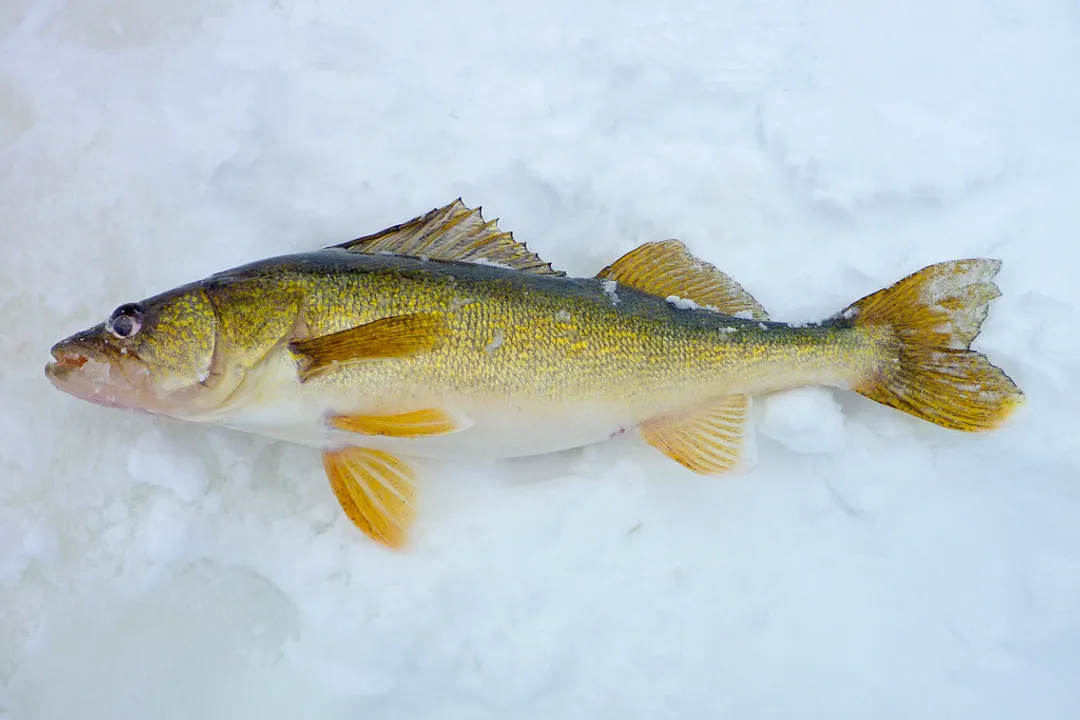
How does the coloration of a walleye inhabiting turbid rivers contrast with one from clear water lakes?
Turbid water fish adopt significantly darker, often dusky green or brown pigmentation.
The physical appearance of the walleye demonstrates significant plasticity, allowing it to utilize effective natural camouflage across varied habitats. When situated in environments with low light penetration, such as turbid rivers, lakes with muddy bottoms, or deep basins, the fish develops a darker pigmentation. This usually manifests as dusky green or rich brown hues across its back and sides, enabling it to blend seamlessly against a dark substrate. Conversely, walleye living in environments characterized by clearer water, brighter sunlight, or pale, sandy bottoms tend to exhibit lighter, more yellowish or golden overall tones, highlighting the direct environmental influence on their natural coloration.