How does the burrowing tendency of *T. albopilosus* commonly change as the spider matures?
Answer
Slings exhibit much stronger burrowing tendencies than their adult counterparts.
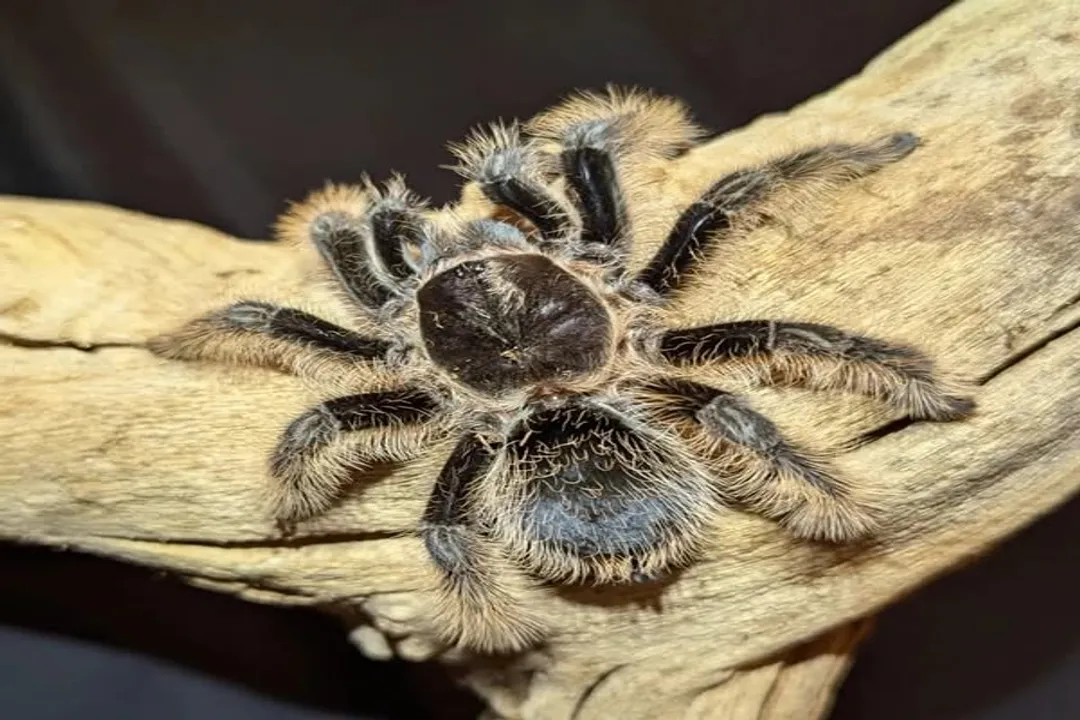
Juvenile Curly Hairs (slings) are noted to have much stronger burrowing tendencies, often digging a significant starter burrow that adults frequently abandon.
Related Questions
What is the scientific name for the Curly Hair tarantula?How are *Tliltocatl albopilosus* primarily classified regarding their movement preference?What term accurately describes the digging behavior of the Curly Hair tarantula in the wild?How does the burrowing tendency of *T. albopilosus* commonly change as the spider matures?What is a key characteristic that distinguishes the Curly Hair from a strictly fossorial species?What is the general recommended substrate depth range for housing adult Curly Hairs?How does the recommended humidity management utilize the substrate depth for *T. albopilosus*?What trait makes the Curly Hair tarantula a favorite for newcomers to arachnid keeping?What behavior do slings often engage in that adults typically abandon?When setting up an enclosure, what practice related to maximizing vertical space should owners often avoid for an adult Curly Hair?What defensive action do Curly Hairs typically resort to before resorting to a bite when threatened?