Do Boykin Spaniels have hair or fur?
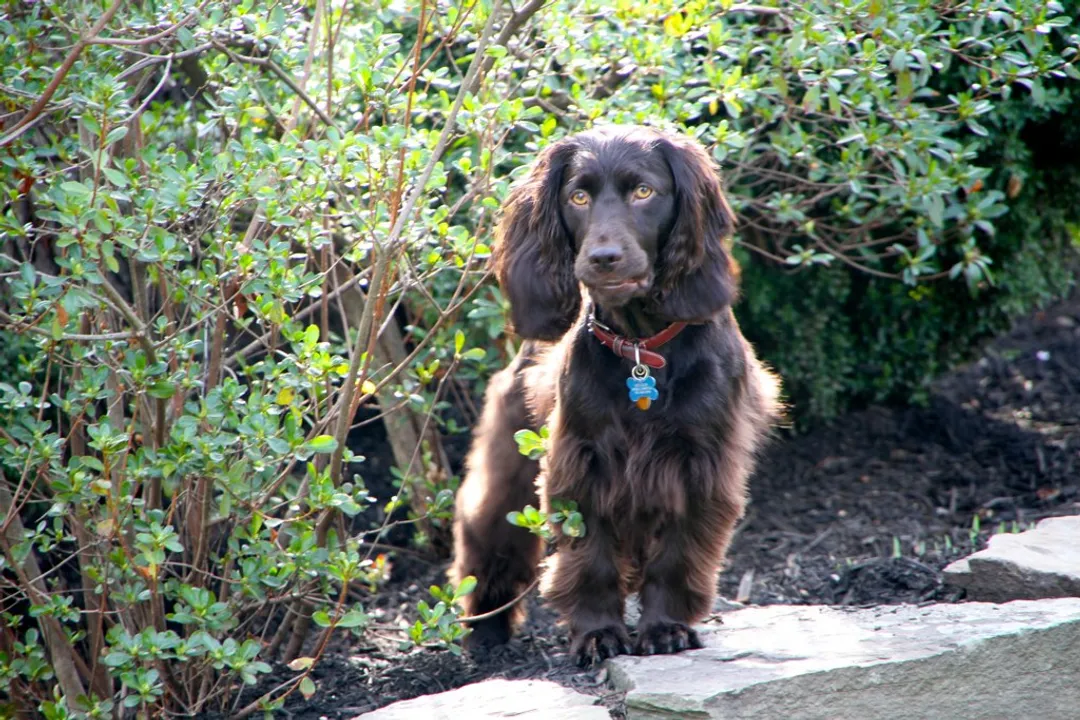
The physical covering on a Boykin Spaniel often sparks conversation among owners and admirers alike. When trying to categorize the dog's outer layer, people frequently ask whether it is technically hair or fur. In everyday language, this distinction usually boils down to shedding frequency and texture; dogs that shed minimally and have continuously growing coats are often labeled as having hair, while those that "blow" their coats seasonally are labeled as having fur. The Boykin Spaniel, a mid-sized sporting breed originating from South Carolina, presents a case where the distinction leans toward the "hair" side of the spectrum, though they possess characteristics shared by both traditional categories.
# Coat Description
To understand the classification debate, one must first look closely at what the breed standard describes. The Boykin Spaniel carries a medium-length coat that is expected to be dense and either flat or carrying a slight wave. It should not be overly curly or coarse. The texture itself is often noted as being fine and soft, sometimes even described as silky. This medium length is punctuated by feathering—longer, flowing sections of coat found primarily on the backs of the legs, the chest, and the underside of the tail.
The density of the coat is an important feature for a dog bred to work in the water and thick marshlands. A dense coat provides a necessary degree of insulation and water resistance. However, this density must be balanced with the texture; a coat that is too coarse or woolly would be far more prone to matting and heavy water retention, which is why the breed standard emphasizes a softer lay.
# Shedding Patterns
The main feature driving the "hair versus fur" argument for the Boykin is its shedding behavior. Most owners and breed authorities agree that the Boykin Spaniel is generally a low-shedding breed. This characteristic is highly desirable for families seeking a canine companion that leaves less fluff on the furniture and floors.
However, "low-shedding" does not mean non-shedding. Like any mammal with a hair cycle, Boykins do shed, though often subtly and continuously rather than in large clumps. Some owners observe that they do shed more noticeably, perhaps seasonally, but it rarely approaches the heavy undercoat shedding seen in breeds like Retrievers or Huskies. This minimal shedding profile is often attributed to the nature of their coat growth, which favors a longer anagen (growth) phase, characteristic of coats more commonly called "hair".
# Texture Versus Function
When comparing a Boykin to a heavy-coated breed like a Great Pyrenees (which has dense fur with a thick undercoat for extreme cold protection) or a short-coated breed like a Labrador (which sheds heavily but lacks significant undercoat or length), the Boykin occupies a middle ground based on texture and maintenance. The combination of density and softness offers a clue into the breed’s development. It stands to reason that a sporting dog designed for retrieving ducks in the often warm, humid climate of the South Carolina low country would require a coat that dries relatively quickly and doesn't snag excessively in dense underbrush. A coat that is too thick or woolly would become waterlogged and heavy, making swimming difficult, while a coat that is too thin would offer little protection from briars or insects. The silky, medium-length coat appears to be a successful compromise engineered for their specific historical workload.[1][4][6]
This means that while their genetics likely produce hair in the technical sense—meaning the hair growth cycle is long and shedding is minimal—their density and the need to manage the feathering give them maintenance requirements that can sometimes feel like a higher-maintenance fur coat.
# Grooming Demands
Because of the length and the presence of feathering around the legs, ears, and belly, consistent grooming is non-negotiable, regardless of what one calls the coat. The feathering is particularly prone to collecting debris, burrs, and moisture, making it an ideal spot for mats to form quickly if neglected.
# Maintenance Schedule
Owners report varying levels of brushing required, which is often tied to the dog’s activity level. A highly active dog running through fields or swimming frequently will need daily attention, whereas a less active companion might manage with less frequent brushing.
| Activity Level | Recommended Brushing Frequency | Primary Focus Area |
|---|---|---|
| Highly Active/Swimmer | Daily | Feathering, behind ears, legs |
| Moderately Active | Every other day | Coat ends, checking for tangles |
| Low Activity/Indoors | Two to three times per week | General body coat, light fluffing |
It is important to use the correct tools. A slicker brush followed by a metal greyhound comb is often recommended to ensure you are reaching down to the skin to prevent matting underneath the top layer of the coat. Skipping days can lead to painful, skin-tight mats that eventually require shaving, which can damage the coat's texture and growth pattern in the long run.
# Bathing and Clipping
Bathing requirements are standard for most dogs; usually necessary when the dog is dirty or starts to smell, but over-bathing can strip the coat of natural oils. While the breed standard does not typically call for extensive clipping, many owners opt for a "tidy up" or "summer cut" to manage the feathering, especially in very hot climates or for older dogs whose coat density may increase with age. If clipping is done, it should be done cautiously, usually only trimming the longer feathering to about 1.5 times its natural length, preserving the silhouette of the breed. Never shave a Boykin Spaniel completely down to the skin, as this can sometimes negatively affect the texture and density of the regrowth, making the coat coarser when it comes back in.
# Breed Consistency and Variability
One point of interest for new Boykin owners is the inherent variability within the breed standard, which plays a role in how their coat feels and behaves. While the standard calls for flat or slightly wavy, you will encounter dogs with nearly straight coats and others with distinct, soft waves. This subtle difference means that a dog with a wavier coat might be slightly more prone to tangles than a dog with a very flat coat of the same texture and length.
This variability is a good reminder that while we use the terms "hair" or "fur" as simple labels, the reality of a specific dog's coat is determined by a complex interaction of genetics, diet, climate, and individual grooming practices. For the Boykin Spaniel owner, the most productive path is to ignore the semantic debate over the word choice and focus instead on understanding the needs of their dog's specific medium-length, low-shedding, feathered coat.[1][4][7]
Related Questions
#Citations
Boykin Spaniel - Dog Breeds - American Kennel Club
A few boykin questions :) : r/BoykinSpaniels - Reddit
Boykin Spaniel - All About Dogs - Orvis
Breed Standard - Boykin Spaniel Puppies
Does anyone have pictures and/or written descriptions of a ...
Behind the Breed: Boykin Spaniel - Taste of the Wild Pet Food
Boykin Spaniel - Wikipedia
Boykin Spaniel | Wahl USA
Boykin Spaniel Dog Breed and Characteristics - Showsight Magazine