What is the lifespan of a fireleg tarantula?
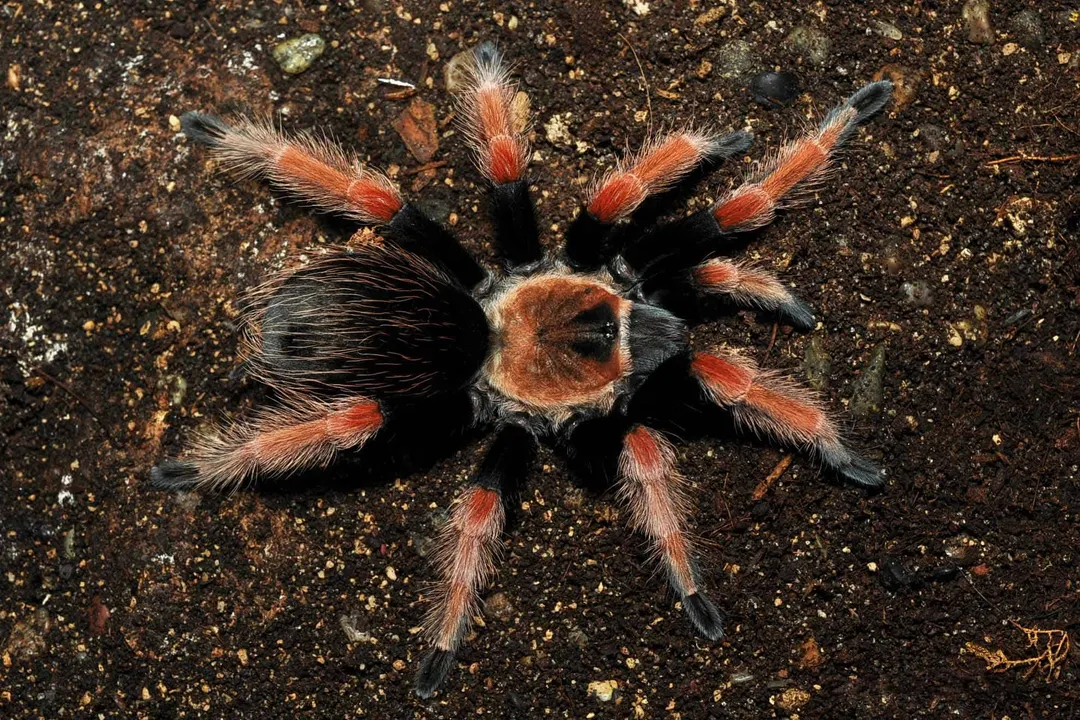
The dazzling Brachypelma boehmei, often called the Mexican Fireleg Tarantula, commands attention with the fiery contrast between its jet-black body and vibrant red or orange legs. [3][4] While its striking appearance secures its popularity among arachnid enthusiasts, one of the most compelling aspects for prospective owners is the considerable length of time these creatures can spend in their care. For those considering an acquisition, particularly a female, this is a commitment that can span decades, making the question of their longevity a central topic for any serious keeper. [2][3] Knowing the expected lifespan dictates the level of long-term planning required for housing, feeding, and general environment maintenance.
# Age Figures
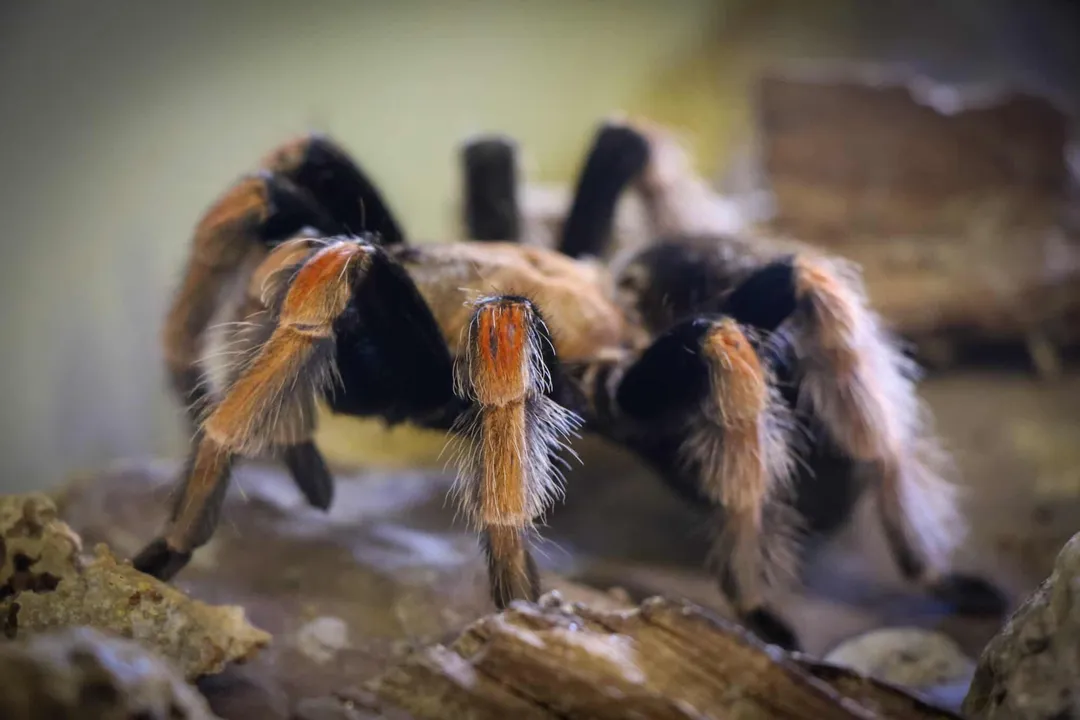
The lifespan of the Fireleg Tarantula is not a single, static number; rather, it is heavily influenced by the specimen's sex. [7] This species, native to the dry scrublands of Mexico, exhibits the well-known pattern in the tarantula world where females significantly outlive their male counterparts. [4][7]
When examining available data for B. boehmei kept as pets, a clear dichotomy emerges regarding longevity. Female Mexican Firelegs are renowned for their extended lives, frequently exceeding twenty years. [3][4] Some sources suggest this remarkable longevity can extend even further, with reported lifespans reaching up to 25 years, or potentially even into the 30 to 40-year range for females under optimal captive conditions. [2][3][5] This places them among the truly long-lived tarantulas available in the hobby. [1]
Conversely, the male Fireleg Tarantula has a considerably abbreviated tenure, especially after reaching sexual maturity. [4][7] Estimates for males often center around 6 to 10 years, with specific figures commonly cited as 8 years or around 6 to 8 years total. [2][3][5][7] Once a male matures—a process that takes several years itself—his remaining time is brief, often amounting to just a few months, particularly if he is used for breeding. [3][5]
To illustrate this substantial difference in potential life expectancy based on current keeper data, a general summary of reported longevity is helpful:
| Sex | Reported Minimum Lifespan | Reported Maximum Lifespan |
|---|---|---|
| Female | 15 Years [1] | Up to 40 Years [5] |
| Male | 6 Years [5] | 10 Years [2] |
It is worth noting that while one source lists the female lifespan range as 18-22 years and the male as 6-8 years, others provide figures that extend toward the higher end of those ranges, suggesting that careful husbandry can push these numbers past the standard estimate. [7]
# Gender Divide
The pronounced difference in lifespan between the sexes is rooted in the biological requirements of their respective life cycles. For the female, growth is continuous, albeit slow, marked by periodic molts that allow her to increase in size until she reaches her mature state. [3][5] She spends the majority of her life in this growth phase, accumulating resources and reaching reproductive maturity typically between 8 and 12 years of age. [3] Her lengthy life is dedicated to survival, eating, and eventually, egg-laying cycles. [3]
The male's trajectory is entirely different, driven by the biological imperative to reproduce quickly. [3] Once a male reaches maturity, he develops specific secondary sexual characteristics, such as tibial hooks and enlarged pedipalps, necessary for mating. [3] In the wild, the male's primary, and often final, goal after maturation is locating a female. [4] This often results in males becoming more active, potentially exposing themselves to greater risks, and in captivity, his entire post-maturation lifespan is a race against his biological clock, which often winds down shortly after he is ready to breed. [3][5] For the keeper, this means that the commitment to a male is short-term, while a female represents a commitment that could easily exceed two decades. [2][3]
# Husbandry Impact
While the species and gender set the genetic ceiling for Brachypelma boehmei's lifespan, the actual years achieved in a captive environment depend entirely on the quality of care provided. [7] Since this species is native to dry scrubland environments in Mexico, replicating those conditions accurately is key to pushing a female toward her upper age limit of 20 or 30-plus years. [3][4]
Temperature and humidity management are foundational to long-term health. These terrestrial burrowers thrive in moderate conditions, with ideal temperatures often cited in the mid-70s Fahrenheit (around 22°C to 25°C). [3][6] Maintaining a proper balance is critical; overly high humidity can promote mold growth in the substrate, while temperatures consistently too low can slow down metabolism to unhealthy levels. [3][5]
A crucial element directly tied to longevity is feeding management, particularly concerning the female's molting process. [3] Tarantulas must periodically shed their exoskeleton to grow. A large, well-fed female nearing her maximum lifespan might molt less frequently than a juvenile, perhaps once a year. [4] However, obesity is a significant threat in captivity, as an overweight abdomen can lead to severe molting complications or even rupture from a minor fall. [3] Therefore, the feeding schedule must be rigorously adjusted based on the physical appearance of the abdomen relative to the carapace—feeding less if the abdomen is oversized, and slightly more often if it appears thin. [3]
Furthermore, avoiding physical trauma is paramount for any long-lived pet. [3] Because B. boehmei is known to be somewhat defensive and skittish, keepers must exercise caution, especially during rehousing. [3] A fall, even from a short distance, can prove fatal to a heavy-bodied adult if the impact ruptures the abdomen, effectively ending a life that could have spanned twenty years. [3][5] Thus, enclosures must be wider than they are tall, with deep substrate to cushion any accidental slips while burrowing or moving. [3][5]
A practical way to ensure decades of good health involves creating a stable environment where variables rarely change. Imagine a female, now twenty years old, finally experiencing her twentieth winter. If her owner has kept the temperature within the 68°F to 76°F range consistently for two decades, she has avoided the metabolic shock that drastic temperature swings can induce, which is a quiet but effective way to contribute to her remarkable longevity. Consistency in this setup essentially acts as a form of preventative healthcare spanning generations.
# Male Tenure
Understanding the male lifespan is vital not just for expectation setting, but for reproductive planning within the hobby. [3] Since males mature in a relatively short window—often 4 to 7 years—and live only a short time afterward, breeders must act quickly. [3] A male that reaches maturity needs to be introduced to a receptive female relatively soon after his final, male-specific molt. [3]
This short post-maturation period underscores why captive breeding is so important for species like the B. boehmei, which is listed as Near Threatened or Endangered in the wild, facing threats like habitat loss and over-harvesting for the pet trade. [1][4] Successful captive breeding ensures the species remains available without putting further pressure on wild populations. [3] The commitment to a male spiderling, therefore, is less about long-term companionship and more about participating in the species' perpetuation over a few short, intense years of adulthood.
# Commitment Span
For a keeper choosing a female Mexican Fireleg, the choice is a genuine long-term commitment, similar in planning scale to acquiring certain parrots or tortoises, rather than the typical short-term commitment associated with many smaller, shorter-lived reptiles or amphibians. [7] A well-cared-for B. boehmei female is likely to be a presence in the household for twenty years or more, easily outlasting several other pets acquired at the same time. [2][3]
When setting up the enclosure, keepers should envision the setup not just for the next year, but for the next two decades. This means selecting high-quality, sturdy enclosures that will not degrade or warp over time, and investing in materials that maintain stable conditions for years. [3] Considering the creature will likely spend most of its time concealed in its burrow, focusing on the quality and depth of the substrate, which allows for the natural behavior of digging, aids in mental well-being, even if the spider is rarely seen. [3][5] This species rewards patient husbandry with a quiet, long-lived display of one of nature’s most vibrantly colored ground-dwelling spiders.
Related Questions
#Citations
Mexican Fireleg Tarantula (Brachypelma boehmei)
Brachypelma boehmei (Mexican Fireleg Tarantula) Information + ...
Mexican Fireleg Tarantula - Brachypelma boehmei - A-Z Animals
Mexican Fireleg Tarantula Facts & Photos - Wowzerful
Brachypelma boehmei (Mexican Fire Leg) Care Sheet
Mexican Fireleg Tarantula (Brachypelma boehmei) care guide
How Long Do Tarantulas Live? Tarantula Lifespan Chart