How does the bill shape of an Anhinga differ from that of a cormorant, reflecting different prey handling adaptations?
Answer
Anhingas possess a much longer, more slender bill ending in a very sharp point, resembling a spear or dagger.
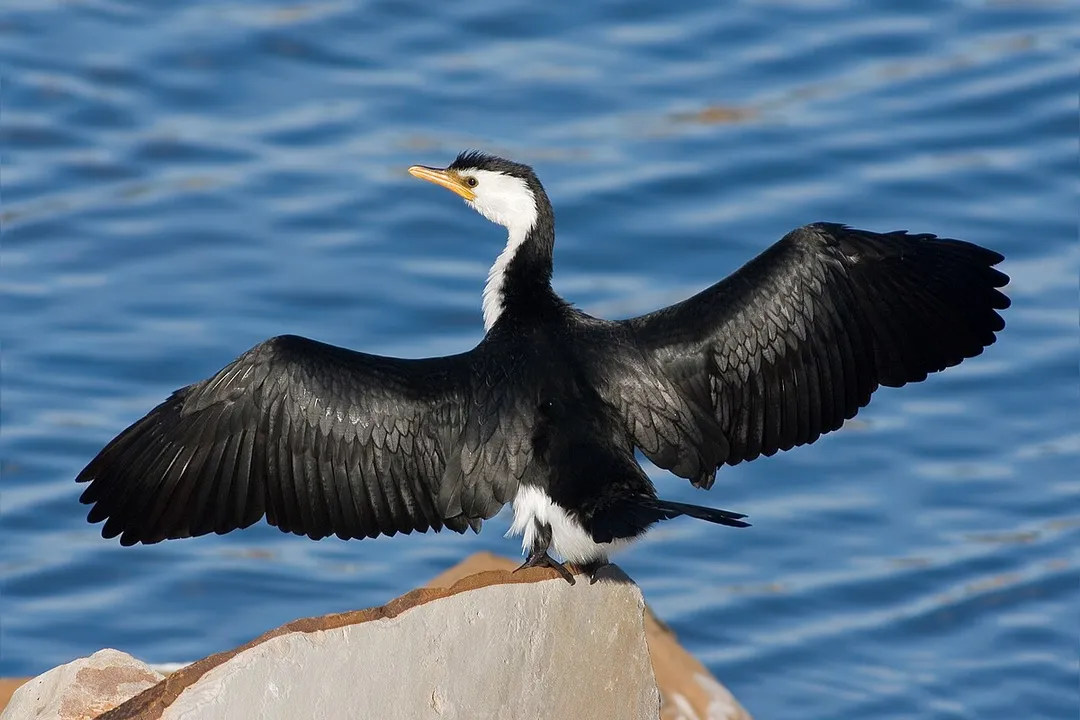
Cormorants have a thicker, slightly hooked bill for grasping, while Anhingas possess a much longer, more slender bill ending in a very sharp point, an adaptation that assists in stabbing slippery prey like eels or snakes.
Related Questions
What forms the staple of a cormorant's meal across the globe?How do cormorants propel themselves underwater during pursuit hunting?What common North American fish species are often targeted by the Double-crested Cormorant?What must a cormorant do with captured prey before swallowing it after returning to the surface?Why is swallowing prey headfirst a necessary orientation for cormorants?What causes the Anhinga to sometimes be referred to colloquially as the 'snakebird'?How does the bill shape of an Anhinga differ from that of a cormorant, reflecting different prey handling adaptations?What post-hunt behavior are cormorants famous for, which is necessary because their feathers are not completely waterproof?What environmental factor directly increases the likelihood of a cormorant consuming a snake?Which bird is more frequently associated with consuming reptiles like snakes and turtles?How often might cormorants dive for food when it is plentiful?