How did the development of ecosystems in South America compare to northern continents during this period?
Answer
South America developed distinct ecosystems due to continental isolation
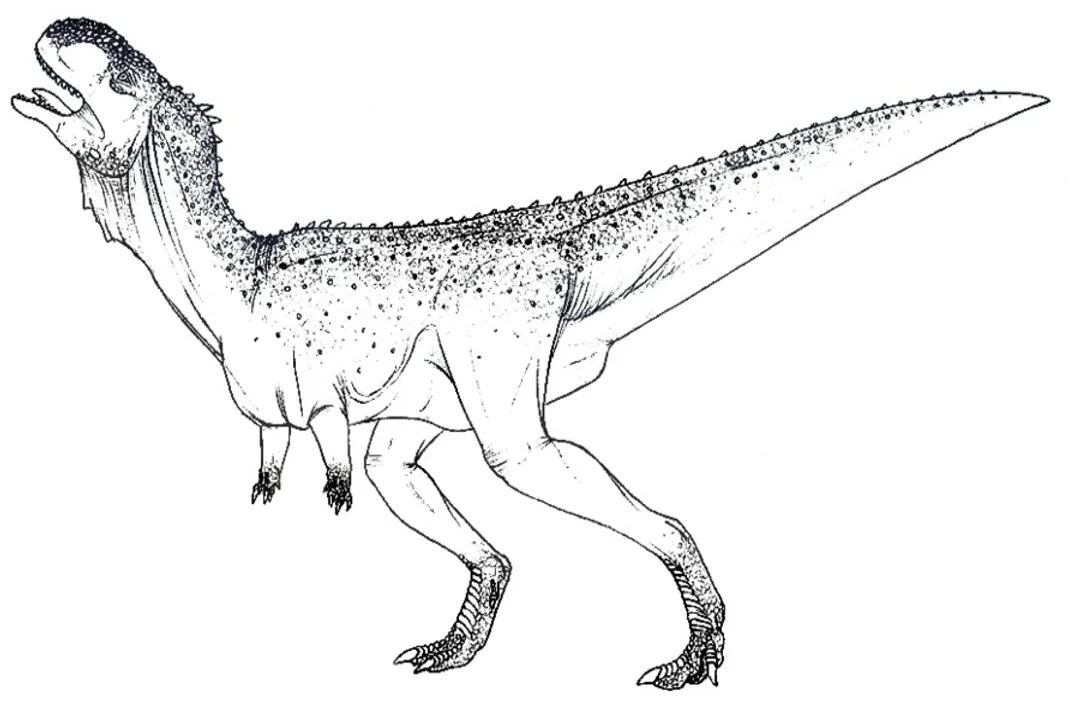
The Late Cretaceous South America, where *Xenotarsosaurus* lived, was geographically separated from the northern continents, leading to a critical evolutionary divergence. This isolation meant that South America developed distinct, unique ecosystems. In contrast to the northern continents, where Tyrannosaurids rose to prominence, the southern landmass favored local lineages, particularly the Abelisauroids, resulting in different anatomical solutions for large predatory roles. The presence of *Xenotarsosaurus* helps illustrate this independent evolutionary experimentation driven by geographic separation.
Related Questions
What does the name Xenotarsosaurus literally mean based on its fossil discovery?What specific feature defines the genus Xenotarsosaurus regarding its lower leg?During which geological stage did Xenotarsosaurus live in ancient Argentina?What geological layer in Argentina hosts the fossils of Xenotarsosaurus bonapartei?Which famous group of theropods, known for Tyrannosaurids elsewhere, did Xenotarsosaurus represent locally?What characteristic associated with Abelisauridae is likely shared by Xenotarsosaurus?What is the approximate estimated length of the medium-sized Xenotarsosaurus?How did the development of ecosystems in South America compare to northern continents during this period?Which anatomical feature differentiated Xenotarsosaurus’s snout from that of Tyrannosaurs?What did the moderate size and carnivore status of Xenotarsosaurus suggest about its predatory role?