What is unique about Xenotarsosaurus?
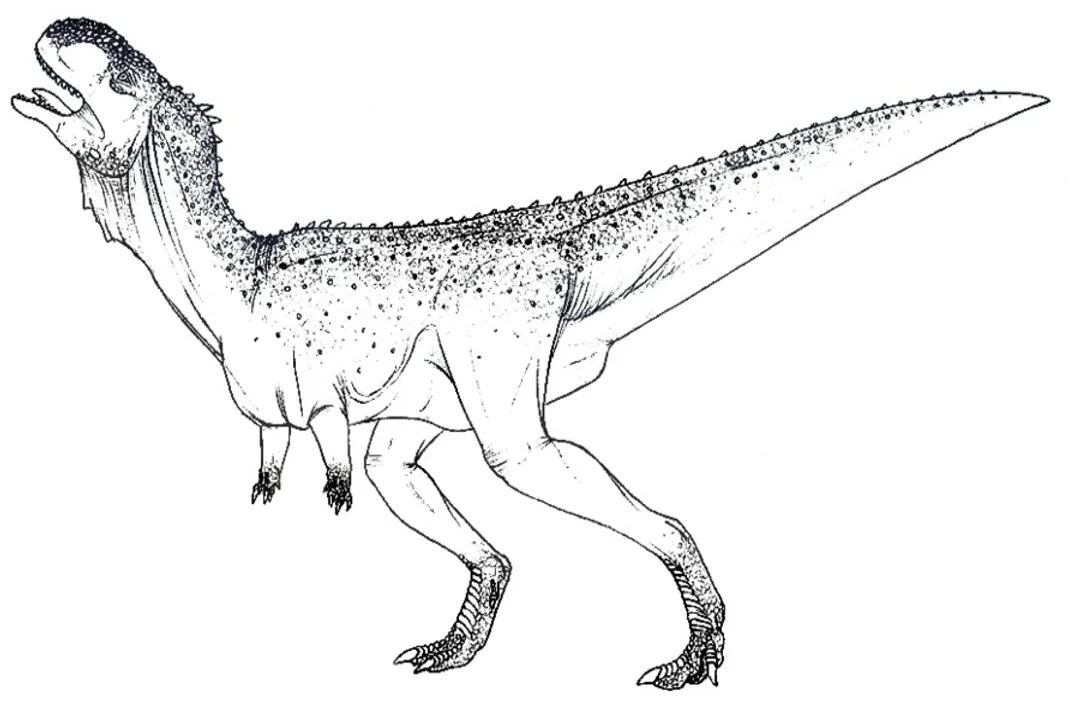
The creature known as Xenotarsosaurus immediately captures interest simply by the meaning of its name: "strange ankle lizard". [1] This name points directly to the most defining, and admittedly unique, characteristic discovered in its fossil remains. Belonging to the diverse group of theropod dinosaurs, Xenotarsosaurus roamed the Earth during the Late Cretaceous period, specifically the Santonian stage, in what is now Argentina. [1][6] While it shares general features with its notorious relatives, the structure of its lower leg and foot sets it apart enough to warrant its own specific designation, Xenotarsosaurus bonapartei. [8]
# Ankle Design
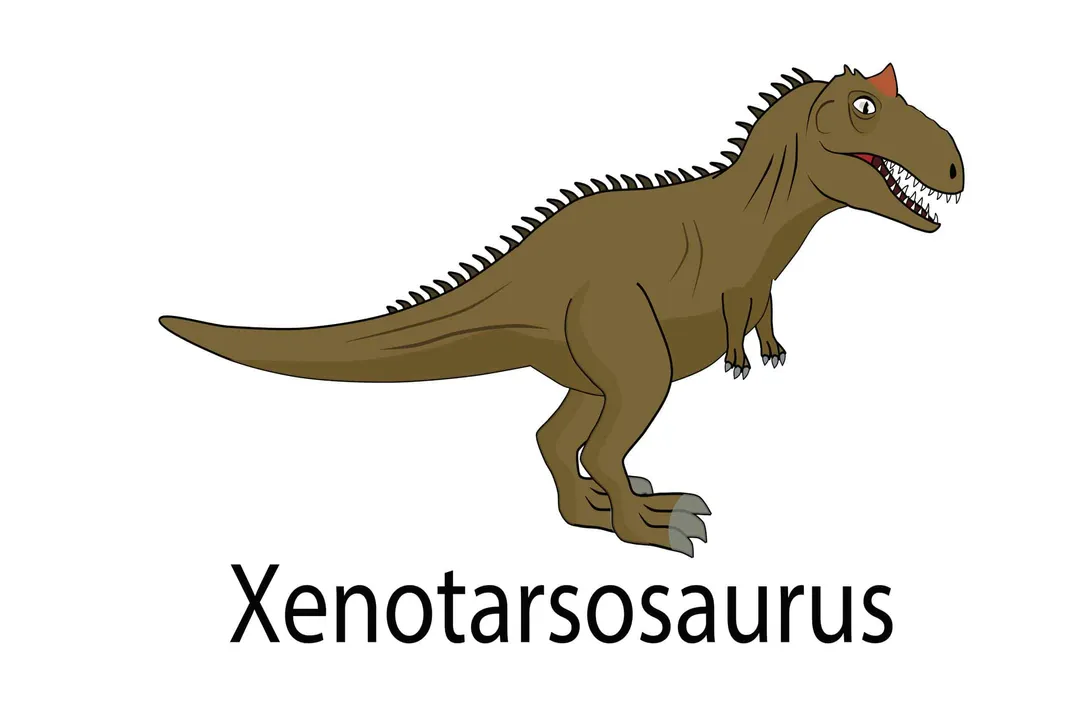
The key distinguishing feature that gives Xenotarsosaurus its moniker lies within its tarsals—the ankle bones. [1] In many theropods, the ankle joint allows for significant flexibility, but the bones in this particular Patagonian dinosaur show a notable configuration. [1] While the sources confirm the ankle structure is what makes it unique, the exact nature of the unusual articulation—whether it involved fusion, a specific pattern of contact, or a unique bone shape—is the crucial detail derived from its discovery. [1] This specific arrangement of the tarsal bones is what paleontologists used to define the genus, suggesting an adaptation in its gait or weight distribution that diverged slightly from other contemporary meat-eaters. [1] Thinking about the complex mechanics of dinosaur locomotion, this subtle variation in the tarsals might indicate specialized requirements for traversing the specific terrain of ancient Gondwana, perhaps offering a different kind of rigidity or flexibility compared to the stout, powerful ankles common in other large predators. [1]
# Argentine Home
Xenotarsosaurus is firmly rooted in the fossil record of South America, specifically the region that forms modern Argentina. [1][5] The geological context for its existence is the Bajo de la Carpa Formation. [1] Placing it within the Santonian stage means this dinosaur was sharing its environment with other contemporary fauna from the Late Cretaceous, roughly 86 to 83 million years ago. [1][6] This time and place are significant in dinosaur evolution because South America, cut off from the northern continents, developed distinct ecosystems dominated by certain dinosaur groups. [1] The presence of Xenotarsosaurus here helps flesh out the picture of the Patagonian ecosystem during that specific window of time. [6] Considering that many of the larger, more famous carnivores from this era in other parts of the world, like North America and Asia, were Tyrannosaurids, Xenotarsosaurus represents the local, specialized lineage that rose to prominence in the south. [1][6]
# Theropod Cousins
Despite its unique ankle, Xenotarsosaurus is classified firmly within the Abelisauroidea group of theropods. [3][5] This places it among relatives like Carnotaurus and Majungasaurus. [1] Abelisaurids are instantly recognizable by a few common characteristics that Xenotarsosaurus likely shared. [1] These include having a relatively short, deep snout—quite different from the long snouts of tyrannosaurs—and, perhaps most famously, possessing very small, almost vestigial forelimbs. [1] While details on the arm structure of Xenotarsosaurus itself might be limited by the fossil material, membership in the Abelisauridae family suggests these features were present. [1] These dinosaurs were generally medium-sized carnivores, with estimates placing Xenotarsosaurus around 5 to 6 meters in length. [6] This size profile suggests it was a capable predator or scavenger within its local food web, occupying a niche below the very largest apex predators that may have existed concurrently. [2][6]
# Predator Niche
As a theropod, Xenotarsosaurus was a carnivore. [2][6] Its relatively moderate size, estimated around 5 or 6 meters, suggests a predatory strategy focused on mid-sized prey, or perhaps acting as a significant scavenger within the environment. [2][6] Fossils and artistic interpretations sometimes connect this animal to scavenging behavior, possibly targeting large, beached sauropods or the remains left by larger hunters. [7][9] Whether it actively hunted smaller dinosaurs or specialized in opportunistic feeding, its position as a substantial meat-eater was undeniable. [2] Its unique tarsal structure, whatever its precise mechanical implication, would have been essential for whatever locomotion this animal required, whether chasing down quick prey or efficiently maneuvering around large carcasses. [1]
This particular dinosaur adds another vital piece to the complex puzzle of Gondwanan Cretaceous life. [1] While names like Tyrannosaurus dominate popular culture, Xenotarsosaurus reminds us that in the southern continents, the evolutionary path for large carnivorous dinosaurs favored the Abelisauroids, leading to distinct anatomical solutions like its namesake ankle bones. [1][6] Examining these specific differences, even down to the tarsal level, is how paleontologists map the geographic isolation and independent evolutionary experimentation that occurred across the ancient world. [1]
Related Questions
#Citations
Xenotarsosaurus
Xenotarsosaurus Animal Facts
Xenotarsosaurus - DinoDen
Xenotarsosaurus Pictures & Facts - The Dinosaur Database
Xenotarsosaurus | Dinosaur Wiki
Xenotarsosaurus
Xenotarsosaurus is a genus of abelisaurid theropod ...
A Dinosaur A Day — Xenotarsosaurus bonapartei
A Xenotarsosaurus scavenging on a beached Plesiosaurs