How are the jaws and teeth structured on the Yellowtail Snapper, indicative of its diet?
Answer
Jaws are generally equal, featuring small teeth arranged in villiform bands
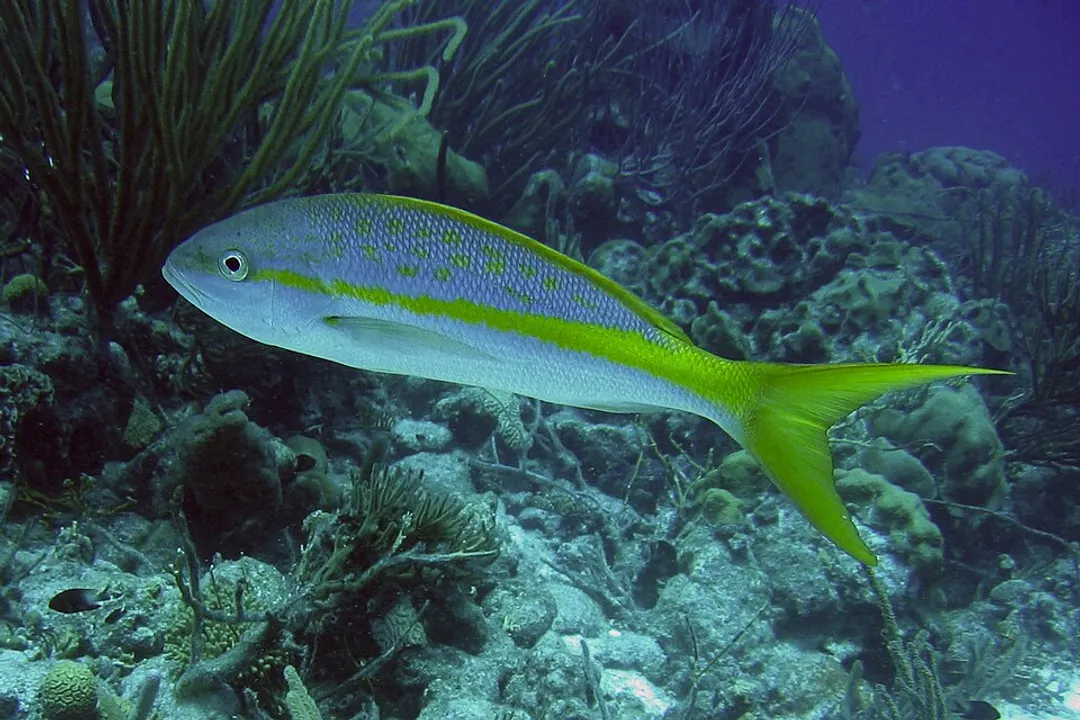
The snout structure and dentition provide strong clues regarding the Yellowtail Snapper's feeding ecology. The jaws are described as generally equal in length, meaning neither the upper nor the lower jaw significantly overhangs the other. Internally, the teeth are small and organized into villiform bands. This arrangement is well-suited for grasping and managing smaller prey items, such as various types of crustaceans, small fish, and worms found in their offshore habitats.
Related Questions
What is the scientific designation for the Yellowtail Snapper species?How is the caudal fin, the namesake feature, described regarding its shape in the Yellowtail Snapper?What appearance characterizes the longitudinal stripe on the adult Yellowtail Snapper’s side?What typical size range (length and weight) is commonly observed for recreational anglers catching the Yellowtail Snapper?How are the jaws and teeth structured on the Yellowtail Snapper, indicative of its diet?What distinct visual characteristic differentiates small, juvenile Yellowtail Snappers from mature adults?What term describes the main body profile of the Yellowtail Snapper when viewed from the side?Where is the yellow pigmentation most intense and serves as the species' namesake feature?What specific detail about the chin's position relative to the eye socket aids in differentiating Yellowtail Snapper anatomy?What additional, often faint, anatomical reference point can sometimes be observed running along the flank of mature specimens?