Habitat suitability maps suggest potential non-native python habitat along how many US coasts?
Answer
Three US coasts
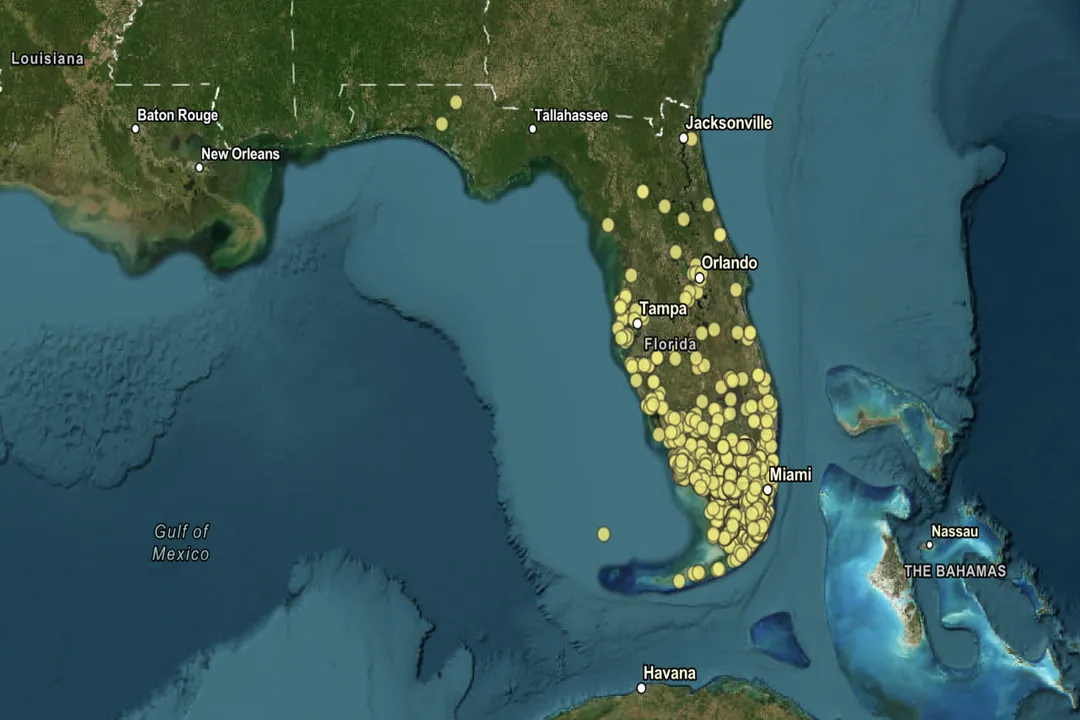
While the established, self-sustaining python presence remains tightly focused in the subtropics of South Florida, scientific modeling projects a much wider potential range based purely on environmental parameters such as temperature and rainfall. These habitat suitability maps illustrate areas where the environment theoretically possesses the necessary characteristics to support non-native pythons should further introductions occur or if the species successfully navigates northward over many decades. These projections extend along the Atlantic coast, the Gulf Coast, and a third coastal area, totaling three US coasts where conditions *could* be suitable.
Related Questions
Which species is overwhelmingly referred to when discussing established, breeding python populations in the US?Which two protected lands host the firm establishment of the Burmese python population core?What primary factors allow Burmese pythons to thrive and reproduce year after year in South Florida?What environmental factor acts as the main barrier preventing robust python colonization north of the subtropical zone?Invasive range expansion for pythons in Florida often follows which type of geographical feature according to dispersal models?What development regarding the Florida Gulf Coast indicates pythons are moving beyond the Atlantic-facing Everglades basin?Habitat suitability maps suggest potential non-native python habitat along how many US coasts?How does managing the densely populated Everglades python population differ from managing an isolated northern detection?What specific biological requirements necessitate the geographic limitation of robust Burmese python populations to the southern US subtropics?Why does scientific tracking focus heavily on the Burmese python (*P. bivittatus*) over other large constrictors in the US context?