Which US states have pythons?
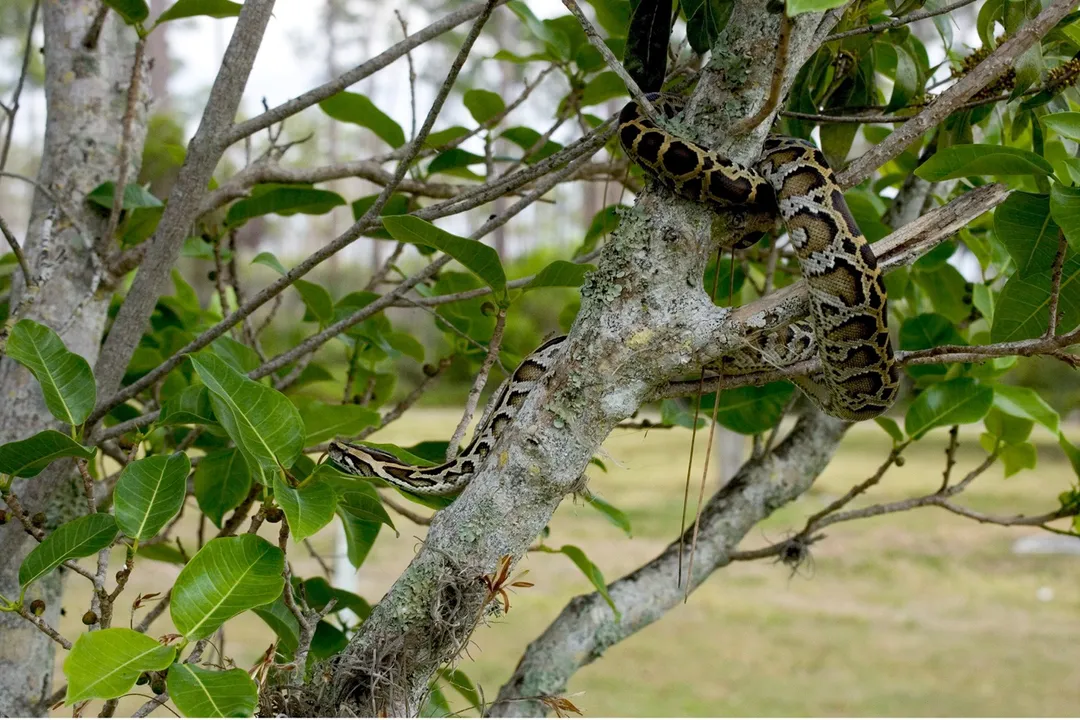
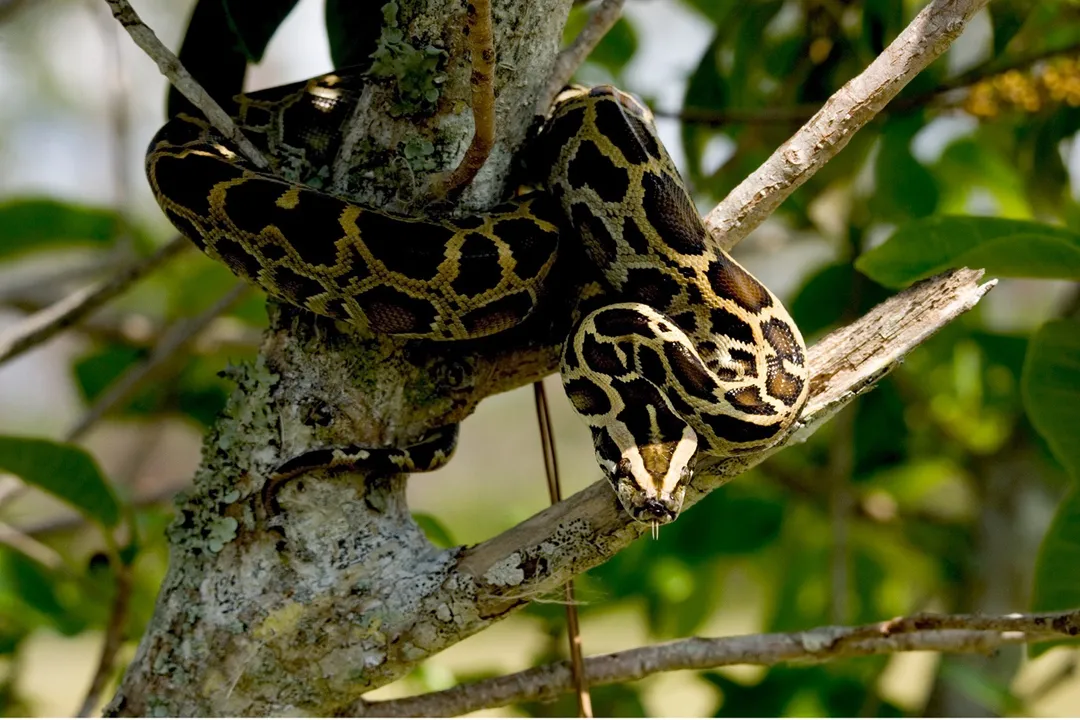
The appearance of large constrictors, specifically pythons, in US ecosystems is a topic that garners significant attention, primarily due to the ecological disruption they cause where established. While popular culture often imagines massive snakes taking over the entire country, the reality is much more geographically focused, centering heavily on one state where the problem has reached an alarming scale: Florida. [6] The species most notorious for establishing breeding populations outside of its native range is the Burmese python (Python molurus bivittatus). [2][6]
# Florida Invasion
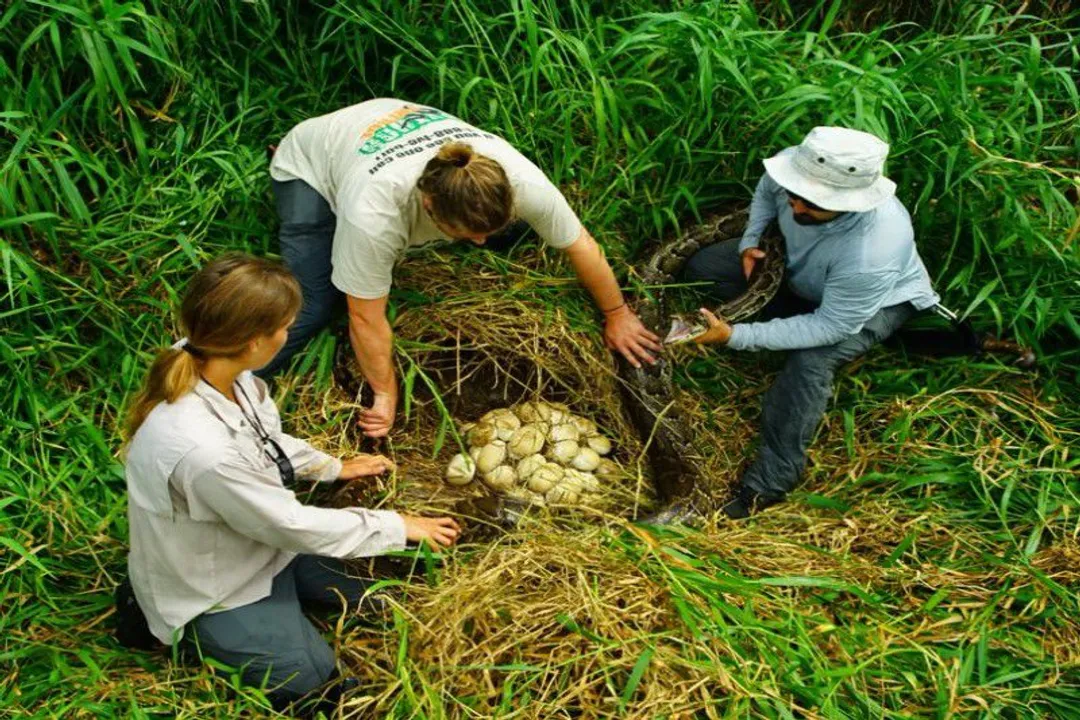
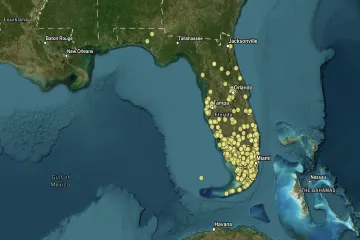
Florida serves as the primary focal point for the non-native python issue in the United States. [6] It is in the southern parts of the Sunshine State that this invasive giant has truly taken hold, fundamentally altering the local food web and wildlife populations. [6] The presence of these large snakes has led to significant declines in mammal populations within areas like Everglades National Park. [6] Sources confirm that locations where pythons have been documented are concentrated heavily within this southeastern region. [4] The scale of the problem necessitates organized efforts, such as those dedicated to python removal, indicating that this is not just a matter of sporadic sightings but an established, reproducing population. [1]
# Species Identification
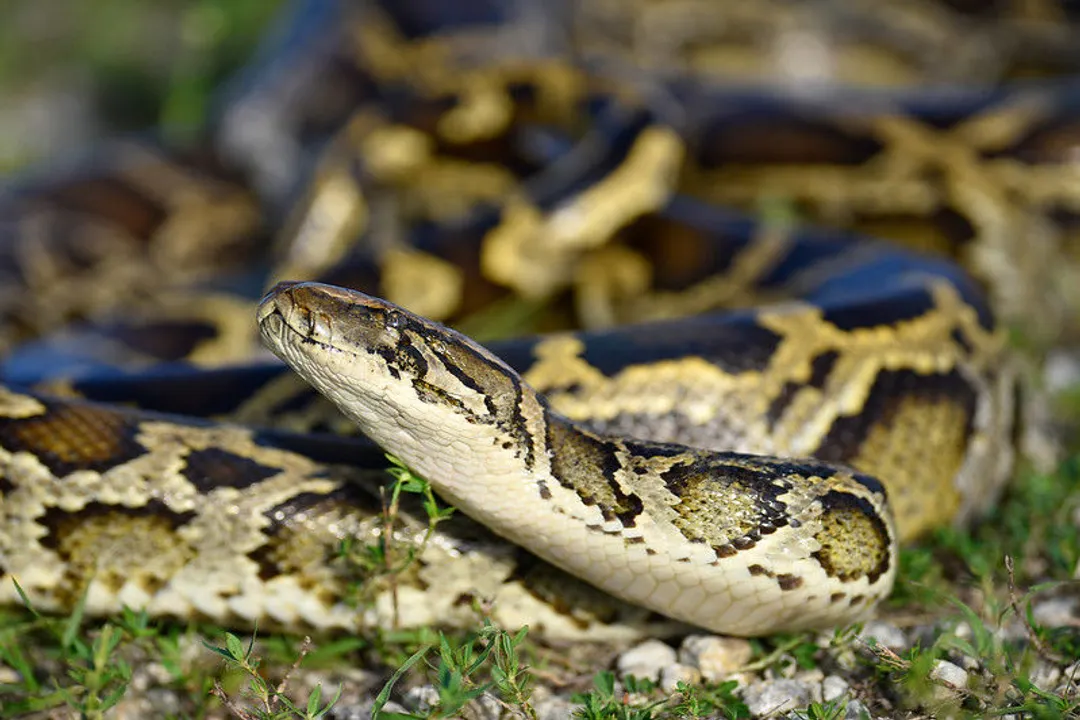
It is important to specify which type of python is causing the ecological concern, as not all snakes fitting the general description are the issue. The overwhelming evidence points to the Burmese python. [2][6] Understanding the exact species is vital because management strategies, legal restrictions, and risk assessments are tailored to the specific biology of the snake in question. [7] While the term "python" might be used broadly, the impact and regulatory focus in the US are almost entirely directed toward this one particular large constrictor. [2]
# Geographic Spread Potential
While Florida bears the brunt of the established invasion, scientific modeling and documented observations suggest the potential range extends much further. [5] Researchers have mapped out areas along three different US coasts where conditions might be suitable for pythons to survive and potentially establish themselves. [5] This predictive mapping indicates concern for areas beyond the immediate Southeast. [3][5]
The potential risk is not confined solely to the Atlantic coastline. Evidence points to the expansion of Burmese pythons along the Gulf Coast as well. [9] This suggests that states bordering the Gulf of Mexico, perhaps with suitable warm, humid environments, are also considered within the realm of possible future habitat, even if breeding populations have not yet been confirmed there. [5][9]
When comparing the confirmed, high-density established zone in South Florida—which serves as the known invasion hub—against the vast potential habitat projections, a significant discrepancy emerges. While the ecological crisis is currently localized to the southern tip of Florida, the modeling that covers three coasts implies that states stretching northwards and westward along the Gulf have environmental characteristics that could support the species, presenting a long-term management challenge that requires proactive monitoring far from where the problem originated. [3][5]
# Beyond Established Zones
The presence of pythons outside of the main established Florida breeding grounds often manifests in two ways: either as transient, non-reproducing individuals, or as newly established, localized populations in nearby states that have not yet reached the critical mass seen in South Florida. [4] Because of the high value of these animals in the exotic pet trade, accidental releases or escapes contribute to the overall risk picture in adjacent states. [7] Any sighting in a new state, even if isolated, triggers monitoring because it suggests a breach in containment or a dispersal event that could lead to further propagation if the conditions are right. [7]
For residents living in states that share coastal features with Florida—for instance, states along the Gulf like Alabama or Texas, or Atlantic states further north—it is useful to know that officials are tracking potential habitat suitability based on temperature and moisture regimes. [5] While the immediate threat of widespread ecological devastation remains focused on the area where the snakes have successfully established breeding populations, preparedness in adjacent regions hinges on understanding these predictive habitat maps. [3][5] Monitoring efforts, often supported by citizen reporting and data collection through local organizations or government agencies, are key to containing any localized spread before it mirrors the situation in Florida. [1][8]

# Regulatory Context
The status of pythons in the US is often tied to their classification as an invasive species, leading to regulations concerning their possession and transport. [7] For states where they are not established, the primary concern is preventing introduction, which is managed through laws governing the pet trade. [7] In contrast, in states like Florida, the focus shifts from prevention to active control and eradication because the snake is already established as a significant threat to native wildlife. [6] This jurisdictional difference impacts how residents interact with the issue; what might be illegal possession in one state could be a target for removal in another. [7]
For individuals living in states bordering or near the areas mapped for potential python habitat, understanding local wildlife regulations is a crucial first step. For instance, if a large, non-native snake is found, knowing the correct local or state agency to contact—rather than attempting removal independently—ensures the situation is handled by trained personnel who can document the sighting for tracking purposes. [8] This reporting is how scientists refine the predictive models, turning abstract habitat maps into confirmed areas of risk. [5] The community engagement visible on local social media groups often highlights the immediate, on-the-ground efforts to document and report these sightings, which provides critical, real-time data supplementing the broader USGS mapping efforts. [8]
# Environmental Factors Driving Range
The potential for pythons to thrive in areas beyond Florida is fundamentally linked to climate. [5] The survival of a large, non-native reptile is heavily dependent on ambient temperatures, particularly during winter months, as they cannot internally regulate their body heat. [5] The USGS maps illustrating potential habitat along three coasts are essentially large-scale assessments of where winter temperatures are consistently mild enough to avoid lethal freezing events for extended periods. [5] This climatic constraint is the single biggest barrier preventing the Burmese python from spreading rapidly across the entire continent, concentrating the risk to warmer, more humid regions. [3][5] The degree of establishment in any given state, therefore, correlates directly with the length and severity of its mildest season. [5]
The presence of water and available prey are secondary but necessary components. South Florida provides an abundance of both, which is why the ecosystem has been so heavily impacted. [6] Other states along the Gulf and Atlantic margins possess similar environmental niches, making them susceptible if an established population were to gain a foothold, which is why the monitoring maps are so focused on those specific coastal zones. [5][9]
The sheer size these snakes can achieve in the wild, like the impressive specimens documented by various tracking groups, underscores why their potential spread is taken so seriously. [1] A fully grown Burmese python is a formidable predator, capable of consuming mammals the size of deer fawns or full-grown raccoons, which puts native bird and mammal populations at severe risk if the snake population grows unchecked in a new environment. [6] This predatory capacity is what drives the urgency behind mapping out every state that falls within the model's "suitable habitat" zone. [3]
Related Questions
#Citations
Python Information FPCP
Burmese Python (Python bivittatus) - Species Profile
Burmese Pythons Could Devastate Northern US States
Map of southeastern United States showing locations where pythons ...
USGS Maps Show Potential Non Native Python Habitat Along 3 US ...
Florida vs. the Burmese Python: How an Invasive Giant is Changing ...
Burmese & African Rock Pythons - Texas Invasive Species Institute
What is the cut off point for pythons to survive in the US beyond ...
Experts issue warning as massive snakes spread across US region